























NASA Artemis rocket launch: Artemis II rolls back for repairs as April 2026 windows take focus

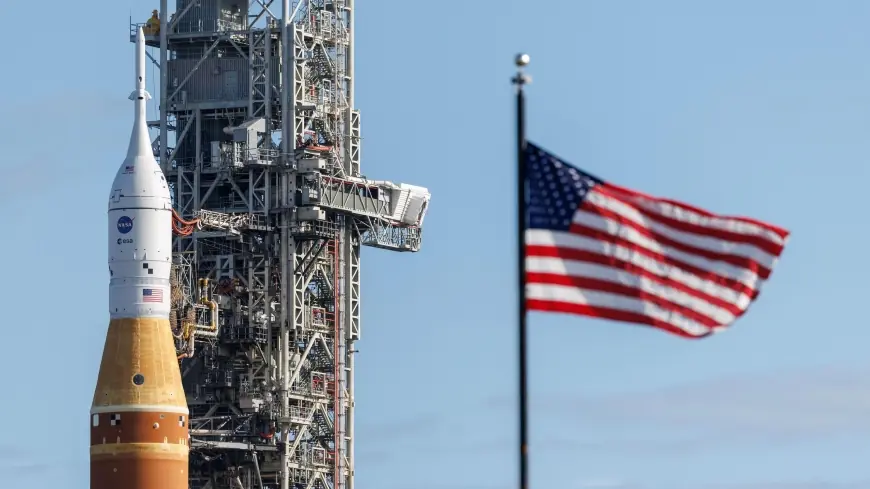
The NASA Artemis rocket launch timeline has shifted again this week after engineers identified an upper-stage helium pressurization issue that makes an early-March liftoff unrealistic. The result: the Space Launch System rocket and Orion spacecraft are being prepared for a rollback from the pad to the Vehicle Assembly Building for hands-on troubleshooting, pushing public attention toward NASA Artemis rocket launch opportunities in April 2026.
Even with the delay, mission teams stress the objective remains unchanged: fly a crew around the Moon and return safely, validating deep-space systems for the next steps of the Artemis program.
NASA Artemis rocket launch: why the rocket is rolling back to the hangar
The current NASA Artemis rocket launch pause centers on a problem in the rocket’s upper stage helium system. Helium is used to help pressurize tanks and support key propulsion operations, and the issue emerged during processing that followed recent countdown and fueling work.
A rollback is not a small move. It’s a high-effort logistics operation requiring careful coordination, strict safety protocols, and a new flow of inspections once the vehicle is back inside. Teams typically choose rollback only when a pad-side repair is impractical or when deeper access is needed to verify system integrity.
The short version: the hardware needs better access than the pad can provide, and the program is choosing verification over speed.
NASA Artemis rocket launch: what “no March launch” means for the schedule
For the public, the most immediate takeaway is simple: a NASA Artemis rocket launch in March is effectively off the table. Moving a crewed mission out of March carries downstream implications:
-
More time is needed to complete repairs, retest, and revalidate the vehicle.
-
Pad availability and range scheduling must be reworked.
-
Flight readiness reviews get reshuffled, not skipped.
This is why “delay” often understates the reality. Artemis II is a crewed deep-space test flight; every rollback and re-rollout creates additional checkouts that must be completed before launch approval.
NASA Artemis rocket launch: April 2026 mission windows come into view
With March fading, the spotlight shifts to April. Planning materials for the mission show a set of NASA Artemis rocket launch opportunities in April 2026, generally featuring two-hour launch windows on selected days. These windows are driven by orbital mechanics and recovery constraints, not convenience.
Here’s a quick look at sample April window openers that have been publicly listed in planning documents (all times ET):
| Date (ET) | Sample window opening time (ET) | Window length |
|---|---|---|
| Apr 1, 2026 | 6:24 PM | 120 minutes |
| Apr 4, 2026 | 8:53 PM | 120 minutes |
| Apr 5, 2026 | 9:40 PM | 120 minutes |
| Apr 6, 2026 | 10:36 PM | 120 minutes |
| Apr 30, 2026 | 6:06 PM | 120 minutes |
These are planning targets, not a final commitment. The actual NASA Artemis rocket launch date will depend on when repairs and re-testing conclude and whether the vehicle clears readiness reviews after returning to the pad.
NASA Artemis rocket launch: what Artemis II is trying to prove
The Artemis II mission matters because it is the first crewed flight of Orion around the Moon in the Artemis era. The goal is not a landing; it’s a systems test at full mission intensity.
Key objectives include:
-
Verifying life support, communications, guidance, and navigation in deep space
-
Demonstrating Orion’s performance during high-speed lunar return conditions
-
Stress-testing mission operations and ground systems as an integrated whole
That’s why the program is cautious. A crewed NASA Artemis rocket launch is not treated like a typical satellite mission—risk posture and verification demands are fundamentally different.
NASA Artemis rocket launch: what to watch next
The next major checkpoints for the NASA Artemis rocket launch timeline are procedural and visible:
-
Confirmation that rollback is complete and the vehicle is stable inside the assembly building
-
Clear identification of the root cause and a documented repair plan
-
Retesting that shows the helium system performs normally under expected conditions
-
A new rollout date back to the pad, followed by final launch-readiness milestones
Until those steps happen, any single-day launch prediction will remain tentative. For now, the most accurate framing is that the NASA Artemis rocket launch is still on track for 2026—just with April emerging as the most realistic target window while teams prioritize crew safety and system reliability.