






















Space Force Accelerates Path from Lab Tools to Operations After High‑Profile Raids

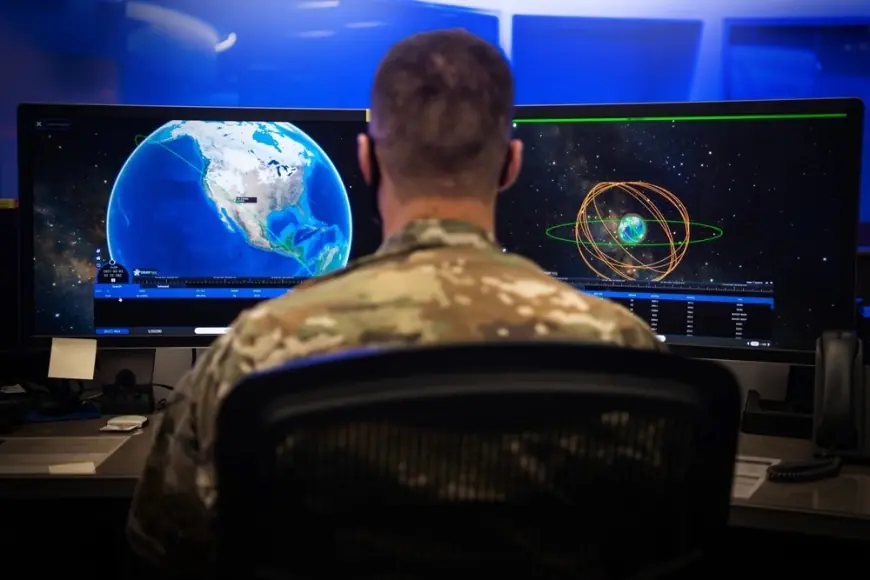
The space force is pushing to shorten the time it takes mature space domain awareness and command‑and‑control tools to reach operational users, citing recent missions that exposed capability gaps. The effort pairs an 18‑month acceleration plan to feed lab‑developed systems into an operational backbone with simultaneous upgrades to the data transport and battle‑management links that enable long‑range kill chains.
Development details: Space Force moves tools into Kronos
Program leaders have repositioned the Space Domain Awareness Tools, Applications, and Processing Laboratory (SDA TAP Lab) under the portfolio led by Lt. Col. Collin Greiser to create a clearer pipeline from experimentation to operations. The SDA TAP Lab, established in 2023, was set up to refine new command‑and‑control tools from industry and academia and speed delivery to users; Greiser's team is now working over the next 18 months to funnel a greater volume of those lab‑matured capabilities, and other industry offerings, into a key space battle management system called Kronos.
Kronos serves as a consolidation point for legacy intelligence and C2 systems used by the National Space Defense Center, Space Force component commands and the multinational Combined Space Operations Center. In November, Space Systems Command issued a commercial solutions opening for Kronos seeking tools across three areas—command and control, battle management, and space intelligence—including cloud‑native services, AI decision support, and a space attack planning toolkit. The solicitation drew a large response and an industry day is scheduled next month to give companies additional insight into the program's vision.
Maj. Sean Allen, who leads the SDA TAP Lab, has emphasized the importance of automation to shorten decision timelines; program officials are also considering an unclassified environment that would have a natural pipeline into Kronos to streamline transfers further.
Context and escalation
The push to speed capability fielding comes amid a broader effort to harden the Space Force's role in long‑range kill chains and to scale data transport and decision speed. System Delta 85, established in August 2025 to deliver tools for space domain awareness, missile warning and tracking, missile defense, battle management and space intelligence, is driving upgrades to data transport, federation and battle management across the portfolio, Col. Jason West said.
Industry and program executives have flagged two primary bottlenecks: scale and latency. Elaine Bitonti of Collins Aerospace highlighted the challenge of moving and processing the volume of sensor and shooter data that would be generated in a large‑scale conflict, while Shannon Pallone, program executive officer for battle management, command, control, communications and space intelligence, stressed integrating and simplifying architectures to remove latency where it matters most.
Operational experience has reinforced those assessments. Operation Midnight Hammer in June 2025 and Operation Absolute Resolve in January 2026 involved more than 100 aircraft and weapon systems and relied on space‑based capabilities to create a secure operational picture across distant theaters.
Immediate impact
Space Force guardians provided critical support during those raids, demonstrating how space systems and operators enable modern joint operations. In January, operators at Schriever Space Force Base supplied satellite communications and position, navigation and timing data to deployed forces and controlled elements of the electromagnetic spectrum to deliver geolocation and prevent interference for units in U. S. Southern Command. During the June strikes in Iran, guardians detected retaliatory missile launches and delivered seconds‑timely notifications to U. S. forces and allies.
Lt. Gen. Gregory Gagnon, commander of Combat Forces Command, noted that hundreds of guardians worked 24/7 across Colorado, Europe and Asia to operate a global sensor network that produced the overwatch critical to those missions. That hands‑on experience has sharpened calls across leadership for increased resources to expand advanced systems and train operators.
Forward outlook
Key milestones are already on the calendar: an industry day next month tied to the November Kronos solicitation, and an 18‑month effort to inject more SDA TAP Lab and commercial capabilities directly into Kronos. Concurrently, System Delta 85 is executing solicitations and upgrades intended to improve data transport and battle management at scale. Program offices are also evaluating an unclassified environment to create a more direct pipeline for matured tools into operational systems.
What makes this notable is that operational deployments have converted theoretical dependencies on space into measurable procurement and integration priorities, prompting concrete actions—reorganization of a laboratory, a commercial solicitation, and a defined 18‑month delivery push—that tie capability development tightly to field needs.