























Applebees closures: Long-running locations shut doors as franchise pressure meets a remodel-and-combo strategy

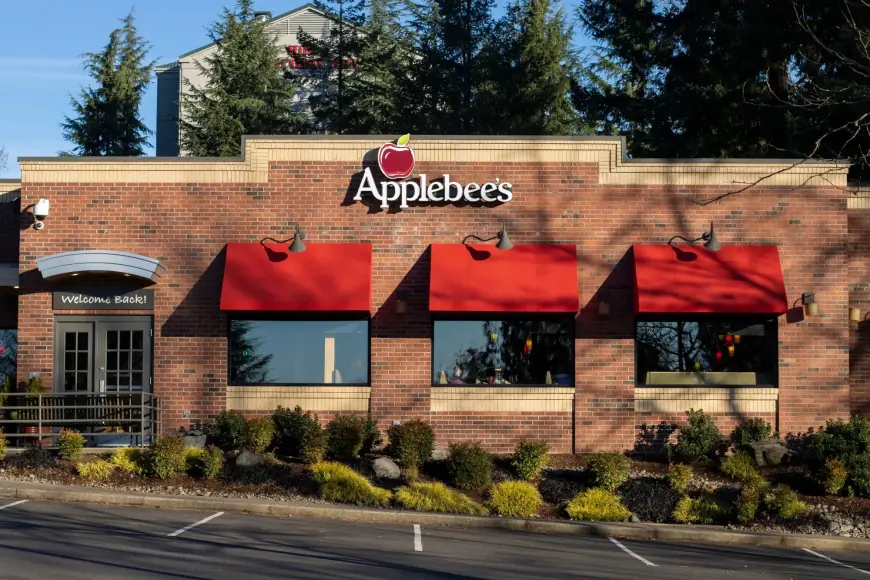
A new burst of applebees closures is landing in communities across the Midwest and Northeast in late February 2026, with several long-running Applebee’s restaurants ending decades of service in a matter of days. The shutdowns are largely happening store-by-store, driven by franchise economics, expiring leases, and shifting traffic patterns—while the broader brand pushes remodels and a dual-concept expansion plan meant to keep Applebee’s relevant in a crowded casual-dining market.
The result is a familiar split-screen: applebees closures in specific towns, alongside reinvestment and new formats elsewhere.
Applebees closures: Recent confirmed shutdowns in Missouri, Indiana, and New York
The most visible applebees closures this week involve restaurants that had operated for 20 to 30 years. In Columbia, Missouri, the Applebee’s near Stadium Boulevard and Interstate 70 Drive SW closed on Wednesday, Feb. 18, 2026 (ET). In Evansville, Indiana, two Applebee’s locations—on East Morgan Avenue and Pearl Drive—closed permanently on Thursday, Feb. 19, 2026 (ET), ending long local runs.
In upstate New York, another major closure has a firm end date rather than an abrupt shutdown. The Applebee’s in Glenville is scheduled to close on Sunday, April 12, 2026 (ET), after operating normally until that date.
Recent applebees closures snapshot (ET):
| City / State | Location | Status | Effective date (ET) |
|---|---|---|---|
| Columbia, Missouri | I-70 Drive SW near Stadium Blvd | Closed | Wed., Feb. 18, 2026 |
| Evansville, Indiana | East Morgan Ave | Closed | Thu., Feb. 19, 2026 |
| Evansville, Indiana | Pearl Drive | Closed | Thu., Feb. 19, 2026 |
| Glenville, New York | 268 Saratoga Road | Closing scheduled | Sun., Apr. 12, 2026 |
Applebees closures: Why profitable-looking restaurants still go dark
Many diners assume applebees closures happen only when a restaurant is empty. In reality, a location can appear busy and still struggle financially if costs rise faster than sales. Franchise operators face a stack of pressures that can turn a borderline store into a losing one:
-
Higher labor costs and tighter hiring markets
-
Increased food and utility expenses
-
Insurance and maintenance costs rising on older buildings
-
Delivery and takeout expectations requiring extra staffing and packaging
-
Lease renewals that don’t match current sales realities
Older Applebee’s units—especially those built during 1990s and early-2000s expansion waves—can be expensive to operate if the building needs significant updates or the trade area has shifted.
Applebees closures: The dual-brand play aims to change the math
While individual restaurants close, the parent company’s growth narrative is increasingly tied to a combined format: Applebee’s and IHOP under one roof. The plan targets 80 dual-branded Applebee’s–IHOP locations by the end of 2026, building from dozens already open or under construction.
The logic is straightforward: one site, broader all-day demand, shared back-of-house operations, and better labor efficiency. For franchisees, the combo model can improve unit economics in markets where a single concept might not fully utilize the location throughout the day.
That doesn’t stop applebees closures, but it can change where—and how—the brand shows up next.
Applebees closures: Remodels are the other big lever
Alongside closures and combo builds, the brand is leaning hard on remodeling. Updated dining rooms, refreshed exteriors, and more efficient pickup areas are designed to improve guest experience and increase off-premise throughput.
Remodels matter because many closures are fundamentally “cost-to-fix” decisions: if the investment required to modernize a location is too high relative to local sales, operators may choose to exit instead of renovate. In that sense, applebees closures can be the flip side of the remodel push—capital goes to the stores most likely to deliver returns.
What happens next: More clarity arrives with earnings and spring leasing decisions
The next near-term milestone for Applebee’s watchers is the parent company’s fourth-quarter 2025 earnings release on Wednesday, Feb. 25, 2026 (ET), scheduled before the U.S. stock market opens. While that report won’t list every single closure, it typically provides updated systemwide direction and a clearer sense of net restaurant change—openings minus closures.
Beyond earnings, spring is also a common decision window for restaurant leases. As renewals come due, more applebees closures can surface quickly, particularly in older corridors where traffic has migrated and rents no longer align with sales.
For customers, the most immediate takeaway is local: closures are real, and some are sudden. For the broader brand, the story is more complicated—selective shutdowns on one hand, and a modernization-and-combo strategy on the other, both shaping what Applebee’s looks like in 2026.