
























Amd Stock: Meta's 6GW MI450 Deal and the 160 Million-Share Warrant That Could Shift amd stock Ownership

Advanced Micro Devices announced a multiyear, multigeneration agreement with Meta Platforms that could be worth as much as $100 billion, and the arrangement has immediate implications for amd stock because it includes a performance-based warrant tied to up to 160 million shares. Meta plans to deploy six gigawatts of custom AMD Instinct MI450 GPUs as part of a major data center build-out, and the terms add a potentially material ownership element to the commercial deal.
Meta's MI450 deployment: six gigawatts, MI450 GPUs and Helios servers
The agreement calls for Meta to deploy six gigawatts of custom AMD Instinct MI450 GPUs in a major data center build-out. AMD said the MI450 chips and Helios rack-scale servers are scheduled to begin shipping later this year. The company framed the deal as an expansion of an existing partnership that aligns roadmaps "across silicon, systems, and software to deliver AI platforms purpose-built for Meta's workloads. " The package is multiyear and multigeneration, and AMD described the approach as a novel way to attract buyers for its high-end AI chips.
Amd Stock dilution math: 160 million-share warrants, 10% stakes and 2031 expiry
As part of the deal AMD issued Meta a performance-based warrant that would allow Meta to buy up to 160 million shares of AMD common stock. If Meta exercises that option, it could own up to 10% of AMD's outstanding stock. AMD struck a similar six-gigawatt arrangement with OpenAI late last year that included an option for OpenAI to purchase up to 160 million shares at $0. 01 per share, giving OpenAI a 10% stake. The warrants are good until 2031, meaning they will not dilute existing shareholders until exercised; however, if both Meta and OpenAI exercise their warrants, existing shareholders would face roughly 20% dilution.
Lisa Su and AMD's pitch: a "win-win" and an investment-first posture
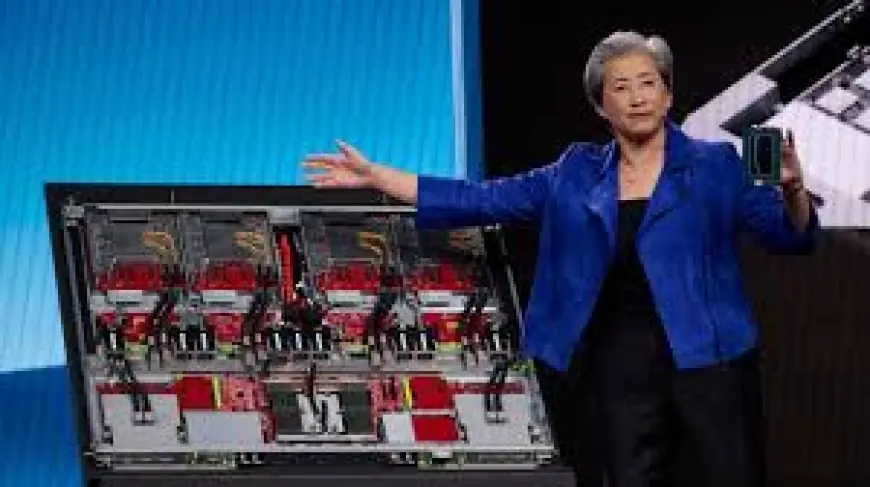
AMD Chief Executive Lisa Su called the structure a "win-win" for shareholders and framed the company's moves as preparing for a long-term cycle. She said, "We're early in the cycle of seeing what the ultimate payoff can be... We have to invest ahead of the curve and really point in the direction that is going to have the largest benefit. " The comments underline AMD's willingness to deploy unconventional commercial terms as demand for AI-capable chips accelerates in what the company described as the AI revolution's fourth year and a period of blistering demand.
Context: Meta's parallel Nvidia commitment and hyperscale build-out
The Meta–AMD deal is not exclusive. It comes in the wake of an agreement revealed just last week in which Meta announced a multiyear, multigenerational partnership with Nvidia for a large-scale deployment of Nvidia CPUs and "millions of Nvidia Blackwell and Rubin graphics processing units (GPUs), as well as the integration of Nvidia Spectrum-X Ethernet switches. " That Nvidia arrangement is part of Meta's rapid hyperscale data center build-out, optimized for both AI training and inference, underscoring that Meta is sourcing from multiple chipmakers.
Investor trade-offs: aligned incentives versus "giving away the store"
The deal clearly aligns Meta's interest with AMD and increases the likelihood of future chip sales, but it also raises questions about how much AMD is willing to give up to secure hyperscale customers. The warrant structure and the earlier OpenAI arrangement have been described as circular deals that are attracting scrutiny from AI investors. Whether the moves are a shrewd long-term strategy or an overgenerous way to win customers depends on whether AMD continues to trade equity for commercial commitments. Only time will tell.