

























Scottish ministers refuse planning permission for Flamingo Land resort at Loch Lomond

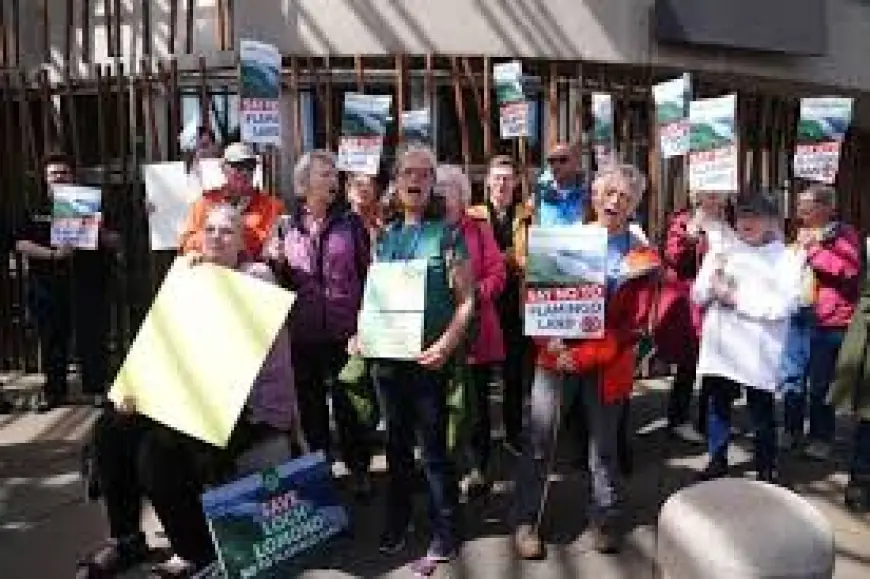
The Scottish Government has refused planning permission in principle for a proposed Flamingo Land leisure resort on the banks of Loch Lomond, rejecting a plan developers said would deliver regeneration and jobs. The decision matters now because ministers concluded flood risk, woodland loss and wider policy conflicts outweighed acknowledged socio‑economic gains linked to the site.
Scottish Government decision
Ministers dismissed an appeal and refused planning permission in principle for the Lomond Banks development, describing their conclusion as a "finely balanced decision. " While the Government accepted the proposal carried "significant socio‑economic benefits, " it found that concerns over flood risk, the permanent loss of ancient or historic woodland and other development‑plan conflicts meant the project did not comply overall. Ministers also said they disagreed with the Government reporter’s view that the proposals did not conflict with the aims of Scotland’s national park — specifically the aims to conserve and enhance the natural and cultural heritage and to promote sustainable use of natural resources.
Flamingo Land owner Lomond Banks responds
Lomond Banks, the company behind the proposals and owned by the theme park operator Flamingo Land, described the decision as "bad news for Scottish business and tourism" and said it "flew in the face" of plans for "regeneration and long‑term economic benefits to one of Scotland's most disadvantaged communities. " Jim Paterson, development director for Lomond Banks, said the project represented transformational investment that would deliver employment, regeneration and long‑term benefits, and that the firm remained confident issues such as flood‑risk modelling and the impact on ancient woodland could be addressed.
Ross Greer and public campaign
Scottish Greens co‑leader Ross Greer, who led a sustained local campaign, welcomed the ministers’ decision and called it "a huge victory for the local community. " Campaigners launched a petition that attracted more than 150, 000 objections in one account and 155, 000 in another, and those public objections formed a central plank of opposition. The sustained campaign prompted ministers to recall or "call in" the plans: one account states ministers said they would recall the plans in June last year because of "issues of national significance, " while another places a ministerial call‑in in June 2025, a month after the Government’s reporter had approved planning permission in principle.
Park authority, reporter and earlier decisions
The proposal has a long history. Flamingo Land first submitted plans in 2018 and withdrew them in 2019 after heavy local reaction. Revised proposals were lodged in 2020 but the Loch Lomond and the Trossachs National Park Authority unanimously rejected the updated scheme; a later report overturned that rejection on appeal, with the appointed reporter placing 49 conditions on the developer and requiring agreement with the park authority before construction could start. The park authority’s initial unanimous rejection in September 2024, the reporter’s conditional approval, and the subsequent ministerial recall and final refusal are all part of the planning sequence that ministers have now closed by refusing permission in principle. The Government’s decision departs from the recommendation of its own adviser who had been minded to approve.
Flood risk, woodland loss and traffic projections
The proposals for the Balloch, West Dunbartonshire site included a £40m holiday‑park scheme with more than 100 holiday lodges, two hotels, a waterpark, a monorail, restaurants and parking for more than 300 cars. Ministers cited uncertainty over permanent loss of ancient woodland, the adequacy of proposed compensatory planting and flood risks in refusing permission. Opponents also highlighted transport impacts: Flamingo Land’s planning documents projected more than 250 extra cars per hour on local roads at peak times, a level campaigners said the A82 could not cope with. Environmental bodies that objected earlier in the process included the Scottish Environment Protection Agency, the Woodland Trust and the National Trust for Scotland; campaigners warned of "irreversible" woodland loss.
The decision is final at ministerial level but remains subject to legal challenge, with the possibility of an appeal to the Court of Session. What makes this notable is ministers explicitly accepted the reporter’s and adviser’s findings on economic benefit yet still judged environmental and flood‑risk concerns decisive — a ruling that underscores how statutory conservation aims can outweigh projected local regeneration when officials identify unresolvable risks.