

















Travel Ban Massachusetts: travel ban massachusetts cited as region reels from historic blizzard

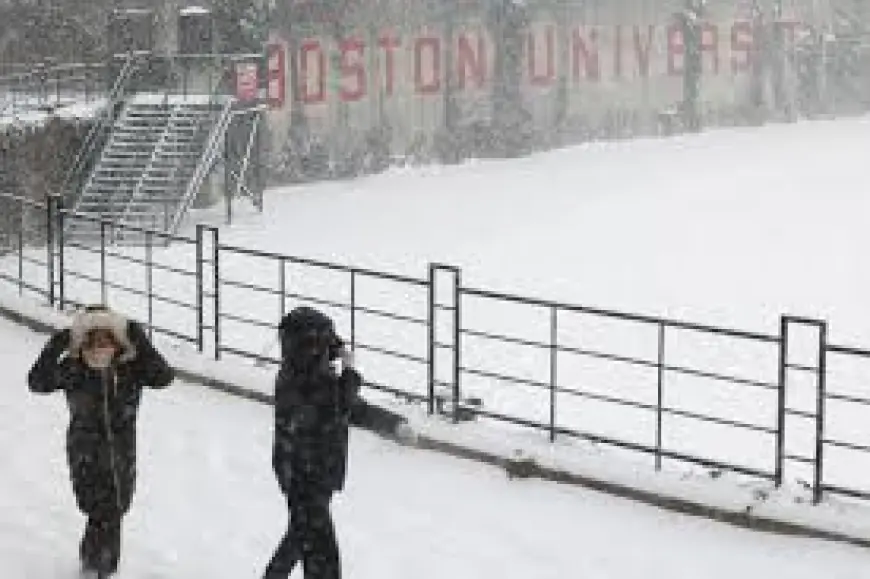
Boston University said travel ban massachusetts was one of the factors in its decision to keep campuses closed on Tuesday, February 24, as Greater Boston and southern New England dug out from a historic blizzard. The university announced campuses would reopen and resume normal operations on Wednesday, February 25.
BU closure and dates
Boston University issued an Emergency BU Alert with the heading "BU Alert: Winter Weather Closure Update – Campuses Remain Closed 2/24/26, Reopening 2/25/26. " The Charles River, Fenway and Medical Campuses were closed on Tuesday, February 24, with limited services offered, and the university said it would resume normal operations on Wednesday, February 25. A campus photo accompanying the alert was credited to Alicia Hamm (COM’26).
Reasons for the closure decision
University leaders said multiple factors informed the second day of closure: widespread service changes to MBTA and Commuter Rail schedules that made commuting difficult; the unavailability of BU Shuttle buses; travel bans issued by Massachusetts Governor Maura Healey; scattered power outages in surrounding cities and towns; and many public school districts remaining closed for another day.
Travel Ban Massachusetts and county bans
State actions included travel restrictions beyond the Boston area. Governor Maura Healey banned all non-essential driving on Martha’s Vineyard and in Bristol, Plymouth and Barnstable counties, which the university noted as part of the regional disruptions. The travel bans were cited alongside transit outages and power losses as reasons to keep BU campuses shut for a second straight day. The city-level picture included separate travel bans issued for Brockton and Taunton areas in the broader regional response.
City digging-out efforts and equipment requests
The nor’easter that barreled through New England on Monday shut down streets, schools and businesses and dumped more than two — and even three — feet of snow in parts of the state and region. Governor Maura Healey said she had requested equipment from Vermont, New Hampshire and New York so "we can dig out sooner and get back to business. " She added, "What communities are asking for is... help with clearing snow. "
Boston’s interim chief of streets, Nick Gove, said the city had roughly 1, 000 workers and 900 pieces of equipment, including snow spreaders and plows, clearing streets for first responders and MBTA buses throughout the storm. Gove said the city had more front-end loaders and diggers actively removing snow piles before the storm ended than it did during last month’s storm. He said city workers would prioritize clearing parking lots and areas around Boston Public Schools buildings — which remained closed Tuesday — and removing snow banks in bike lanes, crosswalks and curbs. The city had 14 snow farms where workers were taking and melting snow, and snow-removal efforts were expected to stretch through the week, with more snow expected before Friday.
Officials and university statements
Boston University’s senior vice president for operations, Derek Howe, said, "A historic blizzard such as this made a second day of closure necessary to ensure the safety of the BU community. Our essential employee workforce did everything, and more, in their power to support all three campuses. This decision was not made lightly, but will give everyone an additional day to attend to their homes and families during this event. "
University Provost Gloria Waters said, "We realize that it is extremely challenging to have two days of classes canceled, particularly at this point in the semester; however, the safety of our faculty, staff and students who do not live on campus is paramount. Safety will always be our top priority, and we look forward to learning from these past few days to further prepare for future weather events. "
Boston Mayor Michelle Wu asked for residents’ patience and said, "This storm combined a lot of heavy snow with incredibly high wind speeds, which means it will take us a little bit to dig out. Our No. 1 goal is to make sure that everybody is safe, and then we want to get the city back up and running, [and] get schools back open as quickly as possible. We’re a New England city. We know how to do this. " Gove added that efforts were intended to avoid storing as much snow at intersections where it had created problems for pedestrians and crosswalks, but warned that "there are still going to continue to be some pretty significant snow banks on the side streets until we get a melt. "
Essential services and medical campus rules
Under BU policy, the snow day canceled both classes and virtual meetings and generally excused people from work except where managers made emergency exceptions or employees were designated essential. On-campus essential employees were required to report as scheduled. The university listed essential services to include University Police, Residential Safety, Residence Life, Dining Services, Student Health Services, Facilities Management & Operations, Environmental Health & Safety, Mail Services, and Network Services. Additional essential services on the Medical Campus included Public Safety, Emergency Patient Treatment, and Occupational & Environmental Medicine.
The Medical Campus includes the Chobanian & Avedisian School of Medicine, the Henry M. Goldman School of Dental Medicine (GSDM) and its Patient Treatment Centers, and the School of Public Health. Medical, PA, and Graduate Medical Sciences students who were assigned to inpatient services or clinics were expected to be present if possible. The context for students assigned to outpatient services, including GSDM students on exte was truncated and is unclear in the provided context.
Regional and local responses
In New Bedford, Jonathan Darling, a spokesperson for Mayor Jon Mitchell, said the city focused Monday on clearing primary roadways. Mitchell asked the state’s National Guard and the Department of Transportation for help obtaining more equipment for snow removal; Darling said it appeared the city would get some additional dump equipment though that account was truncated in the available text. The state parking ban had begun Sunday afternoon, hours before the first major snow began falling, and was extended until 6 p. m. on Tuesday.
Note on local news websites
At least one local site in the region displayed a technical message saying the site was built to take advantage of the latest technology to improve reader experience and that the user’s browser was not supported, asking readers to download a current browser for the best experience.
Boston University plans to reopen campuses and resume normal operations on Wednesday, February 25, as the city and region continue snow-removal and recovery efforts.