














Stefanos Tsitsipas' Dubai Defense Raises the Stakes for Rivals and Recovery

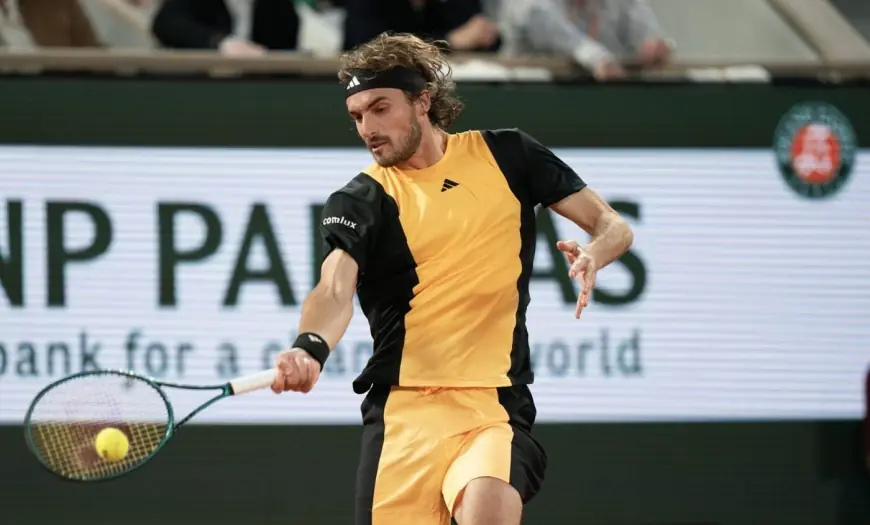
For opponents, tournament watchers and stefanos tsitsipas himself, the start of his Dubai title defense alters immediate expectations: rivals must account for a player who says he feels closer to full health and able to compete on consecutive days, while fans and ranking observers face the possibility of rapid momentum swings. The tournament draw now carries added weight because a recovered contender can reshape match-by-match forecasts.
Impact-first: What Stefanos Tsitsipas' return means for rivals and the draw
Here's the part that matters: a player who reports fewer physical limits changes how others approach him tactically. Opponents who might have expected an easier opening round will confront someone who, on outdoor hardcourts, is judged to have a slight edge. The immediate ripple affects practice plans, warm-up choices and the psychological balance of a first-round clash.
What’s easy to miss is that the regained ability to play multiple matches without back discomfort is not just a fitness note — it alters recovery strategies through a tournament week and raises the value of early-round wins for anyone in his quarter.
- Tsitsipas is beginning a title defense in Dubai while conveying renewed physical comfort and readiness to play consecutive matches.
- His opening opponent is Ugo Humbert; their head-to-head suggests this will be a significant challenge.
- Predictions favor Tsitsipas narrowly on outdoor hardcourts where conditions are said to favor him slightly; the same matchup indoors would tilt toward Humbert.
- Other highlighted Day 2 matchups include Daniil Medvedev vs Valentin Royer and Jakub Mensik vs Hubert Hurkacz, analyzed separately.
Match snapshot: Tsitsipas vs Ugo Humbert and the day’s predictions
The projected picture for the opening match frames Tsitsipas as a narrow favorite on an outdoor hardcourt primarily because his forehand is expected to be a match-defining weapon. Head-to-head history is noted as presenting a real challenge for him, but tournament comfort and the outdoor conditions are factors that push the forecast in his direction.
The analysis in preview notes a conditional split: if the match were indoors, Humbert would be favored; outdoors, Tsitsipas holds the slight edge. Predictive commentary emphasizes fine margins — serving, return breaks and forehand control — rather than a one-sided outcome.
The real question now is whether the physical improvements that stefanos tsitsipas has described will translate into the kind of aggressive court positioning and consistency across multiple matches that a title defense requires. Observers should treat early results as signals, not definitive proof of form.
Micro timeline: recent form and context
- Tsitsipas is entering Dubai as the defending champion.
- He described recent weeks as a period where he felt able to compete on consecutive days and without back discomfort.
- He also acknowledged that while he feels wiser and more at ease, he may still be some way from his absolute best and could struggle to defend ranking points.
Small tactical note for followers: a narrow pre-match preference for Tsitsipas on outdoor courts highlights the importance of his forehand and the match tempo. If Humbert succeeds in forcing low-margin exchanges or accelerating points indoors, the balance would shift quickly.
The article’s day preview also points to other ties of interest — Daniil Medvedev vs Valentin Royer and Jakub Mensik vs Hubert Hurkacz — which are handled separately in detailed match-by-match analysis.
The bigger signal here is that this Dubai week will be as much a test of sustained physical resilience as of shotmaking; players who can string together clean days will gain outsized advantage. Expect early-round outcomes to be read partly as fitness checks and partly as tactical matchups.
If you’re wondering why this keeps coming up: defending a title amplifies both pressure and opportunity. For Tsitsipas, the immediate impact is on draw dynamics and how opponents calibrate their openings.
The real test will be manifest in match play rather than forecasts — initial results will quickly clarify which narratives hold and which need revising.