







Jamie Foxx and the BAFTAs Fallout: How an Unedited Slur and a Cut Speech Force Rewrites on Tape-Delay Editing

jamie foxx appears here as a search-term anchor while the real consequence is plain: a high-profile awards broadcast left an audible racial slur on air and simultaneously cut a politically charged line from a winner’s speech, prompting an apology and immediate scrutiny of tape-delay editing, post-show availability, and how hosts and organisers handle involuntary behaviour in front of cameras.
What broadcasters and awards bodies may change next — Jamie Foxx
Here’s the part that matters: decisions made in the control room and by ceremony organisers now look likely to face closer public and internal review. The broadcast kept an audible racial slur shouted by a guest with Tourette’s syndrome during a two-hour-delayed airing, while a separate acceptance speech line that invoked "free Palestine" was removed. Those twin moves—one criticized as an editing failure, the other framed as time-driven pruning—have highlighted inconsistent thresholds for on-air removal and raised questions about how winners’ full remarks will be preserved and distributed going forward.
What happened on stage and on the tape
John Davidson, whose life inspired the film I Swear, shouted the N-word while Sinners stars Michael B Jordan and Delroy Lindo were presenting the first prize at the ceremony. The moment remained in the broadcaster’s tape-delayed transmission and was later removed from the on-demand version after an apology.
Host Alan Cumming had opened the event with a monologue during which Davidson’s involuntary ticking was already noticeable; the audience had been informed of his condition before the show. It was only after the slur that Cumming publicly addressed the matter from the stage, explaining that strong language can be part of how Tourette’s syndrome shows up for some people. Davidson appeared to remove himself from the theatre after the incident.
Edits elsewhere in the broadcast and the explanation offered
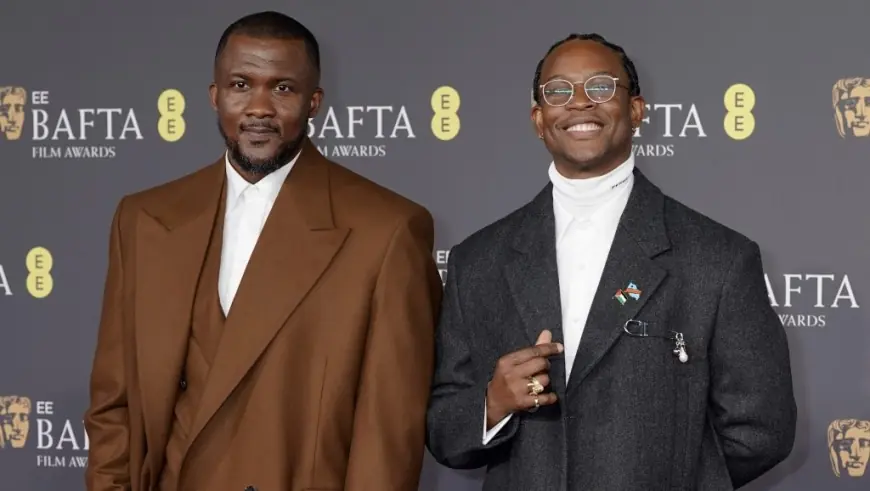
The filmmakers Wale Davies and Akinola Davies Jr. won the award for Outstanding British Debut. In his closing remarks, Akinola Davies Jr. dedicated the award to multiple migrant and displaced groups and concluded with the words "free Palestine. " That portion of the speech was removed from the broadcast edit; the televised cut instead showed him thanking his family and his brother Wale.
The broadcaster apologised for not editing out the slur prior to broadcast and said the offending audio would be removed from the online version. The broadcaster also explained that the live event runs longer than the on-air slot and that reductions were made across the programme to fit time—winners’ speeches were said to be available on the awards organisation’s channel.
Reactions, context and voices from inside the night
Conservative Party leader Kemi Badenoch called the broadcaster’s failure to bleep the slur "a horrible mistake, " saying an apology was important and that an explanation was needed for why it wasn't bleeped. Delroy Lindo said he and Michael B Jordan "did what we had to do" while presenting, but he wished someone from the awards body had spoken to them afterward.
John Davidson, a Tourette’s campaigner from Galashiels in Scotland who was made an MBE in 2019, said he was deeply mortified if anyone felt his involuntary tics were intentional or carried meaning, and that he has spent his life supporting and empowering the Tourette's community. Production designer Hannah Beachler posted on social media that the situation "happened three times that night, " adding that one instance was directed at her on the way to dinner after the show.
Other ceremony outcomes noted on the night: Robert Aramayo, the star of I Swear, won the rising-star prize and also won lead actor in a category where he had not been seen as the front-runner ahead of names like Timothée Chalamet and Leonardo DiCaprio. Wunmi Mosaku won for Best Supporting Actress. Ryan Coogler won Best Original Screenplay and used his speech to speak about community and what matters to him. A dinner hosted by the awards body brought nominees and guests together the same evening, and an after-party hosted by magazines saw Michael B Jordan attend briefly as a listed host while Delroy Lindo was in good spirits and chatted with colleagues.
Key takeaways
- Live-to-tape edits can produce asymmetrical outcomes: an audible slur remained while politically charged lines were cut for time.
- Organisers and broadcasters cited both involuntary behaviour linked to Tourette’s and time constraints as explanations, creating mixed public messaging.
- At least one attendee with Tourette’s has a long record of campaigning and an official honour, and stated deep mortification over perceived intent.
- Several industry figures—presenters, winners and designers—reacted publicly or on social media, making the incident the dominant topic of the night.
- Availability of full speeches on the awards organisation’s own channels was offered as mitigation for cuts made on air.
The real question now is whether broadcasters will tighten procedures for delayed broadcasts and whether awards bodies will revise how they brief attendees and presenters about involuntary conditions in advance. It’s easy to overlook, but the bigger signal here is that editing decisions—whether driven by time or caution—are now being judged against fairness, accessibility and transparency.
What’s clear from the available information: the slur was audible in the broadcast; the broadcaster apologised and removed the ceremony from its on-demand service before restoring an edited version; the acceptance-speech line invoking "free Palestine" was excised for the televised edit; and multiple participants and guests reacted in the hours after the event. Prince Willi is mentioned in the record but is unclear in the provided context.
Writer’s aside: It’s worth noting that handling involuntary medical symptoms in a live or tape-delayed setting requires careful, consistent protocols—both to protect audiences from offensive language and to avoid alienating people with disabilities.
If you’re wondering why this keeps coming up, it’s because the twin choices—to leave an audible slur on the tape and to cut a political line—send mixed signals about editorial priorities at high-profile events.