





















Widespread blockades and arson spread after Tapalpa operation that killed 'El Mencho'

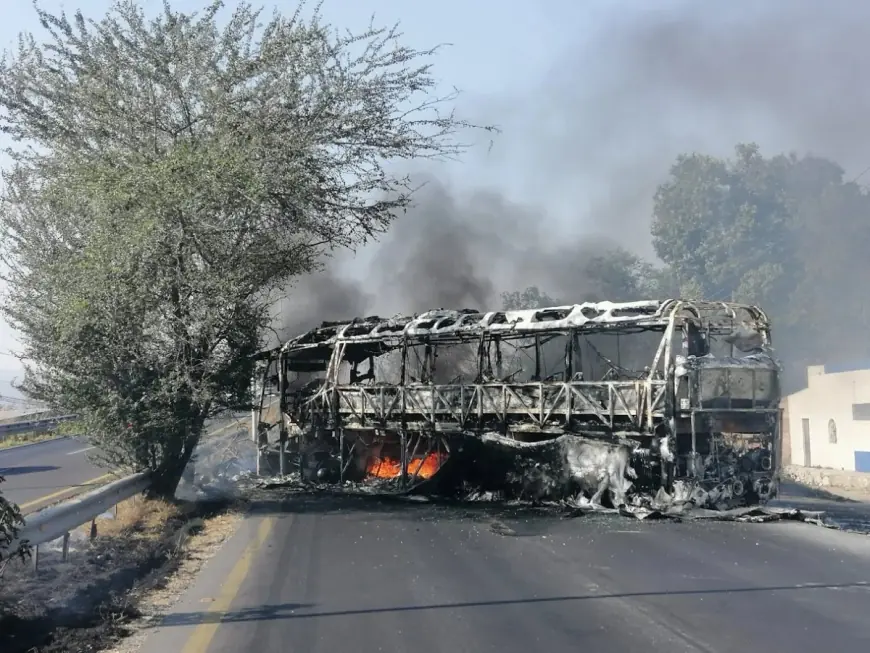
The federal security operation in tapalpa that led to the death of Nemesio Oseguera Cervantes, alias "El Mencho, " set off a wave of blockades, arson and attacks across Mexico, forcing transport suspensions, bank and retail closures and a heavy security response. The scope of the unrest—counted in dozens of municipalities and spanning what authorities describe as 21 states—has prompted coordinated deployments by the Ejército Mexicano, Guardia Nacional and state forces.
Tapalpa operation led by Ejército Mexicano
Federal forces carried out an operation in Tapalpa that culminated in the death of Nemesio Oseguera Cervantes, the leader of the Cártel Jalisco Nueva Generación. The action, led by the Ejército Mexicano, is described by state officials as the flashpoint for confrontations, roadblocks and deliberate burnings of vehicles and businesses in and beyond Jalisco.
Jalisco and Guadalajara: gasolineras and public transport halted
In Jalisco the governor, Pablo Lemus, decreed a code red and installed a permanent mesa de seguridad with authorities at the three levels of government. Confrontations and retaliatory arson were reported across the Guadalajara metropolitan area and other municipalities, with specific attacks recorded at a gas station on Calzada Independencia and Periférico, and vehicle burnings at that intersection and at locations including the road to Zacoalco de Torres, Avenida Lázaro Cárdenas near the central camionera, Periférico and Tabachines, Alcalde and Periférico, Nextipac and the carretera a Nogales, Tesistán and Colotlán, fraccionamiento Cañadas, La Venta del Astillero, Felipe Ruvalcaba and Volcán, Guadalupe and El Colli, and El Bajío close to the Chivas stadium. Public transport in the Guadalajara area was suspended from 9: 00 until authorities authorized its return.
Banco del Bienestar, Femsa and other businesses attacked
Economic disruption intensified as commerce became a target. In Jalisco 20 sucursales of Banco del Bienestar were set ablaze. Fomento Económico Mexicano, operator of Oxxo stores and service stations, logged more than 200 incidents across its network and activated security protocols; no customers were injured and affected employees were being attended. Retail chains and pharmacies closed in multiple states—stores such as Bodega Aurrera, Farmacias Similares and Coppel suspended operations in parts of Michoacán—and several banking institutions, including BBVA, Santander, Scotiabank and HSBC, halted activity in Jalisco and neighboring states like Nayarit, Colima and Michoacán.
Michoacán and Guanajuato: blockades, municipal impacts and official responses
Michoacán reported blockades with burned vehicles in at least 13 municipalities; the state Secretaría de Seguridad Pública noted ongoing operational actions to restore viability. Governor Alfredo Ramírez Bedolla ordered an immediate mesa de seguridad, instructed the shielding of Morelia and the borders with Jalisco, Guanajuato and Colima, and said a coordinated deployment would work to free obstructions and protect the population. In Guanajuato blockades occurred in Moroleón, Irapuato, Silao, León and Purísima del Rincón; authorities said no people had been reported injured but establishments suffered collateral damage. The Secretaría de Seguridad y Paz dispatched an operation coordinated by the Ejército Mexicano, the Guardia Nacional and municipal police.
Wider geography: 21 states, transport advisories and emergency probes
The unrest reached an expansive footprint. Officials and media detail incidents in 21 states, with blockades, burned units and attacks documented in Tamaulipas, Nayarit, Michoacán, Guanajuato, Baja California, Querétaro, Puebla, Guerrero, Aguascalientes, Colima, Quintana Roo and others such as Morelos, Estado de México, Chiapas and Sinaloa. In Tamaulipas the main highways in Reynosa were blocked starting at 8: 00. Authorities in Sinaloa issued a maximum alert and advised the public to avoid trips to southern regions because of roadblocks with Nayarit. In Quintana Roo an attack struck two vehicles in Playa del Carmen; the state governor is maintaining a permanent session and said the Cancún International Airport remained operating normally. In Acapulco there were violent incidents that state authorities said were controlled; Governor Evelyn Salgado Pineda affirmed security forces maintain a full deployment, and the Fiscalía General del Estado de Guerrero opened an investigation after gunfire struck the façade of its offices in Colonia Emiliano Zapata in Acapulco de Juárez.
Some official communications in the unfolding response are incomplete or truncated in the available material: the C5 of Michoacán issued a warning asking people to take precautions, but the full list of advisories is unclear in the provided context; likewise, references to additional shielding measures in coordination with the federal government and the Secretaría de la Defensa Nacional are present but end midphrase and are unclear in the provided context.
Beyond public safety steps, the immediate economic effect was measurable: the peso depreciated 0. 45% on the Monday after the operation, moving from 17. 13 to 17. 21 pesos per dollar. Airlines and major bus lines suspended services in Jalisco on Sunday as a preventive measure. Business organizations, including the Consejo Coordinador Empresarial, condemned the torching of establishments and strategic roads and urged authorities to guarantee security.
What makes this notable is the speed with which a single federal operation in Tapalpa triggered coordinated criminal responses across urban and rural corridors, producing synchronized transport stoppages, targeted attacks on banks and retail outlets and a national security mobilization. Authorities at state and federal levels have repeatedly urged citizens to stay calm and to avoid leaving their homes while operations continue.