






















Panama to Occupy Canal Ports After Court Scraps Panama Ports Company Concession

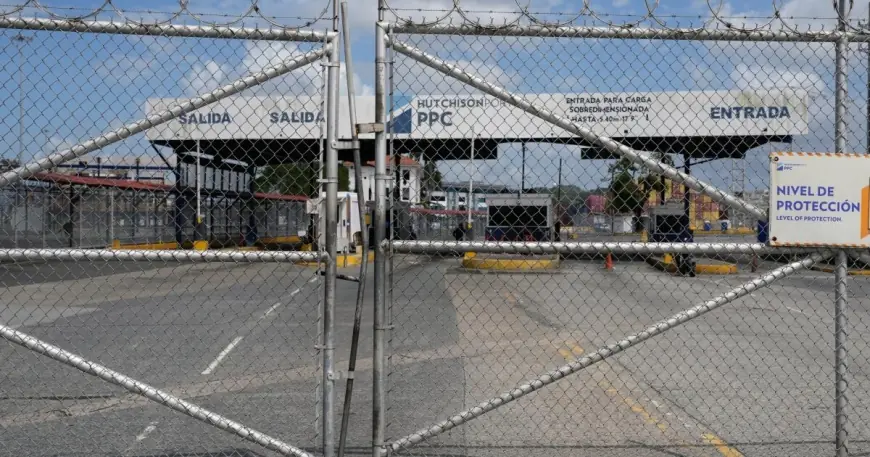
The Panamanian government has issued a decree ordering the occupation of two ports at the entrances to the Panama Canal after a final Supreme Court ruling that declared the operating concession held by CK Hutchison unconstitutional. The move directly affects panama ports company operations and authorizes immediate state control of the terminals while the government seeks to maintain continuity and jobs.
Panama Ports Company concession overturned
In January the Supreme Court struck down the law that approved the concession contract for Panama Ports Company, a CK Hutchison subsidiary, and also invalidated a 2021 extension. The ruling removed the legal basis for the company’s operation of the terminals, which it had run since the state awarded the concession in 1997.
Scope of the occupation order
The decree empowers the Panama Maritime Authority to occupy the Balboa and Cristóbal terminals at the Pacific and Atlantic entrances to the canal for what the government described as urgent social interest. The occupation covers movable property located within and outside the terminals, explicitly including cranes, vehicles, computer equipment and software.
Temporary administration and legal fallout
The government announced steps intended to guarantee continuity of port operations and job stability, naming APM Terminals to temporarily administer the terminals while a new contract is awarded. CK Hutchison has initiated arbitration under the rules of the International Chamber of Commerce; the company has also signaled it may sue the temporary administrator if it operates the concession. The potential timing and impact of the arbitration and any lawsuits are unclear at this time.
The dispute has broader geopolitical resonance: the ports saga became entwined in a rivalry between the United States and China after high-level accusations that China was exerting undue influence over the canal. CK Hutchison had been preparing to sell the two ports to a consortium that included a U. S. investment firm, but that transaction was halted following intervention by the Chinese government.
What to watch next
Key near-term indicators will be the length of the temporary administration and whether arbitration produces binding rulings that constrain Panama’s ability to re-award the concession. If the arbitration proceeds, legal challenges could delay a permanent contract award and create uncertainty for operators and shippers. If the temporary administrator maintains smooth operations, the government may proceed with a new procurement process; if not, disruptions could follow.
CK Hutchison has said it seeks an agreement with the government to continue operating, while the temporary administrator has stated it is not a party to the ongoing legal proceedings. For now, panama ports company as an operating entity is in legal limbo pending the outcome of arbitration and any subsequent contractual steps by the Panamanian government.
Observers should also watch for any formal measures that clarify the treatment of seized movable assets and any regulatory steps toward a new concession. The government’s stated priority is continuity and employment protection, but the path to a durable operating arrangement depends on how quickly legal disputes are resolved and whether a new contract process is completed.