
























Tsa Precheck disruption hits Chicago travelers first, forcing general lines as DHS briefly suspends then restores programs

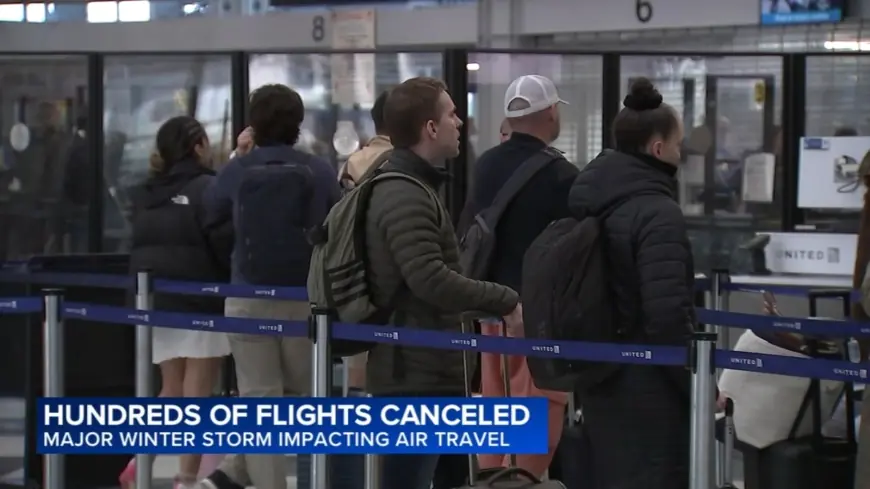
The immediate impact landed squarely on airline passengers and airport staff in Chicago: a Department of Homeland Security move to suspend Tsa Precheck and Global Entry sent millions of trusted travelers into standard security lines, only for the programs to be restored hours later. For frequent flyers who budget minutes and connections tightly, the interruption—combined with a major nor'easter and large-scale cancellations—created a painful, costly ripple.
Who felt the hit: travelers, airport employees and millions enrolled in Tsa Precheck
Long lines and confusion were reported at Chicago airports after Tsa Precheck and Global Entry were closed, forcing passengers who normally use expedited lanes into general security. About 20 million people hold Tsa Precheck and 12 million hold Global Entry, magnifying the scale of the disruption. An airport employee described the scene as chaotic; travelers expressed frustration and altered plans to try to cope.
What DHS announced and how the rollback unfolded
The Department of Homeland Security announced a suspension of Tsa Precheck and Global Entry late Saturday, set to take effect at 5 a. m. local time Sunday. That decision was tied to the partial government shutdown affecting the department. After operations began under that plan, the programs were reopened hours later: by 9: 30 a. m. Chicago time, officials indicated Tsa Precheck remained operational with no change for the traveling public. Officials added that if staffing constraints become a problem, they will "evaluate on a case-by-case basis and adjust operations accordingly. " Two Department of Homeland Security officials stated there were no changes to Global Entry.
Chicago airports and storm-related flight impacts
The suspension announcement coincided with a major nor'easter that produced widespread cancellations and delays. As of 5: 30 p. m. Sunday, O'Hare had 133 cancellations with average delays of 16 minutes, while Midway had 23 cancellations with average delays of less than 15 minutes. Observers noted travelers getting through checkpoints without issue as early as 6 a. m., even though the suspension had been scheduled to start an hour earlier. The storm was expected to dump at least a foot of snow in parts of the Northeast and prompted the first blizzard warning for New York City in nearly a decade; roughly 40 million people were under a blizzard warning and another 14 million faced winter storm warnings.
Broader shutdown fallout, politics and staffing signals
The partial government shutdown took effect on Feb. 14 after lawmakers failed to reach a deal on DHS funding amid growing calls to change immigration operations. Those calls were driven in part by fallout from the deadly shootings of Renee Good and Alex Pretti in Minneapolis by federal immigration agents, which opponents used to press Congress to reverse the shutdown. Homeland Security Secretary Kristi Noem warned that shutdowns have serious real-world consequences and said that TSA and CBP would prioritize the general traveling population while suspending courtesy and special-privilege escorts to allow officers to focus on core missions. Courtesy escorts for members of Congress were suspended to allow officers to focus on securing the skies. Along with the Transportation Security Administration, other agencies such as FEMA and the Coast Guard were also affected by the shutdown. So far, TSA workers have missed one paycheck; air traffic controllers were not impacted. This disruption follows a 43-day shutdown that ended in November, the longest in U. S. history.
Traveler experiences and expert reaction
Frequent traveler Jason Hahn said he arrived 45 minutes earlier than usual at O'Hare because he travels every week and adjusted his schedule anticipating long lines. Hahn said he believed staffing levels were probably the same and expressed a sense that the administration was punishing travelers. One traveler noted that not having Global Entry can be the difference between two hours. Travel expert Peter Greenberg criticized the move as nonsensical given the enrollment numbers and characterized it as more of a political act that creates longer lines without solving the underlying dispute; he also framed the suspension as a tit-for-tat message from the department.
It's easy to overlook, but the combined pressure of a weather emergency and an internal staffing dispute amplified routine airport friction into system-wide delays.
Short Q&A for travelers
- What happened to Tsa Precheck and Global Entry? Homeland Security announced a suspension tied to the partial shutdown, set to start at 5 a. m. local time Sunday; later that morning Tsa Precheck remained operational with no change and Global Entry had no changes.
- How were Chicago flyers affected? Long lines and confusion forced PreCheck users into general security; O'Hare recorded 133 cancellations and Midway 23 cancellations as of 5: 30 p. m. Sunday, with average delays around 16 minutes and under 15 minutes respectively.
- What could confirm further changes? Officials noted they will evaluate staffing "on a case-by-case basis and adjust operations accordingly, " so announcements about staffing or additional operational adjustments would be the next clear signal that procedures are changing.
Here’s the part that matters: even a short pause in expedited screening affects far more people than the programs' nominal size suggests, especially when weather and cancellations are already pressuring schedules. The real question now is whether this will remain an isolated, brief interruption or a recurring lever in the broader funding impasse.