























Mencho’s Fall and Immediate Impact: Who in Jalisco and Beyond Feels the Shock of the Operation

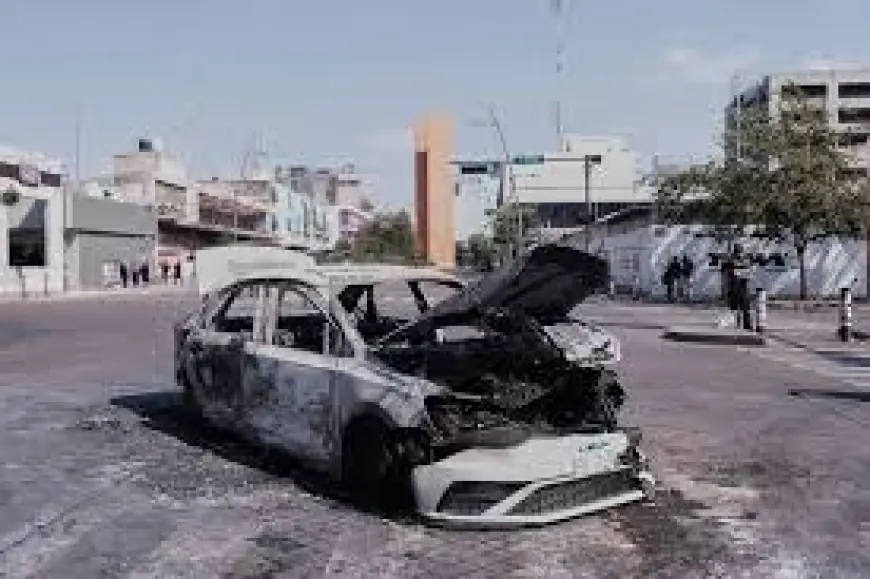
The death of mencho changes the security equation for communities and institutions closest to the Cartel Jalisco Nueva Generación’s footprint. Local residents, federal troops stationed in the region, and neighboring states saw direct consequences within hours: armed clashes, detainees, and a spike in violent incidents that forced reinforcements and emergency medical transfers to Mexico City.
Who is affected first and how the region reacted after Mencho’s death
Residents of Jalisco—rural and urban alike—were the immediate face of the impact. Federal and state security forces had to redirect resources after a wave of violence that included narcobloqueos, vehicle burnings, shootouts and attacks on convenience stores. Security operations were reinforced in Jalisco and extended to neighboring states in response to this unrest.
Operational facts embedded in the outcome
Nemesio Oseguera Cervantes, the 59‑year‑old cofounder of the Cartel Jalisco Nueva Generación (CJNG), died while being transferred to Mexico City after an army‑led operation located him in the mountainous municipality of Tapalpa, about 130 kilometers south of Guadalajara. The military said a Special Forces command carried out the operation with support from Air Force aircraft and the National Guard’s Immediate Reaction Special Force.
During the engagement, soldiers came under attack and repelled the aggression. The Defense noted that four alleged CJNG members died at the scene; three others were severely wounded and later died during aerial transfer to Mexico City. Nemesio Oseguera Cervantes was among the wounded who had been captured and did not survive the transfer. Two additional CJNG members were detained. The Army also had three service members seriously wounded; they were moved to hospitals in Mexico City for urgent care.
Weapons, mobility and the network that enabled long evasion
The operation encountered heavily armed suspects in armored vehicles and with rocket launchers capable of downing aircraft, the Defense said. For more than a decade, Oseguera Cervantes relied on a survival system built on constant mobility, strategic refuges and information networks that allowed him to evade capture repeatedly; security and military circles described him as a capo “a salto de mata. ” Federal forces had reportedly located him on more than 20 occasions prior to this operation.
Cross‑border cooperation and questions about identification
Authorities emphasized that the operation included complementary intelligence support from the United States within a framework of bilateral coordination. The White House spokesperson Karoline Leavitt confirmed U. S. intelligence assistance was provided to help the Mexican operation. The Defense also noted that among those who later died was named Rubén 'N' (a) Mencho, and that forensic authorities will handle identification activities; details remain subject to official forensic procedures.
- US bounty on the cartel leader: US$15 million; Mexico’s reward: US$1, 75 million—the highest in its program.
- The CJNG was previously designated a terrorist organization by the Trump administration.
- Casualties on both sides: four alleged CJNG dead on site; three wounded who died in air transfer; three military personnel seriously wounded and hospitalized.
- Two CJNG members detained; armored vehicles and heavy weaponry seized during the operation.
- Immediate security repercussions: more than 60 violent incidents followed, prompting reinforced federal and state operations.
Here’s the part that matters: the chain reaction from the operation—medical evacuations to Mexico City, detained suspects, and an uptick in attacks—frames how authorities will manage stabilization in the short term.
What’s easy to miss is how this single operation exposed the interplay between long‑standing local protection networks and modern intelligence cooperation. The death of a figure who had evaded capture for years does not erase those networks overnight.
Short micro‑timeline embedded
- For more than a decade: Oseguera Cervantes evaded capture while building mobility and refuge networks.
- He was located in Tapalpa, Jalisco—a mountainous area roughly 130 km south of Guadalajara—and was engaged by a Special Forces command supported by air assets and the National Guard immediate reaction unit.
- After the engagement: four alleged CJNG members died on site; three wounded died en route to Mexico City, including the captured leader; two others were detained; military casualties were evacuated to Mexico City hospitals.
The real question now is how long it will take to dismantle the operational nodes that allowed sustained mobility and to prevent the spread of retaliatory violence into Guanajuato and Michoacán. Unofficial sources flagged at least one sensitive incident: an attack on a National Guard base in Lagos de Moreno during the spike of unrest.
Final note: details about forensic identification and some incident reports remain in official hands and unclear in the provided context; follow‑up announcements from authorities will be needed to confirm outstanding questions.