








Cavaliers Vs Thunder: Thunder Rally After Early Blitz Hands OKC a 121-113 Win

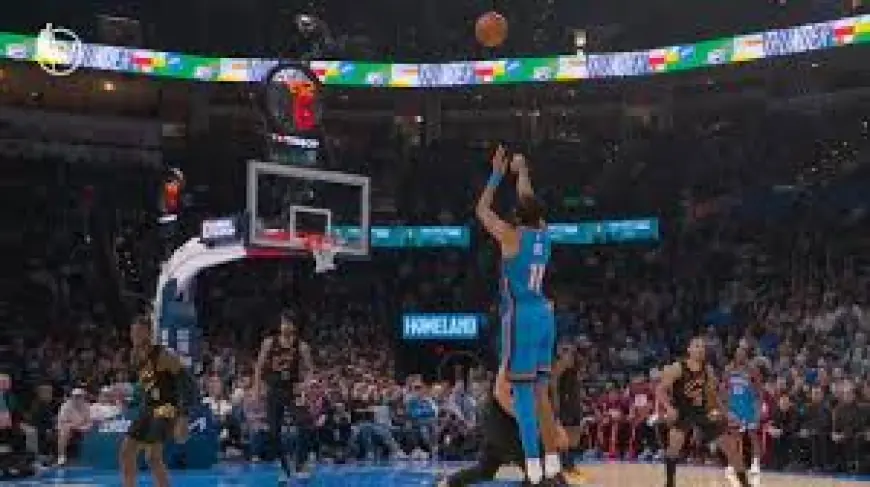
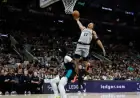
The Oklahoma City Thunder defeated the Cleveland Cavaliers 121-113 on Feb. 22, 2026, a game decided by a catastrophic opening run that Cleveland could not fully erase. The cavaliers vs thunder matchup swung in the first six minutes when Cleveland committed 10 turnovers that yielded 17 points and opened a 20-plus point deficit, effectively dooming Cleveland’s winning streak.
Cavaliers Vs Thunder: Final Score at Paycom Center
The game, played at the Paycom Center with a scheduled 1 p. m. ET tipoff, ended 121-113 in favor of Oklahoma City. The result dropped a clear marker on a matchup billed as a potential NBA Finals preview: the Thunder improved a season mark that stands at 43-14, while Cleveland entered at 36-21. The loss ended Cleveland’s run of wins and underscored how quickly momentum can shift in a high-stakes matchup.
Early Turnovers and Oklahoma City's 17 Points off Turnovers
Cleveland’s problems began immediately. The Cavs turned the ball over 10 times in the first six minutes, a sequence that produced 17 points for the Thunder and created a lead that topped 20 points. That opening burst set the tone; when a defense like Oklahoma City’s senses hesitation it capitalizes, and those early miscues forced Cleveland into a comeback mode for the remainder of the game. The turnovers eventually subsided as the offense found its footing, but the early damage proved decisive.
Sam Merrill and Cleveland's Comeback Push
Sam Merrill emerged as Cleveland’s most reliable offensive spark, finishing with 20 points on 6-of-10 three-point shooting. Merrill hit consecutive deep shots early in the first half and repeatedly gave the Cavaliers life as they chipped away at the deficit. The team’s offense became more purposeful and decisive after the frantic opening, allowing them to make the contest competitive late, but that recovery could not erase the initial margin.
Isaiah Hartenstein's Screens and Cleveland's Navigation Issues
Screen navigation remained an unresolved problem for Cleveland. Isaiah Hartenstein’s wide screens gave the Thunder a consistent edge, and Donovan Mitchell and James Harden were frequently caught or slowed by those actions, leading to open three-point jumpers for Oklahoma City. Jarrett Allen and Evan Mobley were also punished for playing below the level of screens. The Thunder finished 21-of-41 (51%) from deep, a shooting rate that compounded Cleveland’s early turnover damage and made a comeback much tougher.
SportsLine Model, Odds, Injuries and Second-Unit Impact
Pregame projections had underlined the intrigue. Cleveland was listed as a 4. 5-point favorite with an over/under of 226. 5; this was only the second time Oklahoma City was an underdog this season, and it had failed to cover the first such instance. The SportsLine model simulated the matchup 10, 000 times and leaned Over on the point total while indicating one side of the spread hit better than 50% of simulations. That model had simulated every NBA game 10, 000 times, exited the All-Star break on a 38-17 run on top-rated spread picks, and has returned well over $10, 000 in betting profit for $100 players on its top-rated NBA picks over the past eight-plus seasons.
Injuries shaped the Thunder’s availability: Shai Gilgeous-Alexander remained out with an abdomen issue and Jalen Williams was sidelined by a hamstring concern. On the Cleveland bench, Dennis Schroder and Darius Ellis provided a lift; the pair’s scrappy style altered the game’s dynamic when they were on the floor. Schroder has been tasked with operating in the pick-and-roll when Mitchell or Harden are off the court, and Ellis—though 1-of-4 from deep in this game—cut into the lane for a handful of easy buckets and offered physicality the second unit needed.
What makes this notable is how a short burst of turnovers and a mismatch on screens combined to produce a durable advantage: a 10-turnover stretch created a direct scoring swing of 17 points and a margin large enough that even a strong perimeter shooting night from Sam Merrill and renewed bench energy could not fully overcome it.