
























Olympic Medal Count 2026: Conflicting Tallies, Norway’s Historic Run and Team USA Highlights

The latest coverage of the Olympic Medal Count 2026 presents two different tallies of podium success, underscoring Norway’s dominance and a strong showing from Team USA while also raising questions about which figures are definitive. The divergent numbers matter because they change national rankings, historic records and how this Winter Games will be remembered.
Olympic Medal Count 2026: Diverging Tallies
One account lists Norway with 18 golds and 41 total medals, and places the United States second with 12 golds and 33 total medals. That same account declares Norway’s 18 golds the most by any country in Winter Olympics history. Another tally shows Norway leading with 15 golds and 32 total medals, while listing the host nation, Italy, with 25 total medals, nine of which are gold. In that second tally Team USA is assigned 24 total medals and seven golds, in third place for total medals.
Norway’s dominance and national context
Both tallies agree that Norway is at the top of the standings in the provided coverage, but the precise totals differ. Norway’s reported achievements include a small national population of about 5. 7 million and a concentration of success in cross-country skiing, biathlon and ski jumping. The coverage also notes that Norway has topped the Winter Olympics gold table at every Games since 2014, with a tie with Germany in 2018.
Nation-level context offered in the coverage highlights Norway’s wealth per capita and cultural emphasis on sports and exercise. The Norwegian approach to youth sport—where scores are not recorded in some children’s team matches under age 12 and fun is prioritized over early specialization—is presented as a factor in producing fewer dropouts and more long-term athlete development. A former Norwegian Olympian commented in 2018 that Norway avoids certain high-cost sliding sports and favors collective effort; a Norwegian sports professor summarized the country’s formula as collaboration, communication and care.
Team USA's performance and individual golds
The coverage names several American breakthroughs and milestones. One tally attributes to Team USA a total of 24 medals with seven golds and places the team third in total medals. On Feb. 8 Breezy Johnson won gold in the women’s downhill, becoming only the second American woman to win that event; it was her first Olympic medal and the first gold for Team USA at this year’s Games, and she said the moment did not yet feel real. The same day’s figure skating team event featured Ilia Malinin—nicknamed the Quad God—whose performance helped secure gold for the team portion.
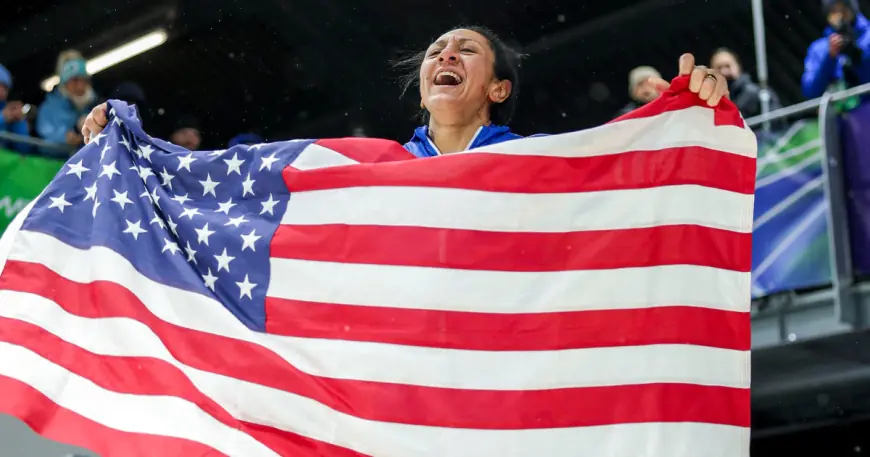
On Feb. 11 Elizabeth Lemley, age 20, won gold in women’s moguls in her Olympic debut, with teammate Jaelin Kauf taking silver. Speedskater Jordan Stolz set an Olympic record to win gold in the men’s 1, 000 meters and then won a second gold later, again setting an Olympic record.
Small countries punching above weight
The provided coverage highlights smaller nations that exceeded expectations. The Netherlands finished with 10 golds—matching host nation Italy—despite a relatively small population of around 18 million. Great Britain recorded its best-ever Winter Olympics medal haul with three golds, a silver and a bronze. Australia also reached its best Winter Games tally with three golds, two silver and a bronze. The coverage contrasts Norway’s population with much larger nations listed as outperformed, including the United States (342 million), China (1. 4 billion), Germany (84 million), Italy (59 million) and Canada (40 million).
Reconciling the numbers and what comes next
The presence of two different tallies in the provided coverage means medal totals and rankings can appear conflicting depending on which set of figures is referenced. Unclear in the provided context are the reasons for the numeric differences between tallies; details about timing, cutoffs or medal reclassifications are not present. Observers should treat the standings as developing and watch for an updated, consolidated count that resolves the discrepancies. In the meantime, the coverage leaves intact several uncontested narratives: Norway’s preeminence in winter-specific disciplines, Team USA’s notable individual gold-medal performances, and the impressive outings from smaller nations.
Image and schedule details were not provided in the coverage. The medal schedule and final tallies may be subject to change.