



















Quinn Hughes and Jack Hughes: What Team USA’s Olympic run means for fans and the Hughes hockey lineage

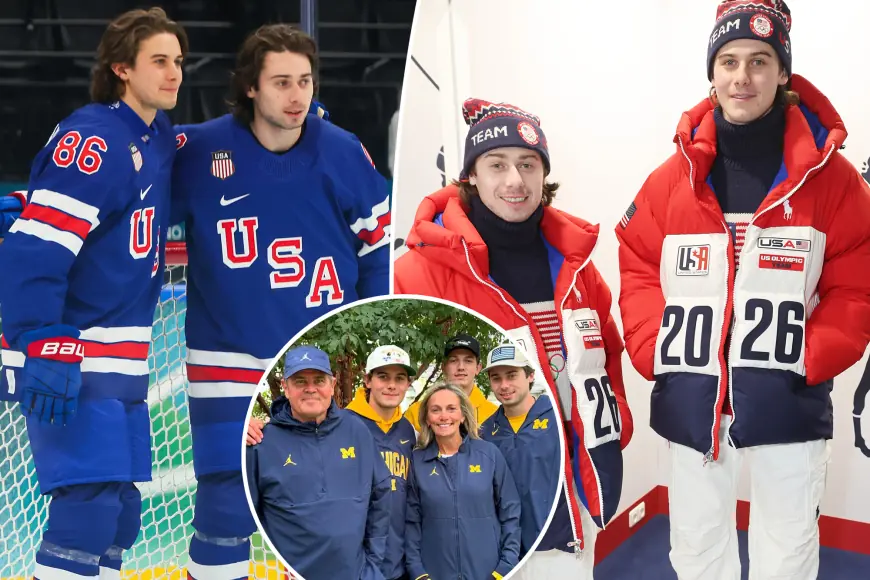
For U. S. hockey fans, the Hughes brothers’ presence at the 2026 Milan Cortina Winter Olympics has become the tournament’s emotional engine. The roster spot and comeback of quinn hughes, combined with Jack Hughes’ offensive burst, have pushed Team USA into medal contention and given supporters a clear identity to rally around — two brothers carrying family coaching roots onto the Olympic ice.
Why the Hughes story lands for Team USA followers
Here’s the part that matters: fans are not just watching two elite NHL players; they are watching a family narrative play out on the biggest stage. Jack and Quinn made their Olympic debut together for the U. S. men’s hockey team at the 2026 Milan Cortina Winter Olympics and are currently leading the Americans as one of the top teams in the tournament. That combination — on-ice production plus a household backstory — sharpens interest for viewers and raises expectation that the team can fight for a medal.
How the tournament has unfolded for the brothers
- Team USA advanced by defeating Latvia, Denmark, Germany and Sweden in the quarterfinals.
- Quinn hughes delivered the game-winning goal against Sweden in the quarterfinals on Wednesday, securing a semifinal berth and a shot at a medal.
- Jack helped push the Americans further with a late scoring burst in the semifinals: a ricochet off the end boards found him for a goal that helped make the score a five-goal lead in Team USA’s eventual 6-2 win over Slovakia in the semifinals on Friday night.
Roles, results and recent form — the on-ice picture
Jack has balanced shifting roles and rising output. He began the tournament on the fourth line with Brock Nelson and J. T. Miller before moving up to left wing on the third unit beside Dylan Larkin and Tage Thompson. That change came after a disappointing 4 Nations tournament, where he recorded one assist in four games and largely faded in an overly physical slate. Since arriving in Milan the 24-year-old has responded: through six games he has three goals and three assists and has earned more responsibility.
Coaching adjustments have been explicit: the Team USA head coach increased Jack’s ice time so he could impact games more, and Jack’s stick work and scoring in the semifinal illustrated that plan in action.
Family background and individual backstories
In the Hughes family, hockey is hereditary. Jack and Quinn are sons of Jim and Ellen Hughes, who are both hockey coaches; Ellen even helped the U. S. Women’s hockey team win gold. Jim and Ellen are also parents to Luke, who plays on the New Jersey Devils alongside Jack. Unlike his older brothers, Luke did not score a spot in the 2026 Winter Olympics.
The family’s development paths vary: the middle Hughes brother was picked first overall in the 2019 NHL Draft and currently plays for the New Jersey Devils; he primarily plays forward but also shifts to the wing at times, such as during the 4 Nations Face-Off tournament. Unlike his brothers Quinn and Luke, who both skated for the University of Michigan, that middle brother did not play college hockey and instead went directly to the NHL.
The context also includes an older brother who played college hockey at the University of Michigan from 2017 to 2019, was drafted seventh overall by the Vancouver Canucks in 2018 and finished out his season at Michigan before joining the NHL; that defenseman was traded to the Minnesota Wild this past season.
Injury comeback, personality quirks and locker-room reaction
Quinn was originally named to the Team USA roster last year but withdrew because of a lower-body/oblique injury; this year he returned and produced a defining moment with the quarterfinal winner against Sweden. He has a reputation for a blank, haunted-looking stare on the ice that inspired memes about him "seeing ghosts"; he addressed that wild theory in an interview earlier this week, explaining that he tends to be very zoned in and focused on what he needs to do, and that sometimes you hear funny stuff from the crowd while preparing to play.
Jack’s reaction after Quinn’s quarterfinal goal was an emphatic endorsement of his brother’s impact: he called the goal a massive moment and highlighted Quinn as one of their best players taking over and winning the game for the team. The brothers’ interplay — one delivering the decisive goal, the other driving consistent offense — has become a central storyline for supporters.
- Jack converted a ricochet for a key semifinal goal in a 6-2 win over Slovakia.
- Jack had three goals and three assists through six games in Milan.
- Quinn withdrew from last year’s roster with a lower-body/oblique injury and returned this year to score the quarterfinal winner vs Sweden.
- Family context: Jim and Ellen are both hockey coaches; Ellen helped the U. S. Women’s team win gold; Luke plays with Jack on the New Jersey Devils but did not make the 2026 Olympic roster.
It's easy to overlook, but the coaching pedigree in the family and the different development routes — college for some brothers, NHL entry for another — help explain how these players fit together on the ice and why they can peak in the same tournament.
The real question now is whether this sibling chemistry and the coaching adjustments that have given Jack more ice time will carry Team USA onto the podium. If the brothers continue to produce at this level, the team’s medal hopes will look increasingly realistic; if either form dips, the margin for error narrows.
Key takeaways:
- The Hughes brothers made their Olympic debut together in Milan Cortina and are central to Team USA’s deep run.
- Quinn overcame a last-year withdrawal for a lower-body/oblique injury to score the quarterfinal winner against Sweden.
- Jack’s move up the lineup produced a strong response: three goals and three assists through six games and a pivotal semifinal tally.
- The family’s coaching roots and split development paths (college vs direct-to-NHL) are a practical reason their styles complement each other.
The story remains unfolding: the brothers have pushed Team USA into the semifinals and into medal contention, and fans now have a clear narrative to follow as the tournament reaches its final rounds.