






















Bobsled Crash Shakes Milano Cortina 2026 as Four-Man Event Delayed and Safety Questions Spike

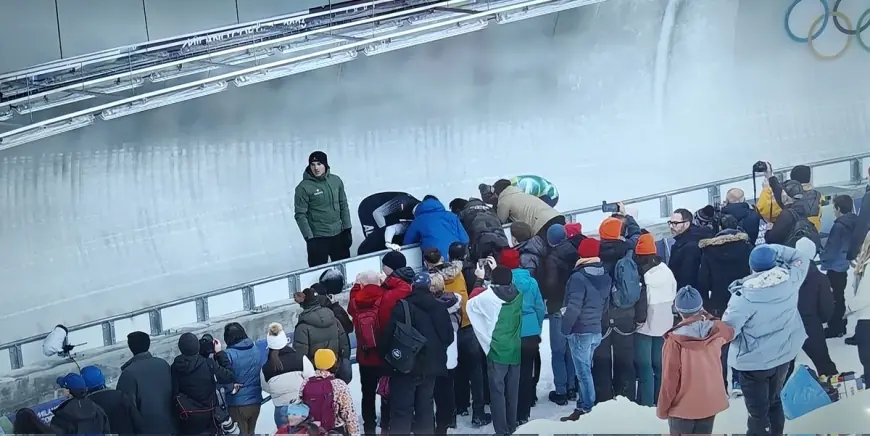
A frightening bobsled crash during the men’s four-man competition at the 2026 Winter Olympics sent Austrian pilot Jakob Mandlbauer to the hospital and forced a series of delays at the Cortina sliding venue, turning what should have been a straightforward medal session into a tense reminder of how quickly the sport can turn dangerous. Mandlbauer was conscious after the incident and later reported to be free of life-threatening injury, but he remained under medical observation as officials, athletes, and coaches weighed whether track conditions and course setup were contributing to an unusual cluster of incidents.
The crash occurred Saturday, February 21, 2026 ET, during the second run of the four-man event. Mandlbauer’s sled overturned in a high-speed section and slid hard along the ice, triggering an extended stoppage while medical staff treated him on site and prepared transport. His three teammates were able to walk away.
What happened on the track
Witnesses described the sled flipping and skidding for an extended distance after losing control, with officials quickly surrounding the overturned sled and the Austrian pilot. Mandlbauer was immobilized as a precaution and taken away for evaluation.
The race eventually resumed, but not before additional delays caused by other teams losing control and making contact with the walls. The pattern of multiple crashes in the same session fueled immediate concern among competitors, even as organizers emphasized that sliding sports inherently include risk and that stoppages were handled with safety-first protocols.
Why this crash hit differently
Crashes are not rare in bobsled, yet certain elements make this one stand out.
First, the timing: four-man is typically the fastest, heaviest, most punishing discipline. With a full crew and a sled that carries more mass, any loss of control tends to translate into more violent impact and more complicated injury risk.
Second, the clustering: when multiple sleds struggle in similar areas on the same day, athletes naturally ask whether the ice is unusually quick, whether a particular curve is catching runners in a way that punishes tiny steering errors, or whether ruts and grooves are forming that change how a sled behaves run to run.
Third, the visibility of the response: extended on-ice treatment shifts the emotional tone of an Olympic session. Even seasoned pilots feel it. A sport that thrives on fearless commitment suddenly becomes a medical scene playing out in real time.
Behind the headline: incentives, stakeholders, and what safety debates are really about
Context matters. Sliding tracks are engineered for speed, and Olympic competition rewards pilots who push the knife edge between maximum velocity and control. The incentive structure is unforgiving: a cautious run rarely wins medals. That pressure can drive more aggressive lines and higher-risk steering decisions, especially when medals are decided by hundredths of a second.
Stakeholders extend well beyond the crashed team.
Athletes want a track that is challenging but predictable, where risk comes from performance choices rather than surprises in the ice. Coaches and technicians want consistent conditions so they can tune runners and setups reliably. Organizers want an event that showcases the sport’s intensity without crossing into avoidable danger. National programs and insurers want to know that protocols are robust, because a single severe injury can reshape funding, participation, and recruitment.
The missing piece in any immediate crash conversation is causality. In the first hours after an incident, everyone has theories, but the reality often requires careful review of video, sled telemetry, ice maintenance logs, and athlete lines. A crash can be driven by a pilot mistake, a setup mismatch, a rut forming mid-session, a small bump at entry, or simply a fraction too much speed into the wrong angle.
Second-order effects already in motion
When a high-profile crash happens during an Olympic final, it changes behavior fast.
Pilots may choose slightly safer lines, sacrificing a bit of time to protect the sled. Crews may adjust push strategy to avoid a speed threshold that makes certain sections feel unstable. Officials may increase scraping or adjust ice treatment to reduce unpredictability. Those changes can subtly shift medal outcomes by favoring steadier pilots and more conservative setups.
It also changes the public conversation. Viewers who do not follow sliding sports closely often see one dramatic crash and question the entire discipline’s safety. That reputational shock can matter for future investment and athlete participation, particularly in countries where the sport already has a narrow pipeline.
What we still do not know
Key questions remain unresolved as the event continues:
-
The full medical detail on Mandlbauer’s injury status beyond the early reassurance that he avoided the worst outcomes
-
Whether officials identify a specific section that requires adjustments before future runs
-
Whether track conditions, ruts, or ice temperature swings played a measurable role in the session’s unusual number of incidents
-
Whether teams file formal safety complaints or request additional inspections before the next competition window
What happens next: realistic scenarios and triggers
-
Mandlbauer is discharged within days if imaging is clear and symptoms remain mild, with a longer rest period before any return to sliding.
-
Organizers implement minor track or ice-management tweaks if internal review shows a repeatable instability point in one curve or entry.
-
Teams adjust equipment and steering approach for the remaining runs, prioritizing finish-and-bank a clean time over maximum aggression.
-
A broader safety review follows after the Games if the incident cluster persists, focused on track design tolerance and ice consistency.
-
The sport experiences renewed scrutiny that accelerates investment in protective gear, crash testing, and sled control analytics, especially for four-man.
For now, the clearest update is that the Austrian pilot was transported for medical care, avoided catastrophic injury in initial assessments, and the event moved forward under heightened attention. The next decisive development will be the medical follow-up and any official determination about whether the day’s crashes were ordinary variance or a signal that conditions were drifting toward unacceptable risk.