
























What athletes and partners can learn from Antoinette Rijpma-de Jong’s surprise 1,500m Olympic gold

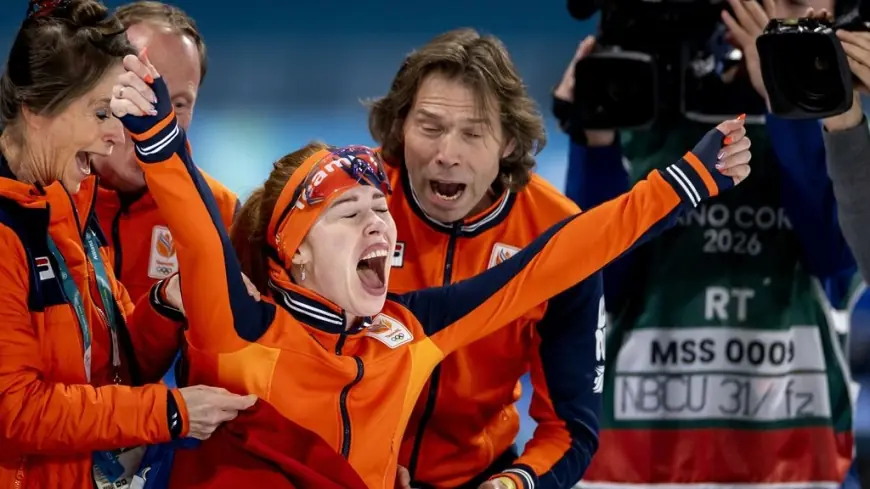
For teammates, coaches and anyone who supports elite athletes, the triumph of antoinette rijpma-de jong is a reminder that small logistical and emotional choices can shift outcomes. Her gold on the 1, 500 metre came after deliberate steps to build a private routine inside a chaotic Games environment — and those closest to her felt the immediate payoff.
Antoinette Rijpma-De Jong’s win: why the support circle mattered first
Her husband’s role during the Games changed the day-to-day dynamic: he rented an apartment close to the Olympic village for roughly two and a half weeks, slept there, baked pancakes, did laundry and created a place she could retreat to. The arrangement was explicitly meant to let her step out of the Olympic bubble when needed and then return refreshed.
Here’s the part that matters for anyone building a performance plan: consistent, practical support — not just pep talks — can be as decisive as training adjustments. What’s easy to miss is the way routine comforts and predictable off-ice time feed on-ice sharpness.
- Daily logistics: a nearby apartment gave her a guaranteed escape valve from the village.
- Practical care: cooked meals and laundry removed small stressors that accumulate quickly during multi-week events.
- Emotional steadiness: being able to visit and rest there during the day created a familiar pocket amid the Games.
- Experience applied: the choice followed lessons from three prior Olympic appearances where she sometimes felt locked inside the athlete bubble.
Race and competition details embedded in the context of that preparation
Rijpma-de Jong secured her first Olympic title in the 1, 500 metre with a time of 1: 54. 09, riding in the penultimate pair and finishing 0. 06 seconds faster than Ragne Wiklund, who posted 1: 54. 15. Valérie Maltais took bronze. The favoured competitor did not beat Rijpma-de Jong’s time in the final pair.
This gold is the athlete’s sixth Olympic medal and comes at her fourth Winter Games. Earlier in these Games she had already won silver in the team pursuit. Individually she previously won bronze on the 3, 000 metre and bronze on the 1, 500 metre at earlier editions of the Games, and she had collected silver and bronze medals in team pursuit events prior to this victory.
Femke Kok finished fifth in the field, skating 1: 54. 79 in the first pair; Marijke Groenewoud placed tenth with 1: 55. 16 after earlier disappointment in longer events but did win silver with the pursuit team and is scheduled for the mass start.
Rijpma-de Jong’s race strategy gave her the most advantage early: an opening lap of 25. 26 put her well ahead initially, and despite slower middle laps the final circuit was quicker than her nearest challenger’s. The result continued a national run of success in the Olympic 1, 500 metre: she followed previous domestic winners on the same podium line-up at past Games.
If you’re wondering why this keeps coming up in coverage, it’s because the gold filled a personal missing piece: after multiple Olympic medals of other colours, an individual Olympic gold had been the remaining major target.
Mini timeline: she rode to gold on Friday 20 February; earlier in these Games she earned silver in the team pursuit; her prior individual Olympic bronzes date from two separate earlier Games.
What’s clear for support teams is that tactical off-ice choices — where an athlete sleeps, who handles routine chores, and when they get an uninterrupted rest — can change competitive margins measured in hundredths of a second. The real test will be whether that approach is repeated by others at future championships and how teams formalize private support arrangements.
Writer’s aside: It’s easy to overlook, but the logistical work done away from the rink often translates to seconds on the clock when it matters most.
Key takeaways:
- Practical daily support can reduce cognitive load and preserve race-day focus.
- Small timing advantages on the opening laps can be decisive when margins are tiny.
- Past Olympic experience shaped the choice to create an off-site private space.
- The victory completed a long personal quest for an individual Olympic gold.
The couple treated the Games as a shared project: he had earlier chosen personal goals differently to prioritise support, and that daily presence and a deliberately created slice of normal life in Milan were woven into the athlete’s final push to gold.