






















How Mia Manganello’s mass-start finale reshapes the moment for U.S. speed skating fans

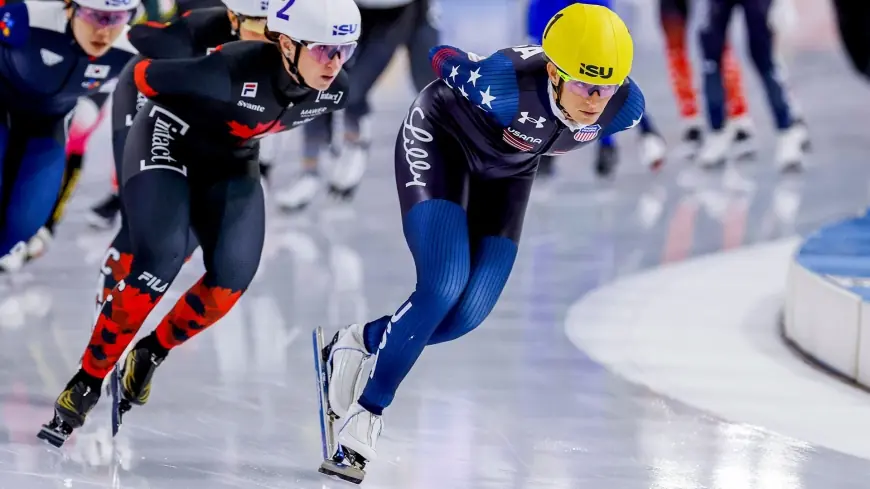
The final day of Olympic speed skating puts the spotlight on a specific audience: fans and teammates watching two Americans chase gold in the chaotic mass start. mia manganello arrives as the world No. 1, at the peak of a long career and preparing to retire; Jordan Stolz arrives with multiple podiums already in Milan. Here’s why this closing race feels different for viewers who have followed the season closely.
Mia Manganello’s position matters to teammates, rivals and long‑time followers
Mia Manganello, 36, has spent nearly 25 years on the oval and enters the mass start after clinching her first World Cup title in the discipline this season. She opened the World Cup with her first individual mass-start gold, then added one silver and two bronzes across subsequent races to win the title by a single point over a longstanding rival. For teammates and fans, that combination of longevity and a freshly earned peak creates heightened expectations and a poignant storyline heading into the final Olympic event.
Here's the part that matters: this is both a career cap for a veteran and an immediate competitive test — the mass start rewards tactics and pack instincts as much as raw speed. It is where experience can pay off, and where the season-long form Manganello has shown is most directly validated or challenged.
Event snapshot and the field shaping the finish
The mass start closes out Olympic speed skating with a race that looks more like short track than other long-track events: a pack of roughly 16–24 skaters cover 16 laps, split into four intervals with a sprint every four laps. The format includes two semifinals (each with 14 or 15 skaters) and the top eight from each semifinal advance to the final.
Competitors in the mix include long-distance specialists and proven mass‑start performers. Jordan Stolz offers a contrasting profile: a sprint specialist who added the mass start back into his repertoire this season and has already reached multiple podiums in Milan, including two golds and a silver in individual distances. If Stolz takes gold in the mass start, it would echo a rare American achievement on the Winter Games stage.
What’s easy to miss is how the season’s World Cup points and narrow margins — like Manganello’s one-point World Cup victory in the discipline — compress into a single, unpredictable race at the Games.
- Field size and format: 16–24 skaters, 16 laps, sprints every 4 laps; two semifinals (14–15 skaters), top eight advance.
- Manganello’s momentum: first World Cup mass-start gold in the season opener, then one silver and two bronzes, winning the season title by one point.
- Stolz’s presence: multiple podiums already in Milan across sprint distances, having added the mass start into his season plan.
- For viewers: the race fuses tactical pack racing with the season’s point narrative, turning a final into both a sporting and personal capstone.
The real question now is how much the mass-start format rewards Manganello’s experience versus Stolz’s sprinting speed and mid-race surge. Small margins in sprints and pack positioning can flip outcomes rapidly.
Timeline context: this race is the last on the Olympic speed skating program after 11 days of competition; Manganello’s World Cup title and Stolz’s multiple podiums this week set the immediate stakes for the finale.
Key signs that will clarify who carries momentum out of this race include semifinal placement (which determines who competes in the final pack sprints) and whether riders successfully control the interval sprints to accumulate points while preserving energy for the closing laps.
For long-time fans and teammates, the mass start is more than a medal event — it’s the narrative endpoint for a season and, for one competitor, a potential career punctuation. This makes the final feel both tactical and emotional in equal measure.