
























Benicio Del Toro at 59: A focused rewind on the actor’s arc from early typecasting to festival acclaim

Celebrating Benicio Del Toro’s career at 59 matters because it highlights a striking trajectory: benicio del toro moved from a narrow early image into a performer who collected major awards and festival recognition, even as his steady stream of opportunities has slowed. This is a moment to look past headline credits and trace how specific roles and directors re-framed his reputation in film and festival circles.
Benicio Del Toro — why the arc matters now and what shaped it
What matters here is context: the arc that led to awards and prestige began under constraints. Early in his career he was pigeonholed as a Latino criminal on television, a pattern that persisted into film. That narrow early casting set the baseline critics and audiences used to read his later turns, making each festival prize and major award feel like a corrective to typecasting rather than a simple career milestone. If you’re wondering why this keeps coming up, it’s because his later honors came from a career that had to break free from a single image.
Career highlights, role patterns and select film moments
Key, uncontested facts from the career rewind:
- Full name and origin: Benicio Monserrate Rafael del Toro Sánchez is known professionally as Benicio Del Toro and is identified as a prominent Puerto Rican figure in the arts.
- Awards and festival recognition: His résumé includes an Oscar, a Golden Globe and prizes from both the Cannes and Berlin festivals.
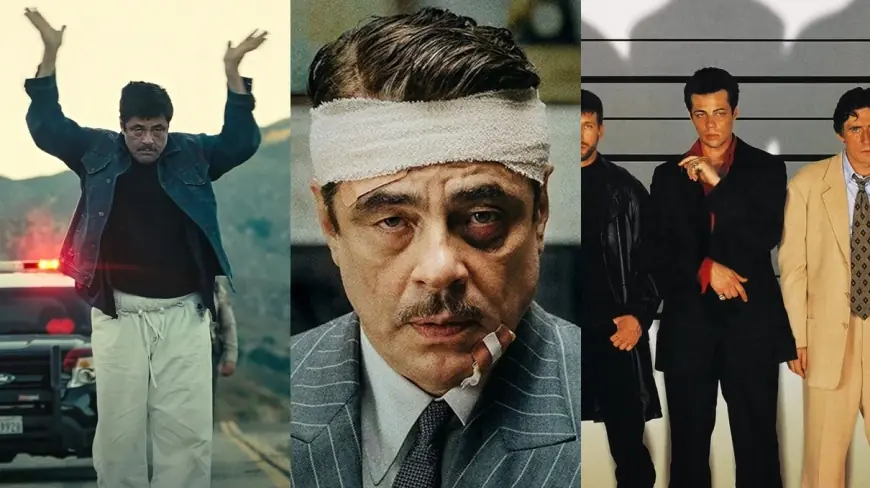
- Early screen landmarks: At 21 he was the youngest villain in the Bond saga in Licencia para Matar; later Bryan Singer cast him in Los Sospechosos Comunes, which elevated his profile.
- Typecasting and range: From the late 90s, police, smugglers, gangsters, thieves and liberators became recurring types for him, though he also took on dramatic and comedic parts when called for.
Several standout film moments underscore how directors shaped audience perceptions. In one Guy Ritchie ensemble about a hard-to-catch diamond, his performance included prosthetic work—he "put on another nose"—to play a villain described as a criminal and rapist who meets a violent end at the hands of vengeful women. In an anthology noir adapted from Frank Miller, he anchored the second tale; that installment contains a Tarantino-directed sequence in which his half-decapitated head speaks, a strikingly surreal moment in the film. Separately, a later project under Anderson (The French Dispatch) is noted as confirming that director’s originality through three distinct stories that touch on love, journalism and fable, and Benicio Del Toro appears among the film’s ensemble moments.
Micro timeline (concise):
- Early career: TV appearances and typecasting as a Latino criminal.
- Age 21: Villain role in Licencia para Matar.
- Later uplift: A Bryan Singer film (Los Sospechosos Comunes) that increased his profile; from the late 90s onward recurring criminal archetypes alongside more varied dramatic work.
What's easy to miss is how festival and award recognition functioned less as a final validation and more as a reframing tool—each prize shifted the narrative around roles he might be offered afterward.
- Benicio Del Toro’s awards changed the conversation about his range, even while casting trends continued to pull him toward similar archetypes.
- Stakeholders most affected include casting directors and audiences who judge an actor by both prestige and typecast history; filmmakers looking for a performer who can carry both genre grit and dramatic weight will note this tension.
- Signals that could indicate a new phase: a sustained run of diverse lead roles or a director-led ensemble spotlight that departs from the recurring criminal types.
The real question now is whether the combination of prestige and selective casting will produce a fresh clustering of roles that reflect the awards rather than past typecasts. Recent commentary notes a slowdown in consistent opportunities, so further shifts may depend on directors who choose to highlight the less-seen facets of his work.
Overall, this is a compact career story that mixes visible trophies with an underlying pattern of typecasting—celebration at 59 is therefore both recognition and a prompt to reassess what kinds of roles might define the next phase.