
























2026 Winter Olympics ice hockey: USA–Canada men’s final set as NHL stars return

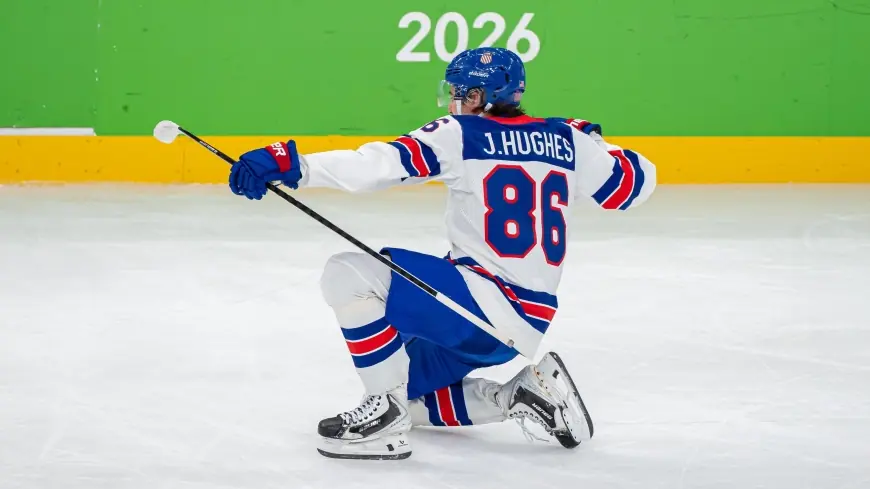
The men’s ice hockey tournament at the 2026 Winter Olympics is headed for a familiar finish: the United States and Canada will play for gold on Sunday morning, closing a Games that brought the sport’s biggest professional names back to the Olympic stage for the first time in more than a decade. With the final weekend arriving, the story is equal parts rivalry, roster depth, and the thin margins that separate medal runs from early flights home.
The medal games: when and where (ET)
Both medal games are scheduled in Milan, with the championship serving as one of the last headline events before the Closing Ceremony later Sunday.
| Game | Matchup | Time (ET) | Venue (Milan) |
|---|---|---|---|
| Men’s bronze | Finland vs Slovakia | Sat., Feb. 21 — 2:40 p.m. | Ice hockey arena |
| Men’s gold | United States vs Canada | Sun., Feb. 22 — 8:10 a.m. | Ice hockey arena |
The early U.S. start time reflects the time difference between North America and Italy.
Why this tournament felt bigger than recent Olympics
The defining shift in 2026 winter olympics ice hockey is the scale of top-level professional participation. The men’s tournament features a large contingent of players who spend their seasons in the world’s best league, turning the bracket into something closer to a best-on-best showcase than the recent editions that leaned heavily on European pros and young prospects.
That talent density changed everything from the opening faceoffs. Group games had the pace and physicality of playoff hockey, and the knockout rounds leaned on details—special teams, short-shift discipline, and depth scoring—rather than a single superstar carrying a roster.
How the United States reached the final
The Americans arrived in Milan with a roster built around speed, pressure, and quick-strike offense. Their semifinal win over Slovakia was defined by a fast start and repeated scoring bursts—exactly the pattern teams chase in a one-and-done setting, where playing from ahead reshapes matchups and forces opponents into risk.
In the bigger picture, the U.S. path also highlighted depth: multiple lines capable of creating chances, defensemen who can move the puck under pressure, and a structure that keeps transition offense available without turning every shift into chaos.
How Canada got back to the gold-medal game
Canada’s semifinal against Finland followed a different script: tighter, more grinding, and decided late. The Canadian edge showed up where it often does—layers of talent that keep pressure on for 60 minutes, plus enough composure to stay on plan even when the scoreboard refuses to cooperate.
Canada’s identity in this tournament has been relentless puck support and wave-after-wave of NHL-caliber forwards. That depth matters most in the second half of games, when tired legs turn small gaps into scoring chances, and when a single defensive-zone miscue can decide a medal.
The final’s key chess match: depth vs disruption
The gold-medal game is a collision of styles. Canada’s lineup is built to win long stretches of play with sustained zone time and rolling lines; the U.S. is designed to break rhythm with speed through the neutral zone, then attack off turnovers and quick changes of possession.
Three pressure points will likely decide it:
-
Special teams: Power plays rarely get many chances in a final; efficiency matters more than volume.
-
Goaltending under traffic: Both teams generate net-front chaos; rebounds and screens are unavoidable.
-
Third-line minutes: When top units cancel out, the game often swings on the “middle” matchups.
Women’s tournament already delivered a classic finish
While the men’s tournament reaches its crescendo this weekend, the women’s competition has already crowned its champion. The United States won gold over Canada in overtime, 2–1, in a final that again showed why this rivalry remains the sport’s most consistently high-level international matchup.
Switzerland took bronze, continuing its rise as a medal threat in a field that has traditionally been dominated by the top two. The women’s result also reinforced a broader theme of these Games: elite goaltending and defensive structure can keep finals tight even when star power is everywhere.
What to watch beyond Sunday
No matter who wins gold, the 2026 edition resets expectations for Olympic hockey going forward. A tournament shaped by NHL rosters raises the competitive floor, increases the number of true contenders, and makes every future participation decision feel consequential.
For fans, Sunday’s final is the payoff: a high-stakes USA–Canada game with a gold medal attached, played at full intensity, with the next Olympic cycle starting the moment the final horn sounds.