

























Mike Huckabee’s Expansionist Remark Raises Diplomatic Stakes — How U.S. Messaging and Regional Law Could Shift

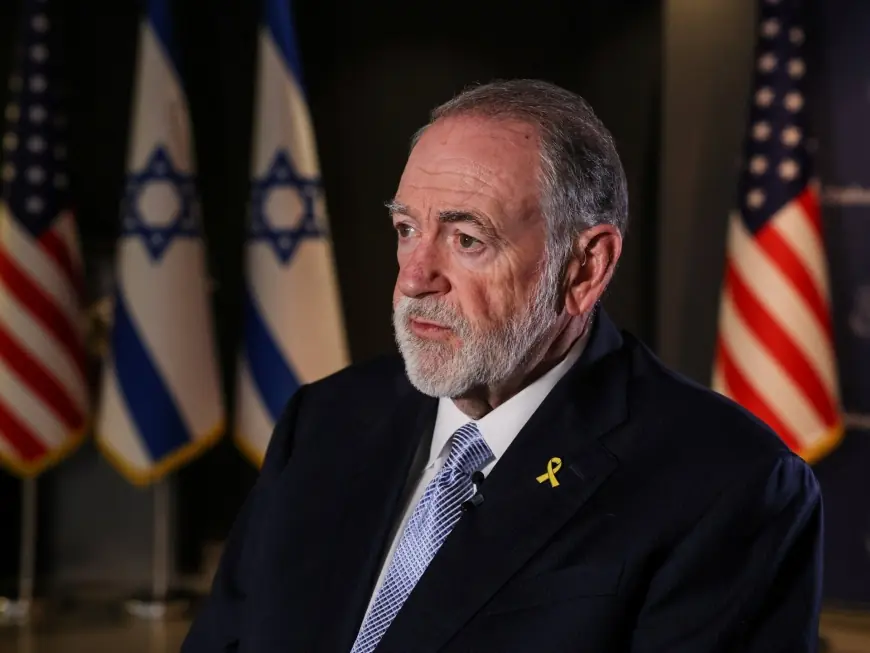
The immediate consequence of mike huckabee’s comment is not just an offhand line on a podcast: it reopens a fraught question about U. S. clarity on borders and the limits of religiously rooted claims. By suggesting he would not object to Israel controlling a swath from the Nile to the Euphrates, the ambassador has introduced a flashpoint that could complicate routine diplomacy, inflame regional anxieties, and force the State Department to clarify policy posture.
Mike Huckabee’s remark: diplomatic friction, legal friction, and political optics
Here’s the part that matters: a senior U. S. envoy’s public embrace of an expansionist reading tied to biblical geography immediately creates three pressure points. First, it places U. S. diplomats in the awkward position of either distancing themselves from or tacitly defending a religiously framed territorial claim. Second, it clashes with longstanding international-law principles that oppose acquiring land by force, a principle that has been invoked in recent legal rulings. Third, the statement feeds domestic and regional political narratives about a so-called "Greater" territorial ambition, which several local politicians have previously entertained.
Those dynamics mean practical consequences could include more frequent requests from foreign ministries for clarifications, fresh public debate inside Congress and executive agencies, and renewed attention from international legal bodies that have already weighed in on territorial occupation matters. What happens next will depend on whether the envoy’s office and Washington offer a tighter, immediate explanation or allow the comment to linger as an unresolved posture.
It’s easy to overlook, but a follow-up characterization of the remark as "somewhat hyperbolic" does not erase its downstream effects: statements framed in religious terms can be read as signals, intentionally or not, by actors on the ground.
Event details and immediate context
The comment occurred in an interview where mike huckabee was asked about a biblical verse describing land promised between the Nile and the Euphrates. He suggested he would not object if Israel took that territory, later describing the claim as somewhat hyperbolic and noting hypothetical wartime scenarios where outcomes might differ. The exchange was recorded during a visit and aired on a prominent program.
- Geographical reference: the phrase invoked territory that, in modern maps, would include Lebanon, Syria, Jordan and parts of Saudi Arabia as well as areas between the Euphrates River and the Nile.
- Diplomatic status: the envoy was appointed by the sitting U. S. president in the prior year and is identified with pro-Israel, Christian-Zionist viewpoints.
- Posture shift: the envoy later described the initial phrasing as hyperbolic while also leaving open scenarios tied to conflict outcomes.
A short timeline of related context embedded in the public record:
- 1981 — The Golan Heights were annexed under Israeli law (a step noted in longstanding territorial disputes).
- 2024 — An international legal body concluded that certain occupations must cease immediately, highlighting legal friction over territorial control.
- 2024 — Military postures shifted after a regional conflict, with outposts recorded inside neighboring territory.
Key actors immediately affected include the State Department (which has been asked for clarification), regional governments whose borders were referenced, international legal institutions already engaged with occupation questions, and Israeli political figures who have previously debated expanded borders. That web of stakeholders makes the comment more than rhetorical: it becomes a policy headache.
The real question now is how quickly Washington will convert public ambiguity into a clear diplomatic line. If clarification is delayed, rivals and partners alike will interpret the silence as a signal—one way or another—about U. S. tolerance for territorial revisionism.
Writer’s aside: What’s easy to miss is how a brief interview exchange can force months of diplomatic housekeeping—formal notes, talking points, and pressure from allied capitals—that rarely appears in headlines but shapes day-to-day statecraft.