

























Spinosaurus mirabilis named after sabre-crested Sahara fossils

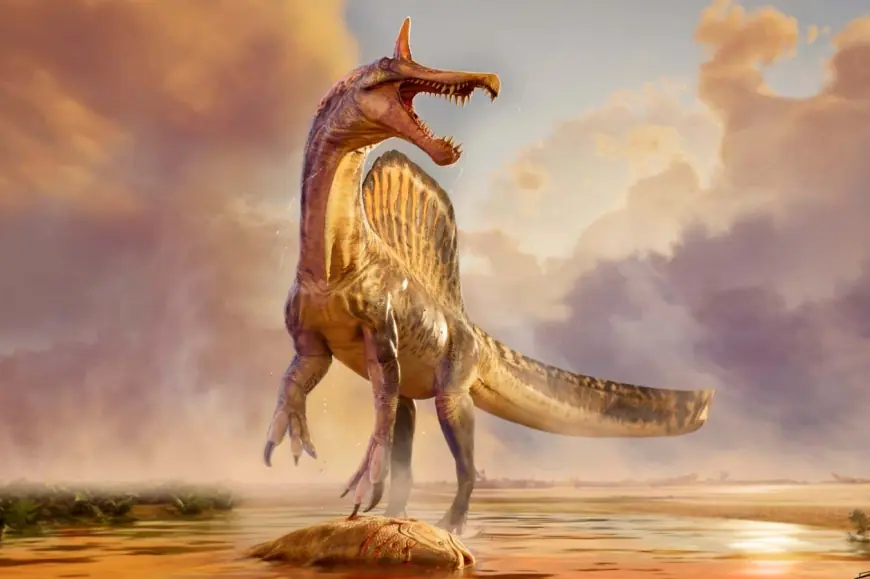
A newly named spinosaurus species, Spinosaurus mirabilis, has been identified from skull and skeletal fossils unearthed in the Sahara Desert, and researchers say its large blade-like crest and inland discovery reshape ideas about how these giants lived 95 million years ago.
Spinosaurus mirabilis wears a sabre-shaped crest
Scientists named the animal Spinosaurus mirabilis after discovering a striking, scimitar-shaped crest on the top of its skull; the bony crest would have been sheathed in keratin in life, similar to the casque of a cassowary. The team found that the crest sat above the sail along the animal's back and was likely a display feature used to attract mates or intimidate rivals.
Found far inland in Sahara wetlands
Fossils were recovered from central Sahara sites in Niger where researchers say the landscape was a network of rivers and wetlands during the Cretaceous. The bones come from multiple individuals — on one expedition the team collected remains from around 10 spinosaurs — and the inland location lies hundreds of kilometres from the nearest ancient shoreline, placing these animals in forested river systems rather than exclusively coastal environments.
A 'hell heron' built for wading
Lead researcher Paul Sereno described S. mirabilis as a kind of "hell heron, " built to wade: he noted the animal could have walked into about two meters of water while stalking large river fish. The fossils show interdigitating teeth, with lower-jaw teeth that protruded between the upper teeth, an arrangement that would have formed an effective trap for slippery fish and supports the idea of a shallow-water, fish-eating lifestyle.
The new material helped researchers reconstruct the skull using 3D digital models created in camp on solar power, and the study's authors say the size and shape of the crest were clear enough to identify a distinct species. While S. aegyptiacus and other spinosaurs also bore crests and sails, the team found that the crest on S. mirabilis was much larger and more blade-like, enhancing its visual presence in open riverside habitats.
Other palaeontologists who reviewed the finds welcomed the discovery but emphasized that many questions remain. One researcher noted that, although the fossils confirm display structures and a waterside habit for this group, better preserved specimens are still needed to resolve details of spinosaur relationships and biology.
Researchers involved in the fieldwork said the discovery opens a new chapter in understanding how these animals lived inland during the Cretaceous and that finding more complete, better preserved specimens will be the next priority to answer outstanding questions about Spinosaurus evolution and behaviour.