













Punch The Monkey Finds Comfort and Company at Ichikawa City Zoo as Viral Plush Companion Draws Crowds

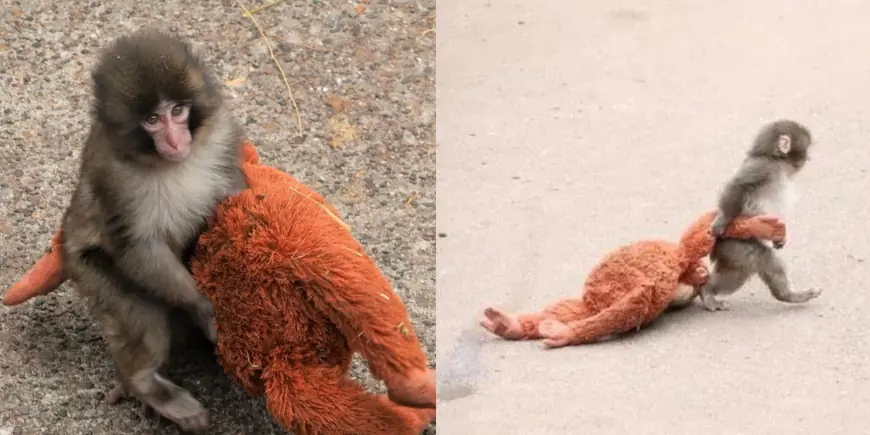
punch the monkey, a young macaque once rejected by his mother, has begun forming social bonds at the Ichikawa City Zoo after months of relying on a stuffed orangutan for comfort. The shift has unfolded alongside an outpouring of public attention, donated plush toys and a rise in visitors.
What happened and what’s new
Zoo staff shared images and videos of the baby macaque clutching a plush orangutan that caretakers provided when his mother rejected him at birth. For weeks the toy was his constant companion and footage of him dragging the plush around and cuddling it became widely circulated online, drawing sympathy and large public interest.
In recent updates from the zoo, keepers documented tangible changes in the monkey’s social behavior. Caretakers observed another monkey grooming him, an act that signals trust and acceptance among primates, and captured moments of Punch playing with other young monkeys and riding on their backs. Those scenes were described by staff as important milestones in his integration with the troop.
The zoo also received additional plush toys from a retailer that made the original stuffed orangutan, and caretakers noted an increase in visitors who came specifically to see Punch. The zoo posted a request asking visitors to "Please watch over Punch’s growth with warm support, " and later shared images of lines of fans who came to view the once-lonely macaque.
Punch The Monkey: Behind the headline
The narrative that crystallized around Punch grew from a straightforward caretaking intervention into a viral story that has influenced behavior and resources at the zoo. The stuffed orangutan served as a surrogate attachment object while keepers worked to help the young macaque find his place among other monkeys. The spread of images and clips online prompted offers of support and sympathy, and the zoo has used public outreach to update viewers on his progress.
Key actors in this sequence are the caretakers who provided the plush toy and monitored social reintegration, the retailer that supplied additional toys, and zoo visitors whose presence has risen. Each of these actors has a different incentive: caretakers aim to promote the animal’s welfare, the retailer gains a sympathetic public association and visibility, and visitors seek a connection with a viral animal figure.
What we still don’t know
- Long-term social outcomes: whether Punch will fully integrate into the troop over time.
- Health implications: whether reliance on a plush surrogate had any measurable effects on his development.
- Care plans: the precise steps the zoo will take to manage visitor numbers and protect Punch from stress.
- Timeline: how quickly the observed grooming and play will translate into stable peer relationships.
What happens next
- Gradual integration continues — Trigger: sustained grooming and reciprocal play observed by caretakers over weeks.
- Temporary reliance on human-managed support — Trigger: caretakers reintroduce supervised group interactions while monitoring stress responses.
- Increased public attention becomes permanent exhibit interest — Trigger: steady visitor numbers and ongoing social-media posts from the zoo.
- Additional corporate or community donations — Trigger: further public sympathy or promotional visits from brands linked to the plush toy.
Why it matters
The immediate practical impact is on animal welfare and how zoos manage young primates that are rejected by mothers. The visible milestones of grooming and play are meaningful indicators of social recovery and may guide similar interventions elsewhere. For the public, Punch’s story is a reminder of how attachment and companionship can shape behavior across species, and how viral attention can mobilize resources quickly.
Near-term implications include operational pressures for the zoo to balance public interest with the animal’s needs, potential reputational effects tied to the handling of a viral animal story, and an example case for how simple enrichment items can function as surrogates while caretakers facilitate social integration.