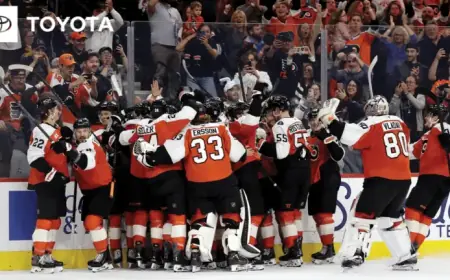






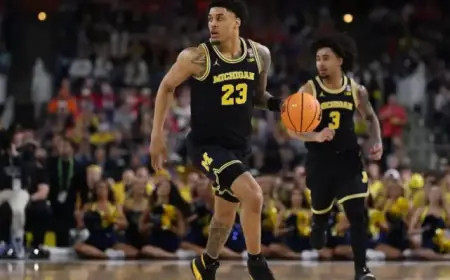
















Quinn Hughes' OT wrist shot lifts U.S. past Sweden 2-1 and into Olympic semifinals

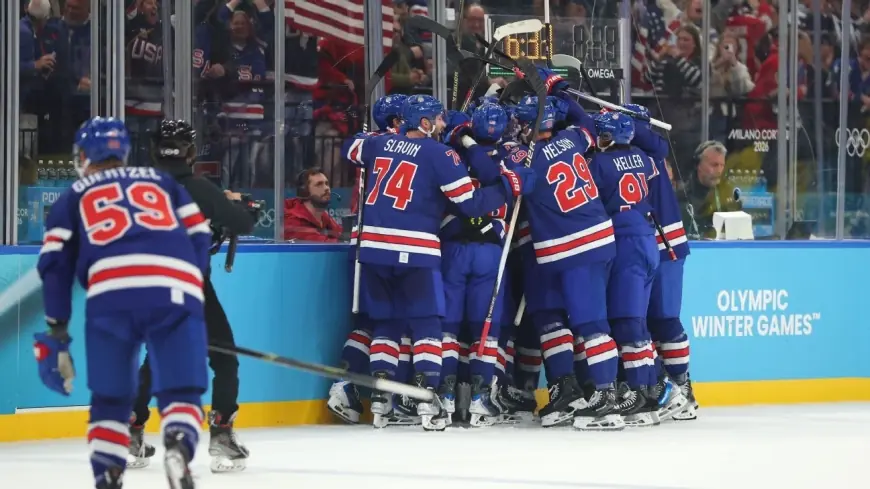
The United States advanced to the Olympic men's hockey semifinals after Quinn Hughes scored the overtime winner to beat Sweden 2-1, a dramatic finish that keeps American gold-medal hopes alive heading into a semifinal against Slovakia.
Quinn Hughes' overtime winner: What happened and what's new
Quinn Hughes finished the quarterfinal with a decisive wrist shot in overtime that cleared Sweden's goaltender, giving the U. S. a 2-1 victory and a place in the semifinals. The winning goal came with 6: 33 remaining in extra time; Hughes received the puck near the left faceoff circle, looked for an open teammate, moved toward the net and released a shot that climbed past the goaltender's left glove.
The game had been tied late in regulation after Sweden pulled its goalie and Mika Zibanejad redirected a pass from Lucas Raymond to score with 91 seconds left. Jack Hughes opened the scoring in the second period when his shot was deflected into the net by Dylan Larkin with 8: 57 remaining in that period. Goaltender Connor Hellebuyck made 28 saves on 29 shots, including a key stop on a high-quality chance in the second period.
The U. S. will meet Slovakia in one semifinal on Friday, while the other semifinal features Canada and Finland. The Americans sit at 4-0 in the tournament; a semifinal win would guarantee a medal for the first time since the 2010 Winter Games, while a loss would shift the team to a bronze-medal opportunity. The outcome also leaves open the possibility of facing Canada in the final.
Behind the headline: context, incentives and stakeholders
The victory came after a tense final stretch in regulation when Sweden equalized, forcing sudden-death overtime. For players and staff, immediate incentives are straightforward: win the semifinal on Friday to clinch at least a bronze and keep gold contention alive. From a roster perspective, key stakeholders include the goaltender who delivered a heavy workload, the defensive unit that limited Sweden to a single late tying goal, and the forwards who converted and created chances at critical moments.
Team morale and momentum are notable factors. Players described the experience as nerve‑racking and intense, but the overtime result has provided a morale boost heading into a matchup with a Slovakia squad described as dangerous and playing well in the tournament. For the team as a whole, the strategic constraint is the do-or-die nature of single-elimination semifinals—there is no margin for error.
What we still don't know
- Definitive lineup decisions for the U. S. semifinal against Slovakia.
- Any injury updates or recovery timelines stemming from the quarterfinal game.
- How Sweden will adjust tactically after the loss.
- Whether the U. S. will change deployment patterns for overtime or late-game situations.
What happens next
- U. S. wins the semifinal: The team secures at least a bronze and advances to the gold-medal game; trigger—victory over Slovakia on Friday.
- U. S. loses the semifinal: The team plays for bronze; trigger—defeat by Slovakia on Friday.
- Overtime becomes decisive again for U. S.: Coaches may alter late-game or extra-time strategies to emphasize possession and minimize risk; trigger—another closely contested match or late equalizer scenario.
- Confidence ripple boosts performance: The momentum from an overtime win could improve execution in the semifinal; trigger—strong start and early control against Slovakia.
Why it matters
The immediate practical impact is tangible: the U. S. remains in medal contention and has a clear path to guarantee a podium finish with one more victory. For players, the win reinforces belief in their ability to perform under pressure, particularly in sudden-death situations. For tournament dynamics, the result preserves the possibility of a high-stakes final between North American rivals, depending on other semifinal outcomes. Near-term implications include heightened scrutiny of tactical choices for the semifinal and increased focus on recovery and preparation over the short turnaround before Friday's game.
Quinn Hughes' overtime goal delivered both a game-winning moment and a strategic reset for the U. S. team: the single-elimination format now places a premium on preparation, discipline and execution in the next match.