





















Semifinal Stakes and Medal Momentum at the 2026 Winter Olympics Ice Hockey Tournament: How Friday’s Results Reorder the Medal Race

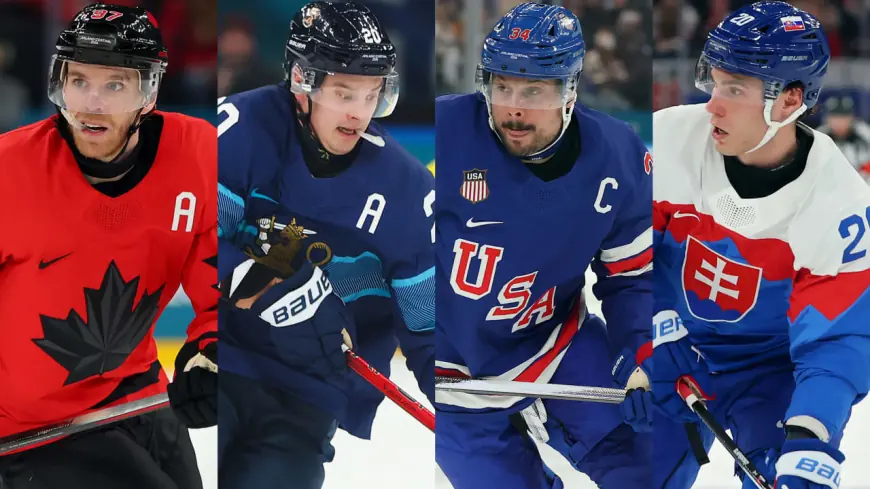
The immediate consequence of these matchups is simple and seismic: the semifinal outcomes rewrite which teams still control the gold-medal pathway. In the 2026 winter olympics ice hockey field, Canada faces Finland and the United States meets Slovakia — with winners advancing to the gold-medal game and losers shifting to the bronze-medal match. That pivot changes preparation, line deployment and short-term expectations for all four squads.
What advancing reshapes at the 2026 Winter Olympics Ice Hockey semifinals
Advancing to Sunday’s gold-medal game alters everything from daily recovery plans to which players will see heavier minutes. Canada and the U. S., having leaned on late-quarterfinal heroics, enter with momentum that changes opponent game-planning; Finland and Slovakia carry narratives of resilience that force favorites to adjust. Here’s the part that matters: a semifinal result turns a tournament into either a championship week or a consolidation exercise for the bronze match, and that flip affects coaching choices and which role players must step up.
It’s easy to overlook, but goaltending trends and depth usage will be decisive. One team’s goalie has been highlighted as a potential game-leveler, while another’s bottom-six depth has been singled out as an area that needs improvement to survive back-to-back high-intensity matchups.
Semifinal matchups, schedule and tactical variables
Friday’s pairings and their immediate timeline are set: Canada vs. Finland at 10: 40 a. m. ET and Team USA vs. Team Slovakia at 3: 10 p. m. ET. Winners meet for gold on Sunday at 8: 10 a. m. ET; the bronze-medal game is scheduled for Saturday at 2: 40 p. m. ET. Schedule subject to change.
- Canada vs. Finland (10: 40 a. m. ET) — Canada comes off a quarterfinal scare that required late heroics, while Finland needed a similar push in its quarterfinal; analysts emphasize Canada’s star power and Finland’s defensive structure as the central matchup dynamic.
- USA vs. Slovakia (3: 10 p. m. ET) — The U. S. is noted for depth across four lines and a blue line that can tilt matchups; Slovakia’s tournament run features standout individual contributions that keep them dangerous.
Several tactical threads recur: Canada’s need for better bottom-six production, reliance on star forwards when the game opens up, and questions about rebound control in goal. For Finland, containing chaos and extracting scoring from transition chances are listed as primary paths to victory. For the U. S., sustained four-line pressure and a mobile defensive corps are the projected advantages; Slovakia’s momentum has been driven by key players who can change a scoreline quickly.
The real question now is how coaches balance ice time between urgency and preservation: press all lines to force wins now, or manage minutes to keep legs fresher for the medal round?
Key takeaways and forward signals
- Both Canada and the United States reached the semifinals after overtime heroics in the quarterfinals; that late-game resilience changes which matchups opponents prioritize defending.
- Goaltending performance and rebound control are highlighted as potential single-game swing factors — a shallow goal differential could swing either semifinal.
- Depth usage matters: Canada’s bottom-six was flagged for struggle in the quarters and may need to improve to wear down strong defensive teams.
- Individual momentum is real for underdog Slovakia and Finland; players who have been difference-makers can turn a tight game into an upset.
- Short-term schedule impact: winners advance to the gold game (Sunday 8: 10 a. m. ET); losers play for bronze (Saturday 2: 40 p. m. ET); that sequence forces immediate strategic recalibration.
What’s easy to miss is how quickly a semifinal result changes the tournament narrative — a single win converts a team from contender to one-game-from-gold, and that psychological shift often has material effects on how coaches deploy their best players in the following 48 hours.
If you’re wondering why this keeps coming up: in this format, the margin between advancing and settling for bronze is razor-thin, so single-game decisions now ripple through the remainder of the event.