

























Iftar Time 2026: Ramadan 2026 start and global fasting hours

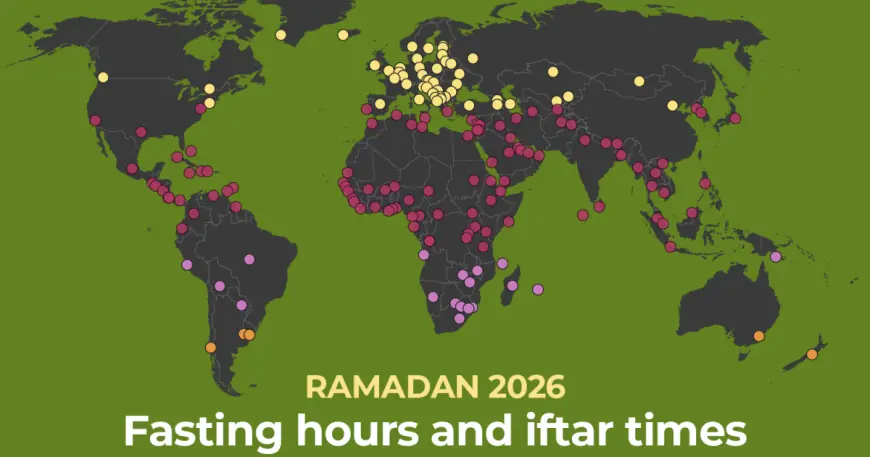
Moon spotters observed the waxing crescent on Tuesday, Feb. 17, 2026, and Saudi authorities announced the first day of fasting will be Wednesday, Feb. 18. With the month now set, communities are consulting schedules for suhoor and iftar time 2026 as fasting windows shift sharply by location.
Iftar Time 2026 details
Planned timetables for suhoor and iftar this year show wide variation: the dawn-to-dusk fast lasts anywhere from about 11. 5 to 15. 5 hours depending on location. Many observers expect typical fasting windows this Ramadan to fall roughly in the 12-to-15-hour range, though exact suhoor and iftar moments will differ by city. The month itself will last 29 or 30 days, with daily abstinence from eating, drinking, smoking and sexual relations during daylight hours as part of the prescribed fast.
Practical schedules for communities include first-day and last-day timings; consolidated tables of fasting hours and mealtimes are being used to help people plan work, school and communal gatherings. For individuals checking iftar time 2026, local prayer timetables and community announcements will supply the precise sunset moments that end each fast.
Start date and moon sighting
The start of the month was tied to the sighting of the waxing crescent. Moon spotters confirmed the crescent on Tuesday, Feb. 17, 2026, which corresponds to Ramadan beginning at sundown that day and the first daytime fast being observed on Wednesday, Feb. 18. Determination by direct sighting is the mechanism communities used to set the calendar this year.
Ramadan shifts earlier in the Gregorian calendar annually because the Islamic Hijri calendar is lunar; months run 29 or 30 days. This annual shift is why the start date moves by about 10 to 12 days each year on the solar calendar.
Fasting hours by hemisphere
Geography will shape daily fasting lengths for millions. For nearly 90 percent of the world’s population living in the Northern Hemisphere, this Ramadan will offer shorter fasts than last year, with first-day durations of about 12 to 13 hours and the number of daylight hours increasing through the month. In contrast, observers south of the equator will face longer fasts than last year: examples cited for southern countries show first-day fasts near 14 to 15 hours, though those hours will shrink as the month progresses.
Longer-term timing notes in current coverage point out that the pattern of changing daylight across years will continue; when Ramadan coincides with the winter solstice in 2031, the Northern Hemisphere will see its shortest days during the month. Because the lunar year is shorter than the solar year by roughly 11 days, the lunar cycle will even produce two Ramadans in 2030 on the Gregorian calendar.
Key takeaways
- Crescent spotted Feb. 17, 2026; first daytime fast observed Wednesday, Feb. 18.
- Daily fasts range roughly 11. 5–15. 5 hours; many locations will see about 12–15 hours on typical days.
- Eid al-Fitr is likely to begin on the night of March 18, 2026, pending sighting and calendar confirmation.