
























As U.S. Women’s Hockey Enters Gold Medal Game, Hilary Knight Prepares for an Olympic Farewell and a Personal Milestone

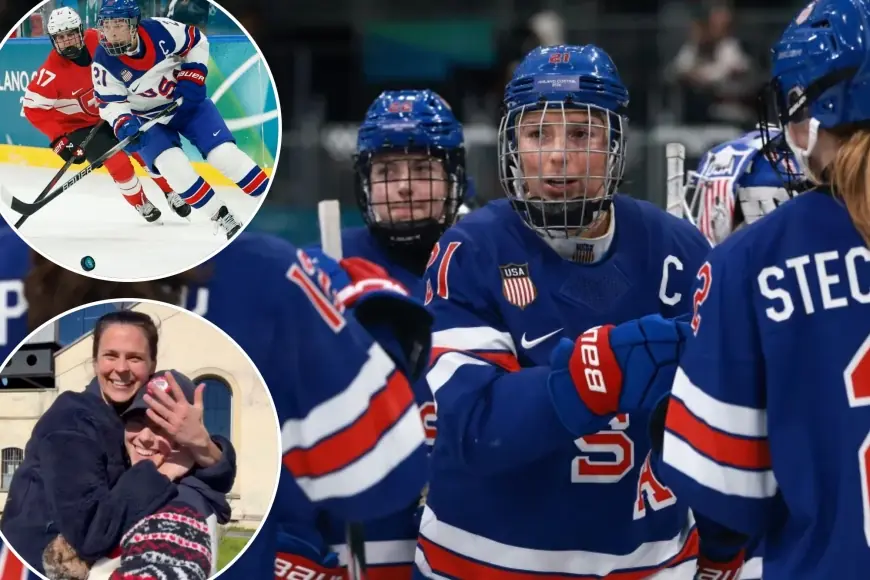
Hilary Knight will play what she announced would be her final Olympic game when the U. S. women’s hockey team meets Canada for the gold medal in Milan on Thursday, and the captain is also planning a personal proposal to her girlfriend one day before the final — a convergence of career and private life that adds an unusually intimate subplot to the biggest game of the tournament.
On-ice facts and the moment at hand
The American roster secured its place in the gold medal game after a dominant semifinal win, and enters the final as a clear favorite. Knight, 36, announced in May that Milan would be her fifth and final Olympics. She reached a career milestone on Feb. 7 by scoring her 14th Olympic goal, tying two other Americans on the tournament’s all-time scoring list, and she is the highest-scoring player in Women’s World Championship history.
The U. S. attack has been prolific: no team in the field has scored more goals than the Americans, who have totaled 31 goals so far. That offensive output has been driven in part by a group of younger scorers — including players aged 24 and under — who grew up watching Knight. The team has also been steady defensively, carrying an unbeaten run without allowing a goal since Feb. 5 that extended to a recorded shutout streak lasting 331 minutes, 23 seconds.
Hilary Knight: legacy, leadership and a private plan
Knight’s impact spans on-ice production and broader influence on the sport. Over more than two decades she has built a decorated competitive record and played a role in establishing the professional league for women’s hockey. Teammates have framed this gold-medal chance as an opportunity to help close her Olympic chapter on the highest note.
Off the ice, Knight has been preparing a personal moment: she planned to propose to her girlfriend, speedskater Brittany Bowe, one day before the gold medal game. The couple first met at the 2022 Games. Knight had the ring in hand for several months and chose the Olympic stage in Milan for the gesture, seeing it as a meaningful place to mark a private milestone at the close of her Olympic career.
Rivalry, records and what this game represents
The final will also be the last Olympic meeting between Knight and a long‑time rival who has been central to international women’s hockey competition. That opponent has multiple Olympic gold medals and a history of scoring decisive goals in past finals. The matchup pits two veteran captains and leading scorers against one another in what both sides see as the final chapter of a storied rivalry at the Olympics.
Knight’s résumé includes a single Olympic gold and ten World Championship gold medals; her opponent’s record in Olympic gold-medal moments includes several tournament-deciding goals and multiple Olympic titles. The narrative of this gold medal game is thus layered: a team-level pursuit of a championship, the individual desire to cap a career highlight, and a historic rivalry reaching its final Olympic expression.
Unanswered questions and plausible next steps
- Unclear timing: the precise timing and public visibility of the proposed engagement remain unconfirmed.
- Post-Olympic plans: Knight has framed Milan as her last Olympics, but future playing or professional steps beyond this cycle have not been detailed here.
- Rival’s future: the opposing captain’s decision about competing in another Olympic cycle has not been stated.
Realistic scenarios in the days ahead:
- The U. S. wins gold; Knight leaves the Olympics with a championship, and the planned proposal becomes a celebrated personal milestone. Trigger: U. S. victory in the final.
- The U. S. falls short in the final; Knight completes her Olympic career without an additional gold but retains a reinforced legacy and completes the planned proposal. Trigger: Canada wins the final and the proposal proceeds independently of the result.
- Public visibility of the proposal is limited by timing and privacy choices, keeping the moment personal regardless of the game outcome. Trigger: Knight and her partner choose a private announcement approach.
Near-term implications are clear: the final will define the ending of Knight’s Olympic chapter and potentially amplify her influence on players who came up watching her. For teammates, the match is both a championship opportunity and a chance to honor a captain whose on- and off-ice work helped shape their careers. For the sport, the combination of a high-stakes final and a human-interest milestone offers a narrative that could resonate beyond the rink in the short term.