










Olympic Mascot 2026: Meet Tina and Milo, the Stoat Siblings Set to Front Milano Cortina’s Winter Games

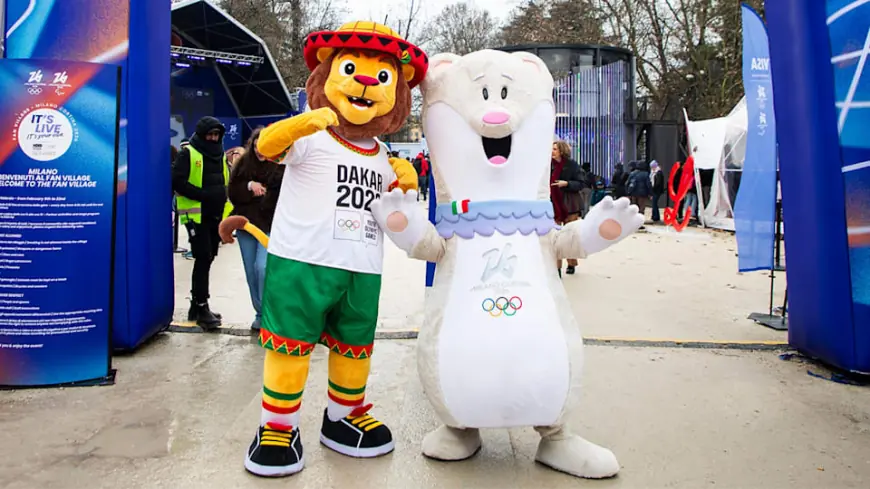
With the Milano Cortina Winter Games now in the final stretch, one of the most visible pieces of the event’s global branding is getting renewed attention: the Olympic mascot 2026. The official faces of the Games are Tina and Milo, a pair of stoat siblings created from student artwork and designed to represent the two host hubs in northern Italy. As ticket sales ramp up, venues enter late-stage testing, and broadcasters begin wall-to-wall promotion, the mascots are shifting from “cute reveal” to a serious tool for storytelling, sponsorship, and public buy-in.
Tina serves as the Olympic mascot and Milo serves as the Paralympic mascot. Their names are drawn from the host locations: Cortina and Milano.
Who is the Olympic mascot 2026?
The Olympic mascot for 2026 is Tina, a white stoat character meant to evoke the winter mountain setting associated with Cortina. The Paralympic mascot is Milo, a brown stoat whose character design includes a visible limb difference. In the official story, Milo was born without a leg and uses his tail to help him move, an explicit nod to adaptive sport and disability representation.
Both mascots were first unveiled publicly on Wednesday, February 7, 2024, and have increasingly appeared in marketing as the February 2026 Games approach.
Why Tina and Milo were chosen for 2026
Unlike many mascots commissioned from a single studio, Tina and Milo originated from a nationwide student-driven ideas contest in Italy. Schools submitted more than 1,600 proposals, then the public voted on finalists. The winning stoat designs took a majority share of the vote, beating out competing concepts that were also rooted in local flora and winter symbolism.
That origin story matters because it lets organizers say the mascots were not just “approved,” but “chosen,” and chosen through a process that foregrounds civic participation. It also creates a built-in pipeline of emotional investment: students, families, and local communities can claim authorship, not just fandom.
Behind the headline: the incentives, stakeholders, and what’s really being sold
Mascots are often treated like harmless decoration, but for Olympic organizers they are a high-leverage asset.
Context: Milano Cortina is a geographically spread-out Games across multiple sites. That makes it harder to communicate a single, coherent identity than a compact, one-city event. Tina and Milo provide a simple, repeatable symbol that travels across venues, merchandise, transport signage, and televised graphics without requiring viewers to memorize the map.
Incentives: Organizers want broad enthusiasm without reopening the most contentious debates that can follow large events: cost, construction delays, and disruption to local life. A friendly mascot pair helps reframe the narrative toward family, youth, and inclusion. Sponsors also prefer clean, non-controversial visuals that can be used globally, especially in products aimed at children and casual fans.
Stakeholders: The host cities benefit if the mascots strengthen tourism demand and soft-power branding. Schools and educators benefit from the visibility of student creativity. Paralympic stakeholders benefit if Milo’s design prompts more mainstream conversation about adaptive sport. And the monarchy of Olympic stakeholders, the athletes, benefit indirectly if the Games atmosphere feels welcoming and high-energy rather than tense and transactional.
What we still don’t know
Even with the characters established, several practical pieces remain unclear or fluid as the Games near:
-
How heavily the mascots will appear in opening and closing ceremonies versus being used primarily in fan zones and broadcast packaging
-
Whether the organizers will lean into the disability narrative around Milo in prime-time moments or keep it subtle to avoid politicized backlash in some markets
-
What the most prominent merchandise categories will be, and whether supply constraints or price points limit access for average families
-
How much the mascots will be integrated into medal ceremonies and athlete-facing traditions versus staying on the spectator side of the event
Second-order effects: why a mascot choice can shape the Games experience
Representation decisions travel. Milo’s design has the potential to normalize disability visibility for audiences who may only engage with Paralympic sport once every four years. If done well, that can translate into more sustained attention, stronger grassroots participation, and better sponsor comfort with Paralympic campaigns.
There is also a commercial ripple: mascots typically drive some of the most durable consumer products of any Games cycle, from plush toys to school supplies. That revenue is not just a nice-to-have; it can help offset operational costs and fund legacy programs, especially when organizers emphasize reuse of venues and cost discipline.
What happens next: realistic scenarios to watch as February 2026 arrives
-
Mascots become ceremony centerpieces
Trigger: organizers decide to use Tina and Milo as narrative anchors in the opening ceremony and televised transitions. -
Mascots remain primarily a merchandising engine
Trigger: brand partners and retail performance outperform expectations, pulling focus toward consumer products and fan engagement zones. -
Milo’s inclusion message becomes a bigger story
Trigger: a coordinated Paralympic campaign uses Milo to connect athletes’ stories with mainstream audiences ahead of March 2026. -
A late shift in visual branding emphasis
Trigger: venue readiness or scheduling logistics push organizers to simplify broadcast storytelling, increasing mascot screen time as a unifying visual.
Why it matters
The Olympic mascot 2026 is not just a character design. Tina and Milo are a strategic attempt to make a dispersed Winter Games feel emotionally coherent, locally rooted, and globally marketable. In a year when attention is fragmented and skepticism around mega-events can run high, the mascots function as a kind of social contract: a promise that the Games are for families, for young people, and for a broader public than elite sport alone.