























adeliia petrosian’s Olympic Debut Draws Scrutiny and Praise

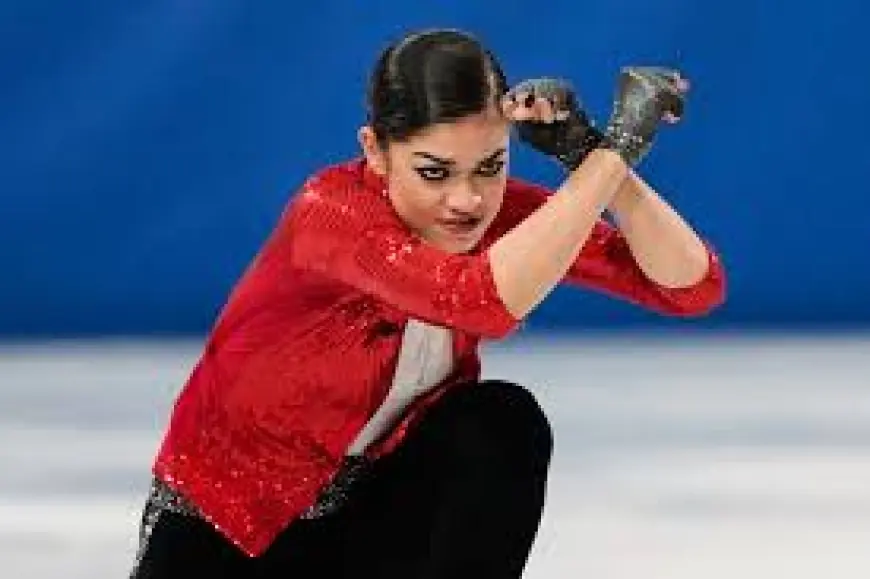
Adeliia Petrosian, an 18-year-old figure skater and three-time national champion, arrived in Milan as both a medal contender and a focal point for lingering concerns about past doping scandals tied to her training circle. Her first official practice at the Olympic rink on Monday (ET) drew intense media attention as she executed a string of clean landings, yet questions about the shadow cast by earlier controversies followed her onto the ice.
First impressions in Milan: a performance that turned heads
Petrosian’s first on-ice session at the official Olympic training rink on Monday (ET) was a showcase: she skated in black with her hair in a tight bun and landed jump after jump, including elements that have established her as one of Russia’s most technically daring young skaters. Cameras tracked her every move as she demonstrated the quadruple jumps that feature in her competitive résumé. After skating, she passed reporters and said in Russian that her mood was excellent.
Beyond the optics, the performance underscored why many see her as a podium threat. She is the reigning three-time Russian women’s national champion and has a proven history of attempting and landing quadruple jumps — the most difficult elements in women’s skating — which have become decisive in international scoring. For many observers, the combination of technical tools and domestic dominance makes her a legitimate contender even in a field marked by uncertainty.
Legacy questions: connections to past doping turmoil
Petrosian’s arrival is complicated by the environment in which she trained. She shares coaches, a choreographer and a training site with other skaters who were at the center of the biggest doping controversy in recent Olympic figure skating history. That scandal erupted when a 15-year-old training mate tested positive for a banned heart medication at the previous Winter Games, triggering a cascade of sanctions and a high-profile investigation.
The Court of Arbitration for Sport documented a pattern of extensive medical interventions for that young skater, including the administration of dozens of medications and supplements over a two-year span beginning at age 13. While Petrosian has not been implicated in any doping findings and there is no record of a positive test for her, her proximity to the coaching team and training environment has created unavoidable scrutiny. She is competing at these Games as a neutral athlete, not under her nation’s flag, and is the sole skater from her country entered in the Olympic women’s event.
That status reflects broader sanctions and restrictions that remain in place after revelations of state-linked doping schemes in past years. The optics of a highly touted young athlete emerging from the same program that produced the earlier scandal are likely to shape public and media attention throughout the competition, whatever her results on the ice.
What’s next: competition and credibility on the line
Petrosian’s formal competition begins on Tuesday (ET). For the skating community, the event will be a test on two fronts: athletic and reputational. If she performs at the level shown in training — combining clean execution of high-difficulty jumps with strong presentation — she could contend for a medal. At the same time, any podium result will be viewed against the backdrop of unresolved questions about the training system she emerged from.
Observers inside the sport express mixed feelings: excitement about seeing a technically gifted young skater on the Olympic stage, and unease about how a medal for a skater tied to a controversial program might affect the sport’s image. Petrosian herself remains an unknown on the Olympic stage beyond her national successes, and the coming short program and free skate will offer the clearest answers about her readiness and the degree to which past controversies will continue to shape reactions to her achievements.