






















IIHF drops shootout for title tilt — how the olympic hockey overtime rules changed in Milan

Overtime drama has long defined Olympic hockey, but the tournament in Milan is unfolding under a new rulebook. Organizers eliminated the decisive shootout for the gold-medal game and altered overtime lengths in earlier rounds, a change that already shaped a chaotic quarterfinal day in which three of four men’s games required extra time.
Gold-medal games: no shootout, full 20-minute 3-on-3 sudden death
The most consequential change is simple and stark: the shootout has been removed entirely from the gold-medal game. Instead, teams will play full 20-minute periods of sudden-death hockey at three skaters apiece until one side scores. That ensures a true golden goal decides the championship and recreates the endurance test of classic playoff overtime periods, but with the open-ice, high-skill dynamics of 3-on-3 play.
Expect extended shifts, more frequent odd-man rushes and, potentially, marathon sessions before a champion is crowned. The move was designed to preserve the drama of a winning goal in live play rather than leaving the outcome to a skills competition.
Preliminary and knockout rounds: staged overtime and shootout specifics
Overtime formats vary by round. In the preliminary stage, games that tie after regulation go to a five-minute sudden-death, three-on-three overtime. If teams remain deadlocked, the match proceeds to a five-round shootout.
Once the tournament reaches the knockout phase, the three-on-three sudden-death period is lengthened to 10 minutes. If the tie persists after that 10-minute window, the game moves to a five-round shootout. One notable Olympic deviation from standard professional rules: after the fifth round, teams in the Olympic shootout may reuse shooters as many times as they wish. That contrasts with the National Hockey League, where shooter reuse is not permitted in the same way for its shootout procedures.
These staged differences — shorter 3-on-3 in prelims, longer 3-on-3 in knockouts, and endless 20-minute periods for gold — were intended to balance the tournament’s need for timely results with the desire for decisive on-ice finishes in the most important games.
Immediate impact in Milan: quarterfinal mayhem and playoff implications
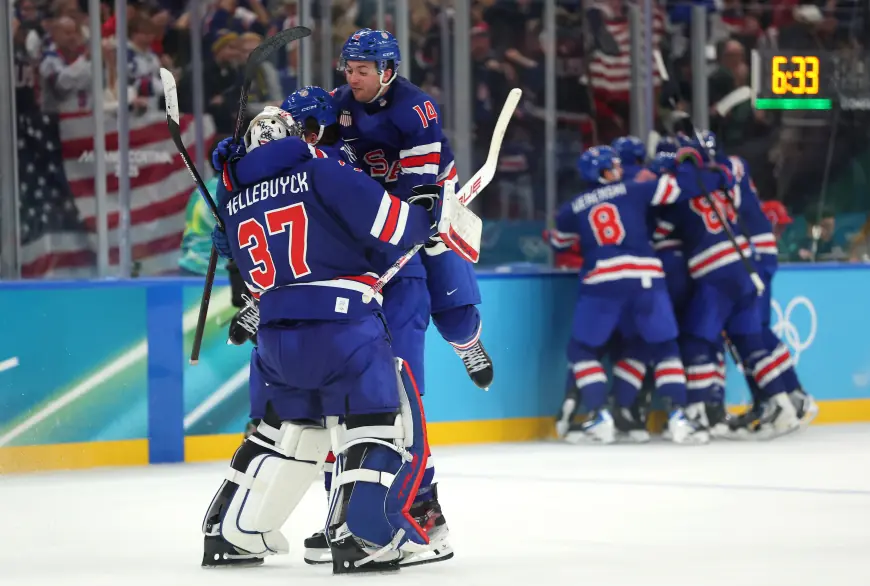
The new structure already influenced outcomes and strategies during a frenzied quarterfinal day. Three of four men’s quarterfinals required overtime, with Slovakia, Finland, Canada and the United States surviving dramatic finishes to reach the semifinals. The surge of extra-time contests forced coaches to manage ice time and risk-taking differently — teams had to weigh whether to press for an immediate late equalizer or conserve energy for potential extended 3-on-3 periods.
Several matches delivered late-regulation heroics: Finland rallied with two late goals to force overtime against Switzerland and then prevailed on a bar-down strike by Artturi Lehkonen. Canada edged past Czechia only after late scores from Nick Suzuki and Mitch Marner pushed the game beyond the brink. The United States needed late resilience to survive a one-goal contest that Sweden forced into overtime, where Quinn Hughes helped set up the decisive play.
The quarterfinal day also produced cause for concern for one marquee player: Sidney Crosby left his team’s game in the second period with a lower-body injury after a heavy hit from Radko Gudas and did not return. The timeline for his recovery will factor into Canada’s plans as the tournament tightens and medal games loom.
With semifinals scheduled for Friday (ET), teams advancing out of Milan must now prepare for the possibility of extended 3-on-3 overtime, particularly if they reach the gold-medal game. Coaches will need to manage rosters and shooter lists differently, knowing the shootout can be reused indefinitely in the Olympics and that the ultimate prize cannot be decided by a shootout at the very end.
The rule changes aim to return the tournament’s biggest moments to live play — a move that promises fresh, unpredictable drama in the hours and days ahead.