

























Inside the world's tallest buildings: what defines today’s vertical icons

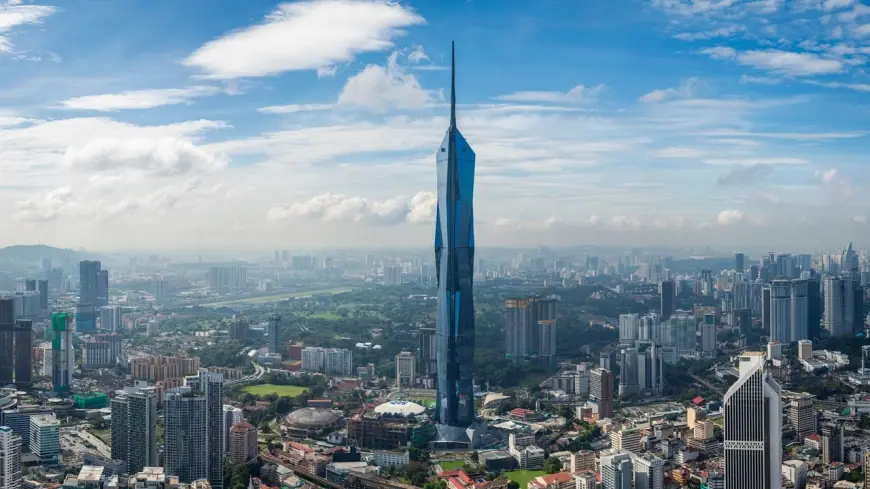
As of Feb. 19, 2026 (ET) — The race skyward continues to reshape skylines from the Gulf to East Asia and North America. Advances in materials and design have produced a cohort of supertalls that function as dense urban ecosystems rather than solitary monuments.
Who tops the list and what stands out
The undisputed benchmark remains the needle-like tower that has dominated one Gulf city’s skyline since 2010. That building anchors a mixed district of malls, residences and fountains and continues to be the global reference point for vertical scale. Southeast Asia’s tallest, completed in 2023, now reshaped the horizon of a major Malaysian capital and ties national symbolism to contemporary architectural ambition.
China’s signature entries include a twisting, spiralling tower whose aerodynamic façade reduces wind loads and improves energy performance while accommodating offices, hotels and observation decks. Another Chinese supertall, nicknamed for its ceremonial shape, rises at the heart of a capital’s financial district and signals a blend of modern form and cultural reference. In the Pearl River delta, a vertical city of offices, residences and a luxury hotel uses some of the fastest elevators on the planet and forms part of a cluster redefining that region’s skyline.
In South Korea, a tapering mixed-use tower now dominates a modern skyline with one of the world’s highest public viewpoints. In New York City, a tower rising from the rebuilt World Trade Center site serves as both a memorial and a modern landmark; its 1, 776-foot symbolic height echoes a key year in American history. Overlooking one of the most important pilgrimage sites in the world, a clock-topped complex blends religious function with supertall scale and accommodates thousands during peak seasons.
How height is measured and why it matters
Heights and rankings use the measurement standards of the Council on Tall Buildings and Urban Habitat (CTBUH), the global authority that standardises skyscraper data. Buildings are ranked by architectural height, which counts permanent design elements such as spires but excludes antennae and temporary structures. Only fully completed buildings are included in official tall-building lists, so a structure only changes the pecking order when it opens its doors.
Engineering advances make these feats possible: high-strength concrete, wind-resistant structural systems and faster elevators have all expanded what architects and cities can achieve. At the same time, mixed-use programming ensures supertalls are lively, 24-hour places—observation decks, luxury hotels, offices, residences and retail coexisting within single vertical volumes.
Why travellers and cities care
Beyond engineering prestige, these towers are cultural and economic signifiers. They anchor neighbourhoods, draw visitors to observation decks and restaurants hundreds of floors up, and appear on postcards and film backdrops. For travellers, a visit offers dramatic views and a direct way to read the ambitions of the place below—whether that’s financial power, national pride, religious significance or rapid urban reinvention.
Practical tips for visitors: check whether observation decks are public or ticketed, be aware of peak pilgrimage or festival seasons around religious complexes, and consider combining skyline visits with nearby cultural sites to contrast vertical modernity with historical context. As cities continue to reach higher, these buildings will remain both technical milestones and the most visible expression of 21st-century urban aspiration.