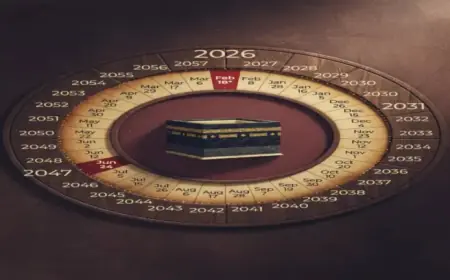

























ramadan 2026: Saudi moon sighting sets start; some communities to observe later


Moon spotters in Saudi Arabia verified the waxing crescent on Tuesday, Feb. 17, 2026 (ET), setting the start of ramadan 2026 at sundown that day for communities that follow that confirmation. Other regions, including parts of India where local sightings were reported later, have announced first-day observances on Feb. 19, 2026 (ET). The divergence underscores how local sighting traditions and differing religious authorities shape the calendar of the holy month.
How the start date was determined
The beginning of the month of Ramadan is tied to the lunar Hijri calendar and is confirmed by sighting the thin waxing crescent that follows a new moon. Observatories and trained moon spotters play a central role in verification. In Saudi Arabia, trained teams and observatories reported seeing the crescent on Feb. 17, 2026 (ET), prompting many communities worldwide that follow that sighting to begin fasting at sundown that evening.
Not all communities base the start of Ramadan on a single international sighting. In some countries local religious leaders and mosque authorities conduct their own observations; where a local crescent is sighted later, first-day observances can shift. For example, several regions announced the crescent was seen locally on Feb. 18, 2026 and set the first day of fasting for Thursday, Feb. 19, 2026 (ET). This dual timing is a familiar pattern and does not indicate disagreement about the month itself, but reflects differing traditions on whether to follow local visibility or an external authority.
What Muslims and communities can expect during the month
Ramadan is the ninth month of the Islamic calendar and commemorates the initial revelation of the Quran to the Prophet Muhammad. Almost 2 billion Muslims worldwide observe the month, with communities across countries organizing communal prayers, charity drives, and nightly gatherings.
A typical Ramadan day begins before dawn with a pre-fast meal called suhoor. Fasting from dawn until sunset includes abstaining from food and water, and is intended as a period of spiritual reflection, self-discipline, increased prayer and Quranic reading, and acts of charity. At sunset the fast is broken with iftar, a communal meal often shared with family and friends. After the five daily prayers many Muslims participate in Taraweeh, an optional set of nightly prayers during which large portions of the Quran are recited.
Fasting is obligatory for healthy, adult Muslims, but exemptions exist: children, pregnant or breastfeeding people, those who are ill, travelers, and others with valid health or life circumstances are not required to fast. Individuals who cannot make up missed fasts later may provide a fidya—an offering to feed someone in place of each missed day. Exemptions do not preclude participation in the spiritual and communal aspects of the month.
Key calendar notes and the close of the month
Because the Islamic calendar is lunar, the start and end of Ramadan move earlier by roughly 10–11 days on the Gregorian calendar each year. The close of Ramadan is marked by Eid al-Fitr, a one-day celebration that begins with a communal morning prayer and includes greetings of 'Eid Mubarak, ' festive meals, new clothing, and charitable giving. Humanitarian organizations project that Eid al-Fitr will likely begin on the night of March 18, 2026 (ET), subject to moon sighting confirmations in the final days of the month.
As ramadan 2026 begins, communities will be observing longstanding religious practices while also navigating the variety of sighting traditions that determine the first day. Neighbors and workplaces can expect increased evening and night activity around mosques and community centers, and many non-Muslims continue to be welcomed to participate in communal iftars and charitable events during the month.