















wuthering heights movie Divides Audiences as New Adaptation Debuts

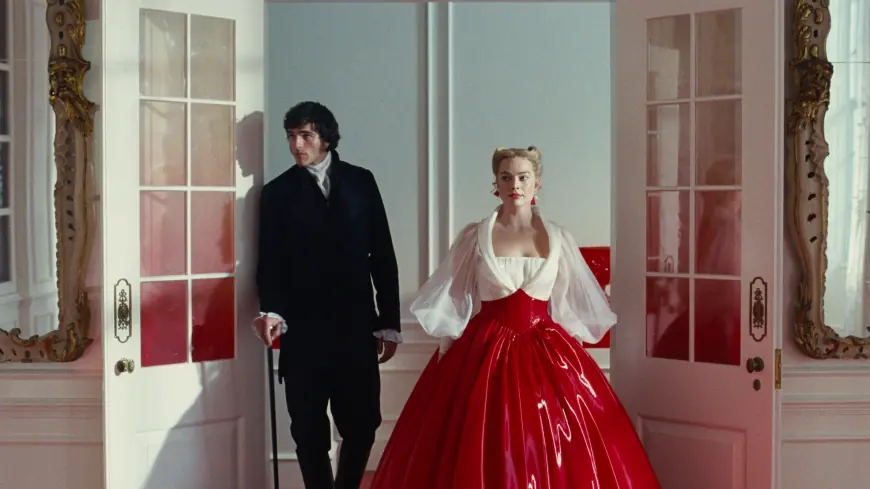
Emerald Fennell’s audacious reimagining of Wuthering Heights opened this week and has sparked a fierce debate: is it a vivid, modern fantasia or a glossy dilution of Emily Brontë’s unsettling classic? Critics and viewers are split over the film’s aesthetic flourishes, casting choices and how much of the novel’s cruelty survives the translation to screen.
Critical response: stylized spectacle versus lost strangeness
Reviewers arriving at the film have largely praised its visual ambition while questioning whether those choices captured the book’s singular, disturbing charge. The adaptation leans heavily into bold production design—rooms finished in flesh-toned leather, fetishistic costuming, and lingering closeups that frame bodies as sensual objects. For some, that approach creates a hypnotic, contemporary take on the moors’ hysteria; for others, it substitutes surface provocation for the novel’s deeper moral ambiguity.
Central to the debate is how the film handles the protagonists’ darkness. In the novel, the relationship between Heathcliff and Catherine is both transcendent and destructive: obsession that roots itself in cruelty and generational harm. Critics arguing for fidelity to that strain note the book’s capacity to make readers both repelled and compelled, and they question whether the new film retains that uneasy tension. Opponents of the film’s choices say the adaptation smooths the jagged edges, turning monstrous, self-destructive characters into glamorous, sympathetic lovers and losing the bleakness that powers the original.
Audience reactions and casting flashpoints
Fan screenings have produced vocal, often contradictory responses. A private Galentine’s Day screening on Feb. 13, 2026 (ET) landed somewhere between ecstatic fandom and breathless shock: some viewers celebrated the sexual energy and the leads’ chemistry, while others walked away uncomfortable with how the film frames violence and coercion as erotic spectacle. That split mirrors online chatter and post-screening conversations, where praise for star turns rubs against unease about what was omitted.
Casting has emerged as a particular flashpoint. The lead performances have drawn attention for their magnetism, but there’s been pushback over choices that critics say alter the novel’s racial and emotional dynamics. Observers note that the character of Heathcliff, long described in the book with ambiguous and racially coded language, has been presented here as a conventionally photogenic romantic lead. That shift has raised questions about erasure and what is lost when a figure of outsider status is domesticated for mainstream appeal.
What changed from the book — and what that means
Beyond casting, the adaptation pares back some of the novel’s most abrasive material: systemic cruelty, cyclical abuse, and the way the story punishes readers for longing for the central pair. Scenes that in print function as moral and emotional detonations are reframed with high-concept production values and a contemporary soundtrack, which reshapes tone and emphasis. Where the source text lets love and brutality co-exist in a way that resists comfortable judgment, the film often tilts toward glamor and intimacy.
Supporters of the film insist it is a deliberate fantasia—an imaginative extraction of moods and images rather than a scene-by-scene translation—and argue it should be judged on its own terms. Detractors counter that, whatever the director’s intentions, certain narrative omissions narrow the story’s moral complexity and offer a more palatable, less strange romance.
The debate is likely to continue as the film reaches wider audiences in the coming weeks. For readers and viewers invested in Brontë’s original, the adaptation raises persistent questions: can a modern, stylized retelling preserve a novel’s essential oddness, or does contemporary glamour inevitably domesticate it? For now, the new Wuthering Heights remains one of this season’s most talked-about and divisive releases, forcing a reassessment of what it means to adapt a book long celebrated for being frighteningly, stubbornly strange.