













michael jordan Faces Backlash Over Celebration with Child After Daytona 500 Win

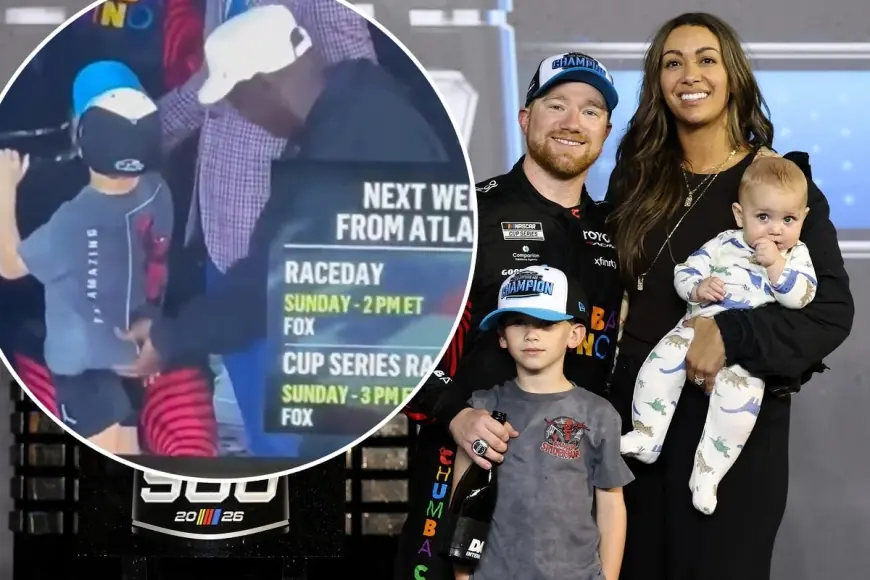
Michael Jordan's appearance in victory lane following the Daytona 500 on Feb. 16, 2026 (ET) has sparked an online debate after a short video showed him touching the winning driver’s young son. The clip quickly generated strong reactions — some condemning the gesture, others defending it as benign or practical — and the driver at the center of the moment has weighed in.
Viral clip ignites mixed reactions
A brief clip from victory lane captured Jordan bending toward the child, briefly pinching or tugging at the boy's shirt and then running his hand along the back of the child's leg. The snippet circulated widely on social feeds, prompting rapid and emotional responses. Critics questioned the propriety of a high-profile adult making such physical contact with a child in a public celebration. Defenders countered that the interaction appeared nonthreatening and noted the child’s lack of visible distress.
Beyond immediate opinion, some observers pointed to context visible in longer footage of the celebration. That extended footage shows confetti, champagne and celebratory liquids being poured, with the child quickly soaked during the commotion. Supporters of Jordan suggest his gesture was an attempt to remove an object or alleviate discomfort rather than an inappropriate touch.
Driver Tyler Reddick pushes back on criticism; alternate explanations offered
Tyler Reddick, who won the Daytona 500 and stood in victory lane with Jordan and his family, publicly defended Jordan’s actions. Reddick said he has known Jordan’s family for years and saw nothing untoward in the moment. He described the night as an emotional high point for his family and Jordan’s group, and emphasized that he did not interpret the interaction as problematic.
Several commentators suggested practical explanations for Jordan’s gestures. One theory gaining traction holds that the child had a chunk of ice or a wet, clinging piece of confetti caught in his shirt after the celebration, and Jordan was attempting to dislodge it. Supporters point to the saturated clothing and the chaotic setting as evidence that Jordan was helping, not harming. Other commentators with long experience around the driver and his family noted that Jordan has a friendly, familial relationship with the child and his relatives, which they say makes the gesture consistent with familiarity rather than misconduct.
Reputation and the speed of online judgment
The episode underscores how quickly brief, out-of-context moments can fuel reputational debate in the modern attention economy. For a figure whose career has been defined by intense public scrutiny, even a fleeting action in a celebratory setting can trigger a polarizing conversation. Some fans reacted with swift condemnation, while others publicly rescinded criticism after viewing extended footage or hearing the driver’s perspective.
Legal experts and child-safety advocates often note that intent, context and the reaction of the child are central to assessing such interactions. In this instance, no formal complaint has been filed and the child's family has expressed no concern publicly. Still, the incident highlights the fragile line public figures walk when they engage physically with minors in crowded, chaotic moments.
For now, the exchange has become another moment in the post-race narrative of the Daytona 500, amplifying conversations about celebrity behavior, parental boundaries, and the dangers of rapid online judgment. With the driver standing by Jordan and plausible explanations circulating for the gesture, the controversy may cool — but it will likely continue to be referenced in discussions about how public figures should conduct themselves around children at high-profile events.