










Macron-Modi talks in bombay highlight Rafale expansion and push for India-made components

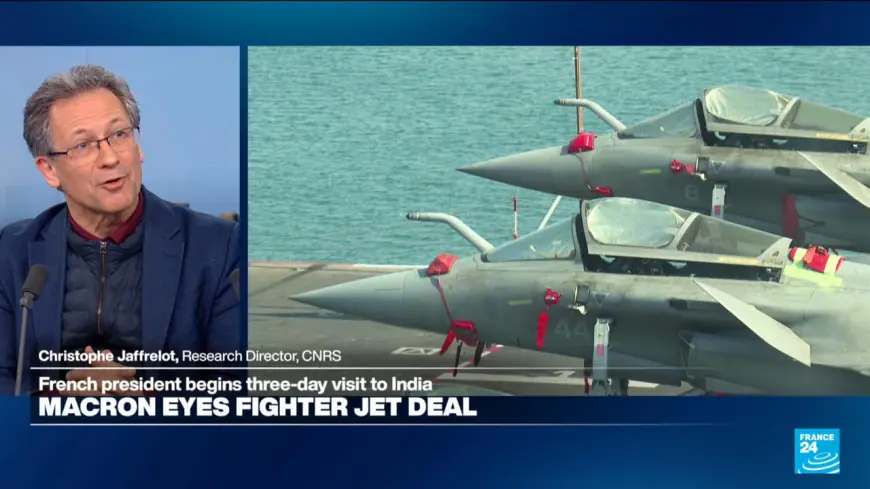
French President Emmanuel Macron met Prime Minister Narendra Modi in Bombay on Tuesday, Feb. 17, 2026 ET, in a high-profile summit aimed at accelerating economic and defence cooperation. The visit underscored both leaders' intent to deepen strategic ties, with negotiations touching on a potential expansion of the Rafale fighter programme and a renewed emphasis on bolstering India-made components in defence supply chains.
Rafale talks and the push for local content
Defence procurement was front and center during the discussions, with officials seeking a deal that could add more Rafale fighters to India's fleet. Negotiations reportedly included proposals for a significant order of additional aircraft, framed alongside India's insistence on a higher percentage of domestically produced parts and systems. New Delhi's push for deeper industrial participation aims to strengthen local defence manufacturing, create jobs, and reduce strategic dependence on single-source suppliers.
Indian defence ministers made clear that any future contract must further expand technology transfer and production involving Indian firms. The demand to "raise India-made component" levels reflects a broader government objective to retool supply chains for resilience and strategic autonomy. For manufacturers, that means reworking assembly, certification and value chains to meet performance and export standards while aligning with Indian offset and local industry policies.
Economic, industrial and technology cooperation
Beyond fighter jets, the summit showcased tangible industrial collaboration. The leaders inaugurated a final assembly line for H125 helicopters built through a partnership between an Indian private-sector aerospace firm and its European partner. The facility in Karnataka marks the first private-sector helicopter assembly line in India and is positioned as a model for future joint ventures that combine European technology with Indian production capacity.
Macron framed the relationship as one of strategic acceleration in an era of shifting global alignments. Discussions spanned artificial intelligence, energy, and supply-chain diversification as both capitals pursue greater cooperation to attract investment and secure critical technologies. For French industry, the Indo-Pacific presents opportunities for long-term strategic presence; for India, foreign partnerships are tools to scale domestic manufacturing and strengthen industrial ecosystems.
Strategic recalibration and geopolitical implications
Analysts note that as India broadens its defence sources, there is an attendant need to manage geopolitical fallout, particularly in ties with long-standing suppliers. Observers warn New Delhi will need creative strategies to balance diversifying procurement while maintaining other critical diplomatic relationships. The potential large-scale Rafale acquisition and deepening Franco-Indian defence ties form part of a wider strategic pivot that could reshape regional security dynamics in the Indo-Pacific.
The meeting also highlighted practical follow-through: officials emphasized implementation roadmaps for industrial partnerships and export-capable production lines. If carried out, commitments on higher local content, expanded helicopter assembly and possible new fighter orders would signal a maturing partnership that blends technology transfer, manufacturing scale-up and shared strategic goals.
As the two governments move from statements to contractual negotiations, the focus will be on technical timelines, certification hurdles, and the degree of technology transfer. Those details will determine whether the ambitious political rhetoric converts into lasting industrial outcomes and a durable security relationship.