




















elana meyers taylor and Kaillie Armbruster Humphries Inspire with Medals on the Track, Motherhood Off It

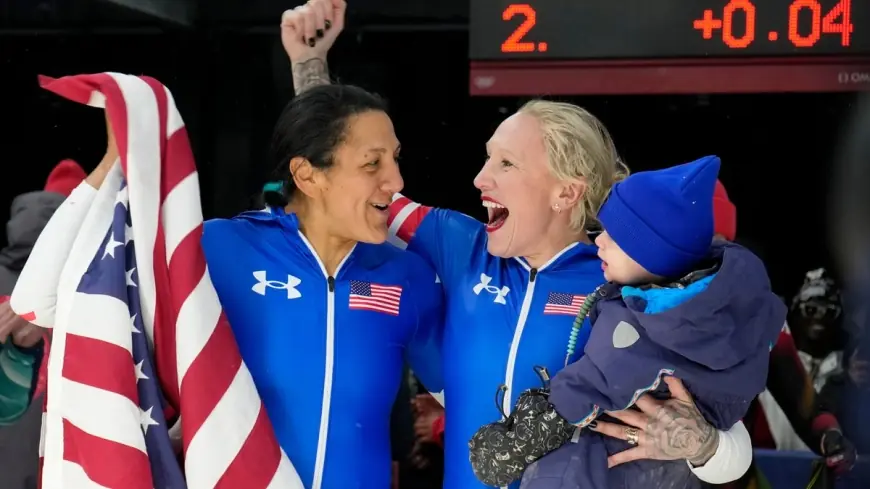
At the Milano Cortina Olympic track on Monday, Feb. 16, 2026 (ET), elana meyers taylor stood atop the monobob podium with a gold medal that capped a career-long pursuit. Beside her, Kaillie Armbruster Humphries—also on the podium—turned a spotlight on a different kind of achievement: the daily, quiet work of balancing elite sport with motherhood. Their moment was as much about visibility and encouragement for working mothers as it was about medals.
Gold on the track, a message off it
Meyers Taylor’s victory in the monobob — finishing ahead of Germany’s top competitors — was a long-awaited athletic milestone. Yet the celebration quickly carried a second, broader message. In the moments after the medal ceremony, both women framed their wins as proof that motherhood need not mark the end of personal ambition. “I hope it shows that just because you're a mom doesn't mean you have to stop living your dreams, ” Meyers Taylor said, reflecting on what the medal represents beyond sport.
Armbruster Humphries, who placed on the podium alongside Meyers Taylor, echoed that sentiment and acknowledged the emotional trade-offs. She admitted that being apart from her son for the first time since his birth was wrenching, but she stressed the need to compartmentalize and protect her performance time while trusting the family support network she has in place. “Mom guilt is a thing and it existed, but I needed to do it in order to be my best, ” she said.
The realities behind the image
Their stories make plain that elite athletes do not perform in isolation. Both athletes credited supportive partners and extended family with making their Olympic pursuits possible; both have spouses with firsthand knowledge of the sport’s demands. Institutional support — from training schedules to financial resources aimed at athletes who are parents — also plays a role, but neither woman minimized the personal calculus each mother must make about time, priorities and identity.
Meyers Taylor framed her medal as a nod to those sacrifices and to those who keep athletes grounded. She dedicated the win to mothers who may not have been able to chase their own dreams and now see their children carry those hopes forward. For Armbruster Humphries, the moment was proof against a narrative that age or parenthood should curtail competitive goals. “Elana and I get to be proof that that's not true, ” she said, noting that success can look different at 20 than it does at 40, but that it remains attainable.
Beyond the podium: an invitation to other mothers
The emotional images from the medals ceremony—little boys playing in the snow near the podium, oblivious to the historic significance of the moment—underscored the human side of athletic achievement. Meyers Taylor and Armbruster Humphries hope those images offer encouragement to anyone juggling caregiving and career ambitions: sports stars or office workers, young parents or those returning to work later in life.
Their message was simple and direct: pursuing a dream after becoming a parent is complicated, sometimes messy, but possible. It requires support, sacrifice and hard choices, but it can also provide a model and a spark for others. In the end, the medals were not only trophies for individual excellence; they were symbols of resilience, and a reminder that the path forward can be carved by those who refuse to choose between family and aspiration.