























elana meyers taylor and Kaillie Armbruster Humphries: Bobsled queens inspire with medals on the track, motherhood off it


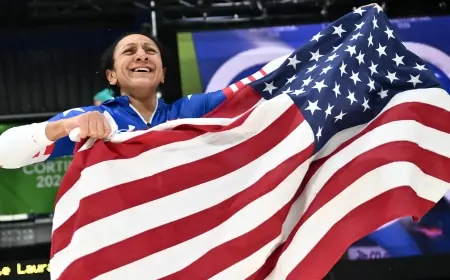
In the shadow of the Milano Cortina track, Elana Meyers Taylor finally reached the summit she has chased for years. On Monday, Feb. 16 (ET), she won the Olympic monobob title, standing beside longtime rival and fellow mom Kaillie Armbruster Humphries on the podium. Their medals were not just athletic achievements; they became statements about ambition, sacrifice and the complicated realities of being elite athletes and mothers.
Gold, family and the changing face of elite sport
Meyers Taylor’s victory — finishing ahead of Germany’s Laura Nolte and Armbruster Humphries — was a personal milestone and a public moment for mothers juggling careers and parenting. She acknowledged the grit it takes to pursue an Olympic dream while raising children, saying she hopes the win “shows that just because you're a mom doesn't mean you have to stop living your dreams. ”
The image of two young boys playing near the podium underscored that message. For Meyers Taylor’s sons, medals are a novelty; for Armbruster Humphries’ toddler, the snow and the chance to explore the medal site were far more compelling than the hardware itself. Yet both athletes were clear that their families are integral to their careers. Supportive partners, extended relatives and dedicated teams help shoulder the daily load — but the emotional tug-of-war remains intensely personal.
Both women stressed that motherhood did not erase their competitive identity; it changed how they approached training, recovery and travel. Armbruster Humphries described the emotional cost of being apart from her son for the first time since his birth, admitting it “gutted her” but that compartmentalizing and trusting her support network allowed her to perform at the highest level.
Practical support and the unseen pressures
Elite programs offer resources aimed at helping athlete-parents manage financial and logistical challenges, and both Meyers Taylor and Armbruster Humphries acknowledged those systems make a tangible difference. Still, no program silences the inner voice that questions priorities or prompts guilt when choices are made in favor of training and competition.
That internal dialogue is familiar to many working mothers. Meyers Taylor framed her medal as recognition of countless people who kept her grounded and encouraged her when things got hard. She dedicated the win to moms who never had the chance to chase their own dreams and to those whose children became their dreams. In that way the podium became a platform for a broader conversation about what success looks like for women at all stages of life.
Armbruster Humphries pushed back against ageist assumptions in the sport, noting that the narrative she grew up with — that athletic careers decline sharply after 40, especially for those with children — does not define her. Her message was straightforward: goals can be reshaped, timelines can shift, and excellence can come later and look different than it did at 20.
Legacy beyond medals
The moment in Cortina d’Ampezzo was more than another Olympic snapshot. For many, it was proof that elite competition and parenting are not mutually exclusive. Both athletes embodied resilience: the physical demands of bobsledding, the mental strain of elite performance, and the unglamorous logistics of parenting on the road.
For younger athletes and parents watching, the sight of two decorated bobsledders balancing motherhood and medals offers a new model. It isn’t a tidy blueprint — there are trade-offs, late nights and moments of doubt — but it is a visible example that dreams can persist alongside family life. Meyers Taylor and Armbruster Humphries hope that message encourages more women to rethink limits and to pursue ambitions that may evolve but do not have to end.
Their medals will sit on shelves, but the longer ripple may be the permission those medals hand to other mothers: that excellence, at times reconfigured, remains within reach.