

























Why anthony kim’s Adelaide win resonated — Tiger Woods explains

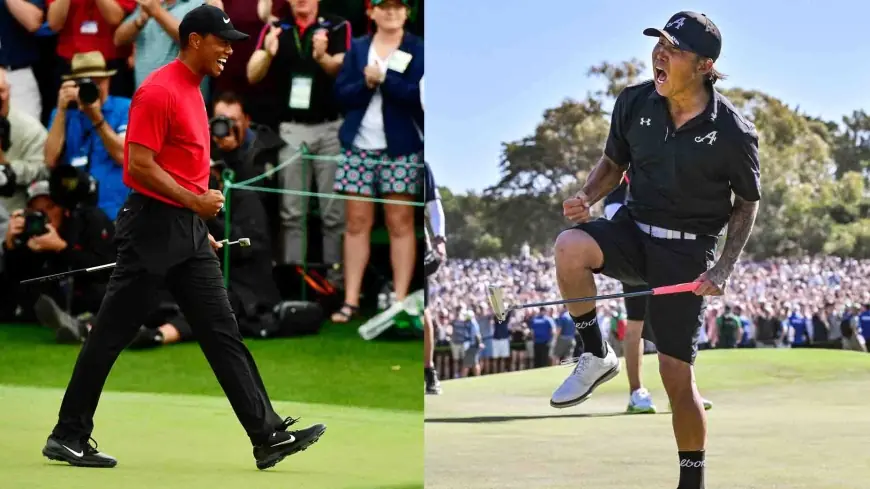
Anthony Kim’s closing 9-under 63 at The Grange produced his first victory in nearly 16 years and a moment that landed far beyond a tournament leaderboard. The 40-year-old’s return to the winner’s circle after a long, public absence was part sporting achievement and part human triumph — and Tiger Woods, who has lived his own comeback story, voiced why that combination spoke to so many.
From prodigy to a long, private struggle
Kim was once one of golf’s brightest young stars: three PGA Tour wins before age 25, a Ryder Cup singles victory and a rise to No. 6 in the world. Then came injuries and life beyond the course. An Achilles injury in 2012 largely removed him from professional competition, and Kim has been candid about battling injuries and substance use during an extended time away. He rarely appeared in public and, for many years, became something of a mythical figure in golf lore.
Life shifted when family became a focus. Kim credits his wife Emily and daughter Isabella with helping him through his darkest moments and pointing him back to golf. He only rejoined professional competition in 2024 and said he had to relearn parts of the game — everything from swing feel to using modern equipment. The path back was neither swift nor assured: he earned playing status through a promotions event, punched his ticket with a clutch birdie on the 36th hole, and spent time rebuilding confidence and form.
How he closed the deal at The Grange
On Sunday, Kim turned that long recovery into a dominant performance. He shot a final-round 63, pouring in consecutive birdies in the middle of the back nine and converting long putts when it mattered most. Four straight birdies across Nos. 12–15 and a 15-footer on the par-4 17th set him apart from a field that included some of the game’s best. He finished at 23 under par, three strokes clear of the next competitors.
The final round carried visual and symbolic weight. Kim played in shorts before large, energized galleries, holed several long putts and walked up the 18th to complete a comeback that had once seemed almost inconceivable. For the man who had been away for more than a decade, the win was both an athletic statement and an emotional release — he described each successful putt as part of a process of digging himself out of old lows.
Why the victory matters beyond a trophy
Tiger Woods, familiar with both public scrutiny and the grind of recovery, offered a succinct read on why Kim’s result hit a wider chord. Woods noted that the win combined the memory of the young player who once electrified fields with the reality of a man changed by time and struggle. That duality — recollection of brilliance plus the humility of return — helped explain the broad emotional response.
There is also a practical takeaway. Kim’s return underscores that careers can be nonlinear and that elite talent, even when interrupted by injury or personal crisis, can resurface with perseverance and support. His comments about being a “small miracle” to still be here and crediting family for his turnaround reinforced the human side of elite sport: performance and personal recovery can coexist and even fuel one another.
Whether this victory marks the start of a sustained late-career resurgence or a singular, redemptive headline, it has already altered the narrative around Kim. For fans, peers and players who have faced setbacks, his win at Adelaide is a reminder that past promise and present work can converge in moments that feel as much restorative as they are triumphant.