























Why usa hockey vs. Canada remains the nastiest rivalry on the Olympic ice

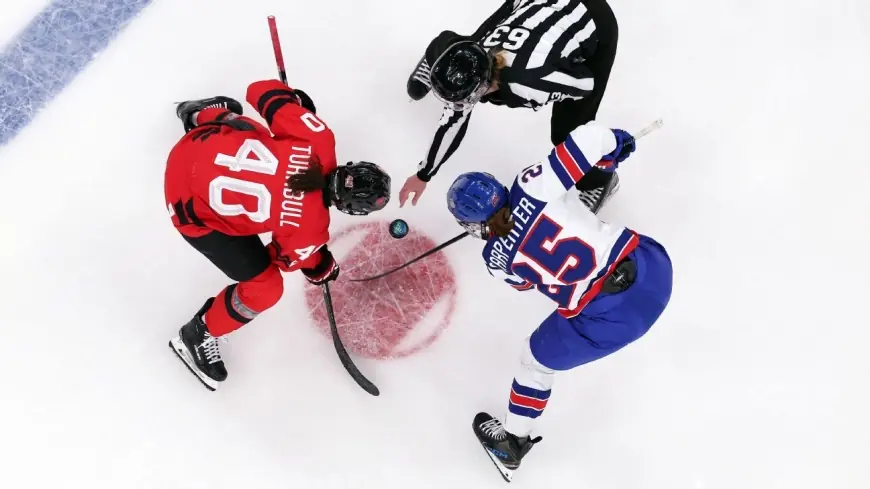
When the United States and Canada skate for Olympic gold on Thursday at 1: 10 p. m. ET, fans will tune into a clash that has shaped women’s hockey for nearly three decades. What began as a tense, often personal feud off the ice has evolved into a high-stakes, physical rivalry that still delivers drama, headlines and unforgettable moments whenever the two teams meet.
Roots of a border feud that became a showcase
The rivalry dates back to the late 1980s and hardened quickly once women’s hockey entered the Olympic program in 1998. Early encounters were marked by palpable hostility: players recalled intentionally avoiding elevators, refusing to mix in shared hotels and treating cross-border matchups as more than just games. That animus translated on to the ice, where both nations battled for the same mantle of supremacy and the rivalry fueled intense preparation and, often, highly physical play.
Over the years the stakes only grew. The two programs have accounted for every Olympic gold in women’s hockey, and their meeting in the final has become a recurring headline. That history has created a culture in which even exhibition matchups can erupt into fights or line brawls — testifying to how deeply embedded the rivalry is, beyond tactical differences or coaching philosophies.
U. S. dominance in Milan — and why it matters
The United States enters the gold-medal game as the overwhelming favorite after a dominant run in Milan. The Americans have posted multiple shutouts and an eye-popping goal differential, using a deep, balanced attack and a commitment to rolling four full lines. Contributions have come from veterans and rookies alike, and the defense-plus-goaltending formula has suffocated opponents; the team went into the final having conceded just one goal through the earlier rounds and having recorded several consecutive shutouts.
That form was underlined in a 5-0 preliminary victory over Canada, the first time the U. S. kept its neighbor off the scoresheet in Olympic history. But while the result sent a clear message about the U. S. run of form, players and coaches stress that a final with so much on the line can reset momentum. With an all-or-nothing gold-medal backdrop and familiar adversaries, the intensity is guaranteed to spike and small moments — a turnover, a power play goal, a momentum shift — can decide everything.
Canada’s adversity and the Poulin factor
Canada’s path to the final has been tested by setbacks and resilience. The team endured early disruptions in the tournament and lost its captain and best offensive weapon to injury for a stretch. The return of that player proved pivotal: the veteran scored crucial goals in the knockout rounds and moved atop the women’s Olympic scoring charts, a milestone that speaks to longevity and big-game impact.
While some questioned roster construction and the choice to rely on veteran continuity rather than youthful infusion, Canada’s ability to grind through adversity — and lean on experienced leaders — has kept them within striking distance. History shows that when these two teams meet in a gold-medal game, past form can be less predictive than appetite and execution in the moment.
The U. S. -Canada matchup on Thursday at 1: 10 p. m. ET will be their latest chapter: a rematch laced with history, grudges and world-class talent. Expect physicality, strategic chess and high drama as both sides chase the same prize — and a rivalry that refuses to cool off headlines another dramatic installment.