











![Amber Glenn Withdraws From [Event] Citing Injury, Will Miss Upcoming Season — Update](https://www.filmogaz.com/uploads/images/202602/image_430x256_6994eca04b7cd.webp)

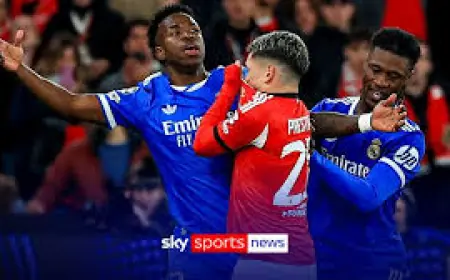
benfica - real madrid: Champions League quarterfinal draw sets up high-stakes rematch

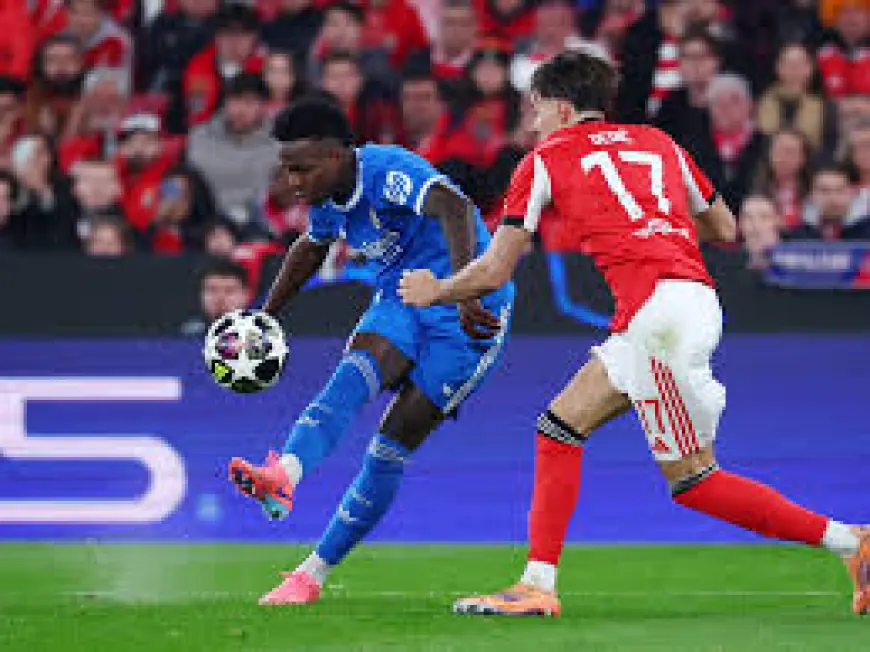
The Champions League draw has paired Benfica and Real Madrid in a quarterfinal tie that renews a compelling rivalry between Portuguese ambition and Spanish pedigree. The two-legged showdown will test tactical coherence, squad depth and mental resilience as both sides pursue a place in the semifinals.
Context and stakes
This draw pits a Benfica side known for its energetic, forward-driven approach against a Real Madrid team that blends experience with individual brilliance. For Benfica, the tie represents an opportunity to reassert itself among Europe’s elite and deliver a memorable campaign for fans. For Real Madrid, the fixture is another step on a familiar European path; the club arrives with expectations of progressing deep into the competition every season.
Home advantage in the first leg will be decisive for the team drawn to host first; the away-goals rule no longer applies, so both managers must balance attack and caution across 180 minutes rather than gamble for a single away-goal edge. Injury returns, recent form and fixture congestion will all shape selection decisions.
Key matchups and tactical battles
Defensive organization against creative threat will be the defining chess match. Benfica’s full-backs typically push high and provide width, which will invite Real Madrid’s quick-transition attackers to exploit spaces on the counter. Benfica will likely rely on compact midfield pressing and rapid circulation to create overloads in advanced areas; success there could unbalance Real Madrid’s ball progression.
Real Madrid’s midfield veterans offer control and tempo management, while their forward line packs the kind of individual quality that can change a tie in moments. Benfica’s goalkeeper and backline will need to be at peak concentration to withstand moments of individual ingenuity. Set pieces and transitional breaks are expected to feature prominently given both teams’ proficiency in those phases.
Managerial decisions loom large. Benfica’s coach may opt for a proactive press to unsettle Real Madrid early, whereas Real Madrid’s manager could choose a measured approach that looks to dominate possession and pick apart Benfica’s structure through patient build-up. Substitution patterns—particularly the timing of offensive reinforcements—could swing the tie.
Players to watch and implications
Benfica will look to its attacking hub for goals and creative impetus; collective movement and link-up play will be essential if they are to breach Real Madrid’s defense. Young talents pushing for breakthroughs in Europe could use this stage to elevate their profiles, while established performers must deliver consistency.
Real Madrid will depend on match-winners capable of producing defining moments. Experience in big ties typically helps them manage game rhythms, but complacency is never an option against a motivated opponent with home support and belief. The tie also has broader implications: progression would strengthen either club’s claim in the title race for continental honors and affect their domestic focus as league commitments continue. Knockout European success often influences transfer strategies and managerial evaluations at season’s end.
Both clubs must manage physical load and avoid key injuries across domestic fixtures leading up to the first leg. The scheduling will test squads’ rotation policies and could determine the competitive balance across the two legs.
Fans can expect high intensity, tactical nuance and moments of individual brilliance across this tie. Benfica’s hunger for a landmark European run will meet Real Madrid’s institutional drive for Champions League glory—a matchup that promises drama and fine margins over two decisive games.