

















![Amber Glenn Withdraws From [Event] Citing Injury, Will Miss Upcoming Season — Update](https://www.filmogaz.com/uploads/images/202602/image_430x256_6994eca04b7cd.webp)


UCLA vs MI State: Bruins Head to East Lansing in High-Stakes Nonconference Showdown

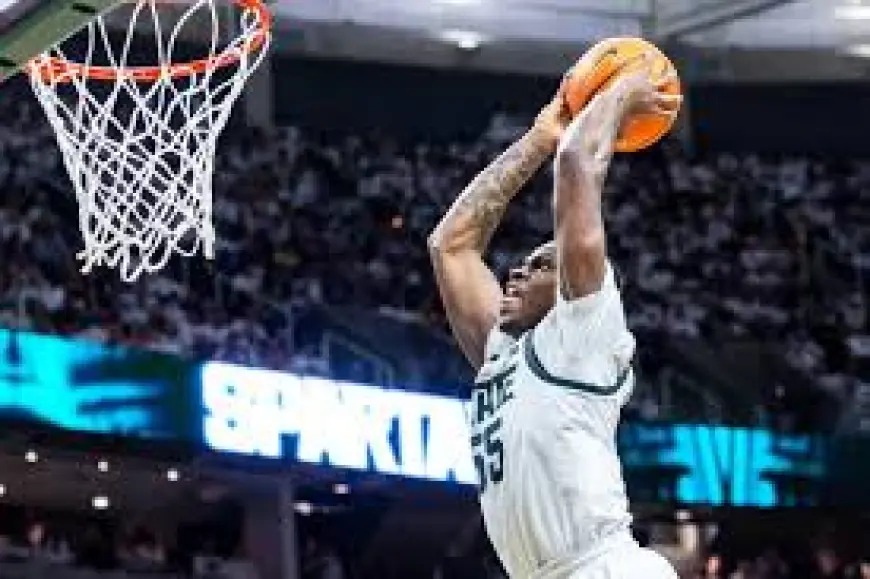
UCLA travels to East Lansing to face Michigan State in a matchup with clear postseason implications. Tipoff is set for 7: 00 PM ET on Saturday. The game will provide a measuring stick for both teams as the season reaches its most consequential stretch.
What's at stake
This meeting is more than a single nonconference test: it will influence national perception, RPI-style metrics and seeding conversations heading into March. Michigan State will try to defend its home court and prove the roster can compete with blue-blood programs on both ends of the floor. UCLA wants a road statement that underscores its consistency against pressure defense and physical rebounding teams.
For the Spartans, a win keeps momentum in the conference push and bolsters their résumé against top-level opponents. For the Bruins, grabbing a victory in East Lansing would silence questions about road toughness and depth when matchup problems arise. Both coaching staffs are likely to treat the game as an opportunity to stress in-game adjustments and late-clock execution.
Matchup keys and X-factors
Half-court offense vs. transition defense: Michigan State traditionally relies on structured sets and offensive rebounding to generate second-chance points. UCLA must limit offensive boards and force contested jumpers if it wants to keep possessions even. Conversely, the Bruins look to push the ball in transition, turn Spartan misses into quick scoring trips and avoid getting bogged down in half-court grind.
Interior play and rim protection: The battle on the glass will be decisive. If Michigan State controls the boards, it will extend possessions and wear down UCLA’s perimeter defenders. UCLA’s frontcourt must match physicality while contesting shots without fouling. Who wins this battle will likely determine the final possession scenarios.
Perimeter shooting and ball security: Both teams feature guards who can change the game from behind the arc. Open looks from distance will flip momentum quickly, so shot selection and turnover margin will be critical. Michigan State’s pressure can create transition opportunities, but it also invites risk; UCLA must value the ball and convert when the defense sags.
Bench depth and foul trouble: Late in the game, bench contributions may decide the outcome. The coaching on both benches will be tested as starters face foul trouble or fatigue. Whichever roster sustains production from the second unit will gain an edge in the fourth quarter.
Injury notes, coaching matchup and what to watch
Coaches on both sidelines are expected to lean on schemes they've refined all season. Defensive switches, late-clock sets and pace management will be telling. Watch how each staff adapts after timeouts and how they defend pick-and-rolls—those adjustments often dictate control of the game.
Keep an eye on available rotations. Any late scratches or limiting of minutes for key players would swing the matchup. Both teams will need their primary scorers to find rhythm early; cold starts could force reliance on less-tested options.
Final possessions and free-throw performance will be worth monitoring as well. In close games away from home, free throws and late-game decision-making typically separate winners from losers.
Saturday’s 7: 00 PM ET tip will reveal which roster and game plan hold up under pressure. Expect a physical, strategic contest with fans engaged through the final minute.