
























Haramain Railway Plays Central Role as Saudi Railways Hits 14 Million Passengers in 2025

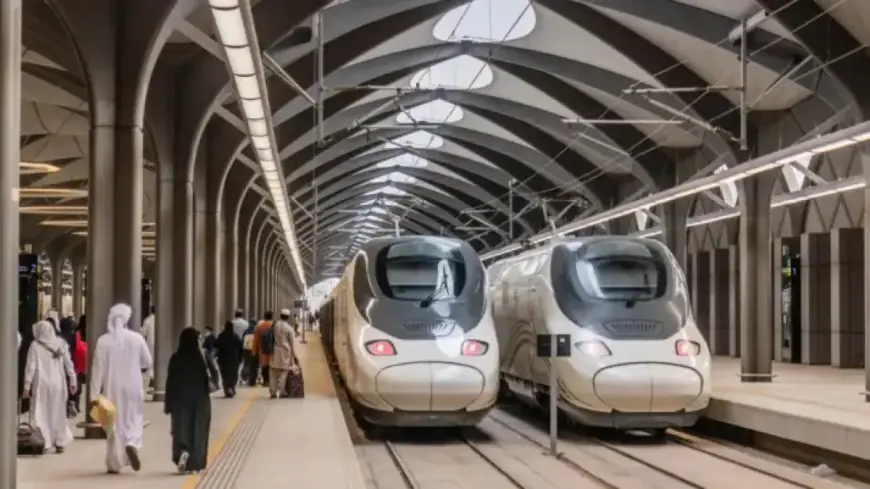
Saudi Arabia Railways (SAR) recorded a landmark year in 2025 (ET), moving over 14 million passengers nationwide — a 7. 1% rise from the prior year — with the Haramain High‑Speed Railway proving pivotal during the Hajj season. The boost in ridership, alongside a high‑value technology contract renewal and ambitious expansion plans, signals a rapid evolution in the kingdom’s rail profile.
Ridership surge and Hajj impact
SAR operated more than 45, 000 trips in 2025 (ET) and transported nearly 2 million pilgrims on the Haramain High‑Speed Railway between Makkah and Madinah during Hajj. That pilgrimage traffic accounted for a substantial portion of the year’s passenger growth and underscored the line’s importance for mass religious mobility.
Beyond passenger services, freight remained a core pillar: the railway network moved over 30 million tonnes of goods and minerals through its freight division in 2025 (ET). The combination of passenger peaks during seasonal pilgrimage and robust freight volumes highlights the dual role the national network plays in supporting both tourism and commerce.
Technology and operations: the Indra renewal
A major operational development came in October 2025 (ET) with the extension of a multi‑year contract to maintain and operate the Mecca–Medina high‑speed line’s critical technology stack. The renewed agreement secures continued support for rail traffic management, signalling, telecommunications, booking and ticketing, access control and other IT systems for at least another five years.
The extension includes fitment of 20 additional trains with the contractor’s telecommunications and ticketing systems, bolstering the line’s capacity as monthly train traffic exceeds 1. 8 million kilometres. Integrated control has been centralised through a national operations centre in Jeddah that supervises communications between trains, stations and control staff, enabling faster decision‑making and improved punctuality across the corridor.
Contactless ticketing and advanced online reservation platforms now handle large booking volumes: the systems in place manage nearly a million online bookings each month and support modern payment and validation methods for urban and intercity services. This digital backbone has been credited with keeping passenger flows smooth during peak periods and enhancing overall operational resilience.
Looking ahead: luxury services and regional links
Growth plans extend beyond capacity upgrades. SAR has announced a new ultra‑luxury train concept, dubbed “Dream of the Desert, ” slated to launch in late 2026 (ET). Designed by Aline Asmar d’Amman, the service will offer one‑ and two‑night itineraries from Riyadh with 33 suites, two restaurant cars and a Majlis lounge, finished in wood, gold accents and earthy hues to appeal to upscale tourists.
Regional connectivity is also rising on the agenda. A proposed high‑speed electric passenger railway linking Doha and Riyadh aims to cut travel times to roughly two hours at speeds above 300 km/h, with intermediate stops planned in cities such as Dammam and Al‑Hofuf and a target completion date of 2031 (ET). Neighboring states are expanding passenger rail offerings as well, with initial services set to connect major urban centers and lay the groundwork for a broader Gulf rail network.
The combination of higher ridership, strengthened technological management, new luxury experiences and cross‑border projects positions Saudi rail as a fast‑moving element of the kingdom’s transport transformation. For the Haramain line in particular, continued investment in systems, rolling stock and passenger amenities will be critical to meet seasonal surges and longer‑term tourism growth.