






















Tyson Fury says he will have no coach or nutritionist for comeback vs Makhmudov

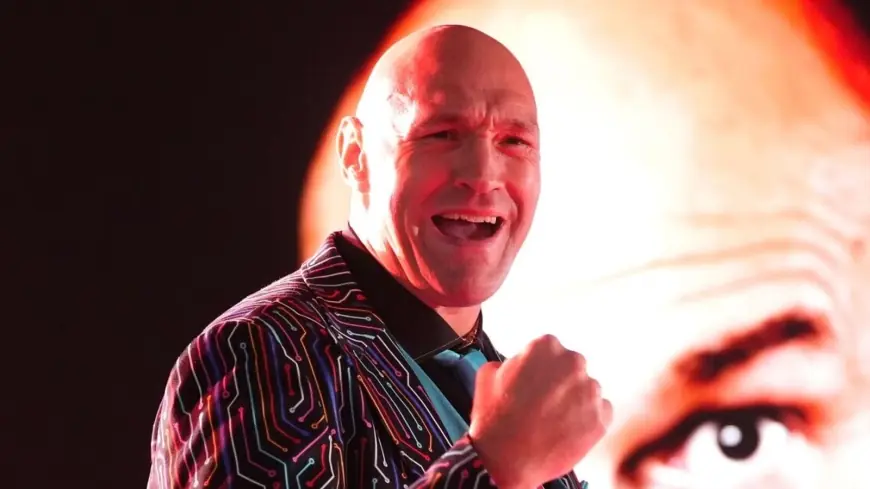
Tyson Fury has announced he will largely go it alone for his return to the ring on April 11 (ET), saying he will not employ a trainer, nutritionist or other specialists for the comeback fight against Arslanbek Makhmudov. The two-time world heavyweight champion insists his corner will be limited to basic ring duties while he handles the rest of his preparation personally.
Going solo in the training camp
Fury told a recent interview that he does not feel the need for the usual team of specialists around him. "I don't need a trainer, I don't need a nutritionist, I don't need a mind coach, I don't need a sleep coach and I definitely don't need a strength coach, " he said, adding that his corner's role should be limited to washing his gumshield, handing him water between rounds and applying Vaseline.
The announcement marks a clear break from Fury's recent approach. An American coach had guided him through some of the biggest moments of his career since 2019, including a run to the WBC world title and two high-profile fights against Oleksandr Usyk. Fury, 37, retired after back-to-back defeats to Usyk but has now declared himself ready to re-enter the heavyweight picture.
Fury acknowledged the challenges posed by inactivity — he will return after roughly a year out — but framed the decision to lead his own camp as a sign of confidence in his experience and instincts. "Here's what I need in boxing - someone to wash my gumshield out and give me some water between rounds, and give me a smear of Vaseline across the eyes, and leave the rest to me, " he said.
Motivation, ambitions and the heavyweight map
Fury has made clear that a comeback is not a one-off nostalgia act. He wants to win a world title again and believes his profile keeps him at the centre of the heavyweight scene, belts or not. He predicted a potential trilogy with Usyk before the end of the year, saying the Ukrainian would be seeking another fight with him and that he remains the sport's premier draw.
On the path back to the top, Fury faces Makhmudov on April 11 (ET) at Tottenham Hotspur Stadium in London. He has dismissed doubts about ticket demand for an event billed to draw upwards of 60, 000 spectators, and has used his public appearances to underline his intentions: to re-establish himself among the division's elite and to push for bigger clashes down the line.
Fury also revealed a personal motive for his return. He said recent tragedies experienced by others close to the sport crystallised his thinking about life's fragility, prompting him to stop delaying his plans. That sense of urgency has fed into his decision to re-enter the ring and to do so on his own terms.
Experience, risk and what to expect
There is risk in Fury's self-reliant strategy. Elite fighters typically rely on teams for conditioning, nutrition, recovery and tactical planning; opting out of that infrastructure will put the spotlight on Fury's fitness and discipline. Yet his record — 34 wins in 37 bouts with one draw — and his history of overcoming long layoffs will be measured against his performance on April 11 (ET).
For opponents and observers, the immediate questions are simple: can Fury recapture peak form without a traditional support network, and will victory over Makhmudov set up the high-stakes fights he desires? The answers will emerge as Fury moves through his training camp and into the ring, where he insists the essentials will be handled by him alone and the corner will do no more than the basics during the fight.
Whatever the outcome, Fury's return on April 11 (ET) shifts the heavyweight landscape and raises the stakes for the division's top names as a famously mercurial champion stages his comeback.