

























Elana Meyers Taylor Wins Monobob Gold, Becomes First Olympic Champion After Years of Near Misses

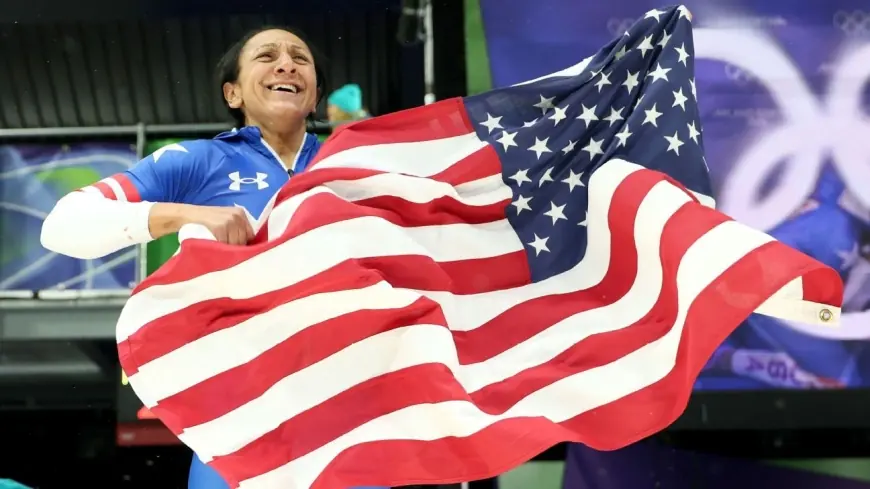
On Monday night, Feb. 16, 2026 (ET), Elana Meyers Taylor clinched the monobob gold at the Milan Cortina Winter Games, finally topping a career that had produced five Olympic medals but no title. The 41-year-old U. S. bobsledder rallied in the final heat to take gold with a combined four-run time of 3 minutes, 57. 93 seconds, dropping to her knees and waving the American flag as her two young sons watched from the stands.
A career-defining night in Cortina d'Ampezzo
Meyers Taylor's victory was the culmination of years of perseverance through injury, doubt and near misses. She entered the final run trailing Germany's track leader, but held firm under pressure and produced a decisive final push that moved her into first place overall. The margin for the medals was tiny: the German pilot had led after three runs, and the top group was separated by tenths of a second going into the last heat.
Her final total of 3: 57. 93 put her ahead of the field, with Germany's Laura Nolte taking silver and Kaillie Humphries Armbruster capturing bronze. Humphries Armbruster's third-place finish came earlier in the last rotation, ensuring her fifth career Olympic medal; Meyers Taylor then sealed the gold for herself and for the United States.
Historic milestones and personal triumphs
At 41, Meyers Taylor became the oldest American woman to hear the national anthem at the Winter Games and, with this victory, tied a longstanding U. S. mark for the most Winter Olympic medals by an American woman. Before Monday night she had stood on podiums five times—three silvers and two bronzes—making this gold the final jewel in a storied collection and a symbolic reward for years of resilience.
Her journey to the top of the podium is notable not just for the medal count, but for the obstacles she overcame. Concussion issues threatened her career at points, and the balance of motherhood and elite training added fresh challenges. On the run that sealed her victory she celebrated visibly: a leap in the air, raised fists and tears as emotion overcame her. Those moments resonated beyond the track; she will be remembered both for athletic excellence and for proving that elite performance can continue well into what some consider the twilight of an athlete's prime.
Final runs and decisive moments
The competition came down to execution in the fourth heat. The field ran in reverse order, sending the third-place pilot down first among the medal contenders, followed by Meyers Taylor and then the leader. Humphries Armbruster posted a strong time that guaranteed at least a bronze. Meyers Taylor, starting from second on the leaderboard, produced a run clean enough to displace the leader and put pressure on the final sled.
The German pilot, who had held the lead through the first three heats, put down a fast last run but ultimately fell short of reclaiming gold. The final podium reflected not only speed, but composure under immense pressure—qualities Meyers Taylor embodied throughout a meet that tested nerves as much as skill.
For the sport, the outcome highlighted the depth and longevity possible in sliding events: two athletes in their 40s stood on the podium, and both underscored that age and parenthood do not preclude elite achievement. For Meyers Taylor, the gold is a career capstone—one that will be replayed for years to come as a defining Winter Games moment.