

























Where the Feb. 17, 2026 annular solar eclipse will be visible — and who will miss the 'ring of fire'

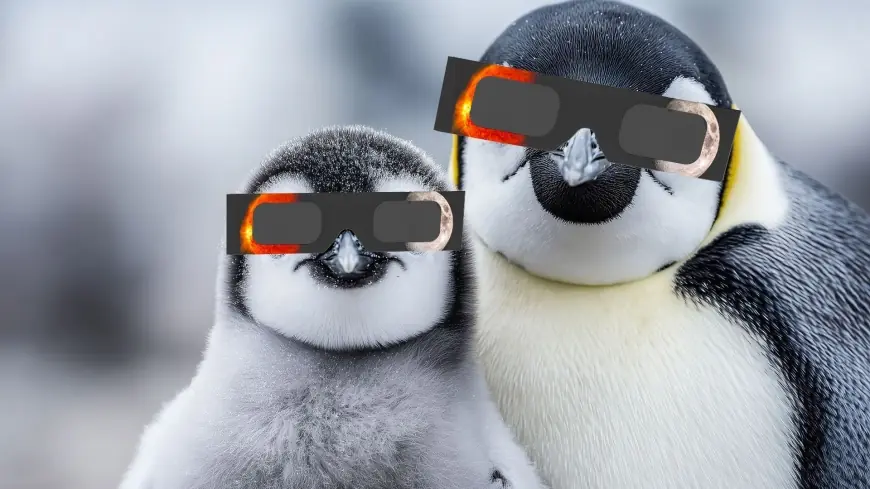
On Tuesday, Feb. 17, 2026, the sky will stage an annular solar eclipse — the so-called "ring of fire" — but the spectacle will fall mostly over remote Antarctic seas and ice. A narrow corridor will see the full annular phase, while a far broader swath of the Southern Hemisphere will witness a partial eclipse.
Path of annularity: where the full ring will appear
The path of annularity for the Feb. 17 eclipse stretches roughly 2, 661 miles (4, 282 kilometers) long and about 383 miles (616 kilometers) wide. The corridor begins over mainland Antarctica and tracks across western Antarctica before setting off the Davis Sea coast in the Southern Ocean. In practical terms, the only places that can observe the full "ring of fire" are in and around that Antarctic track — areas with far more penguins than people.
The annular phase will be brief for any locations within the corridor, and exact timing will vary by position along the path. The first signs of eclipse activity will begin near 6: 42 a. m. ET, with the central annular passage occurring later as the Moon’s shadow sweeps southeastward across the ice and ocean.
Who will see a partial eclipse
Although the full ring will be confined to Antarctic latitudes, a much larger region will experience a partial solar eclipse, during which the Moon appears to take a "bite" out of the Sun. The partial phase will be visible across most of Antarctica, southeastern Africa, the southern tip of South America, and over wide stretches of the Pacific, Indian, Atlantic and Southern oceans.
Observers in southern Africa and parts of South America should be able to witness a noticeable partial eclipse low on the horizon, weather permitting. Maritime and research-station observers in the Southern Ocean and on Antarctic coastline outposts will have the best chance of seeing the annular event directly.
Safety, next eclipses and what to watch for
Never look directly at the Sun without approved protection during any phase of a solar eclipse, including annular events. The Sun’s intense visible and invisible radiation can cause permanent eye damage. Use certified solar eclipse glasses or safe indirect viewing methods such as a pinhole projector or a solar-filtered telescope. Ordinary sunglasses are not sufficient protection.
For skywatchers planning ahead: Earth will experience a total lunar eclipse on March 3–4, 2026, just two weeks after the annular event. That lunar eclipse will turn the Moon a reddish hue for observers inside the path of totality, which will include western North America, Australia, New Zealand and parts of East Asia for roughly 58 minutes. A substantial fraction of the global population will be able to see the blood moon in totality, in stark contrast to the sparse audience for the Feb. 17 annular trough.
The next annular solar eclipse after Feb. 17, 2026, will occur in early February 2027 and will have a very different set of viewers, crossing parts of South America and West Africa. For photographers and travelers eager to experience an annular event, those later, more accessible paths will offer better opportunities.
In short: Feb. 17’s eclipse delivers a dramatic celestial sight for a narrow, icy corridor and a muted show for much of the Southern Hemisphere. For most people, the partial phases will be the only visible effect — but safe viewing remains essential whether the Sun is a crescent or a ring.