
























Canada reacts as cheating row rocks curling superpower

The Olympic curling competition was upended over the weekend when accusations that Canadian players intentionally touched stones after release ignited a storm of on-ice confrontations, official interventions and sharp public debate. The row began on Friday, Feb. 13, 2026 (ET), and widened through the weekend as teams, officials and fans grappled with questions about fair play and national reputation.
What unfolded on the ice
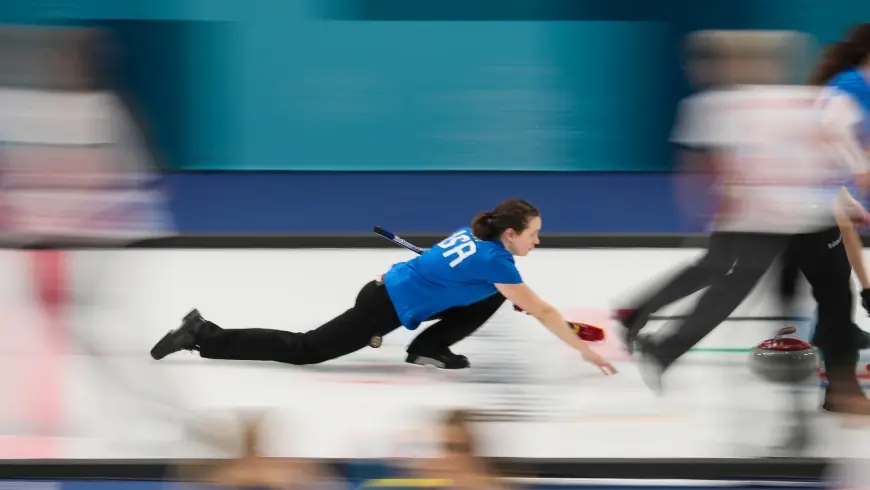
The controversy started during a preliminary-round matchup on Friday, Feb. 13, 2026 (ET), when an opposing player accused a Canadian thrower of a so-called double-touch—making contact with the curling stone a second time after release. The accusation provoked a profanity-laced exchange between the players that was picked up on video and circulated widely.
Officials issued a verbal warning for the foul language but did not levy a cheating charge in that match. Play resumed under greater scrutiny: umpires were repositioned to monitor deliveries more closely, and for portions of subsequent sessions official movement between sheets increased to observe releases. Despite the tension, the Canadian squads continued competing; one women’s match later ended in a narrow 8-7 loss in which a contested delivery was ruled a violation and the thrown stone was removed.
On Saturday, Feb. 14, 2026 (ET), the same double-touch allegation surfaced against a Canadian women’s skip during another tight game. The player vehemently denied the infraction, saying there was a “zero percent chance” she had touched the rock after release. The charged atmosphere persisted into Sunday, Feb. 15, 2026 (ET), when another national men’s side faced similar scrutiny.
Reaction, reputation and enforcement
Back home, the episode prompted sharp commentary. Fans and commentators called for clarity and for competitors to uphold the long-standing spirit-of-the-game ethic that has underpinned curling’s culture. One Canadian fan described the moment as “a sad day for Canadian sport, ” arguing that integrity matters even when it’s uncomfortable to police teammate actions.
An opinion column in a national newspaper urged Canadian teams to step back from defensive posturing, suggesting that preserving the country’s sporting reputation should trump combative instinct. That piece argued Canadians should “be the bigger man and woman” even if they believe they did nothing wrong.
The players involved have defended themselves forcefully. One Canadian veteran said he could have handled the exchange better but insisted he has never tried to gain an advantage through deliberate rule-breaking and that he was defending teammates. The women’s skip maintained her innocence and expressed frustration at what she described as officials inserting themselves into judgment calls.
On the enforcement side, the governing body adjusted match supervision to try to prevent disputed deliveries from becoming repeat flashpoints. Umpires who had been actively monitoring releases remained available in the field of play but were later instructed to step in primarily at the request of competing teams. That change reflected the logistical limits of observing every hog line moment across multiple sheets while trying to preserve the flow of matches.
What comes next
The controversy leaves several open questions: whether the incidents represent isolated judgment calls, a pattern of deliberate play, or a competitive tactic being weaponized by opponents. For Canadian curling, historically synonymous with podium success and sportsmanship, the wider cost may be reputational. How teams respond in public posture and on-ice conduct over the coming days will shape whether this becomes a brief distraction or a lasting blemish on a national tradition.
Ultimately, officials and competitors will need to balance clear rule enforcement with the sport’s ethos, and fans will be watching closely as the tournament continues under heightened scrutiny.