






















Elana Meyers Taylor Finally Claims Olympic Gold in Monobob, Capping a Record-Tying Winter Games Breakthrough

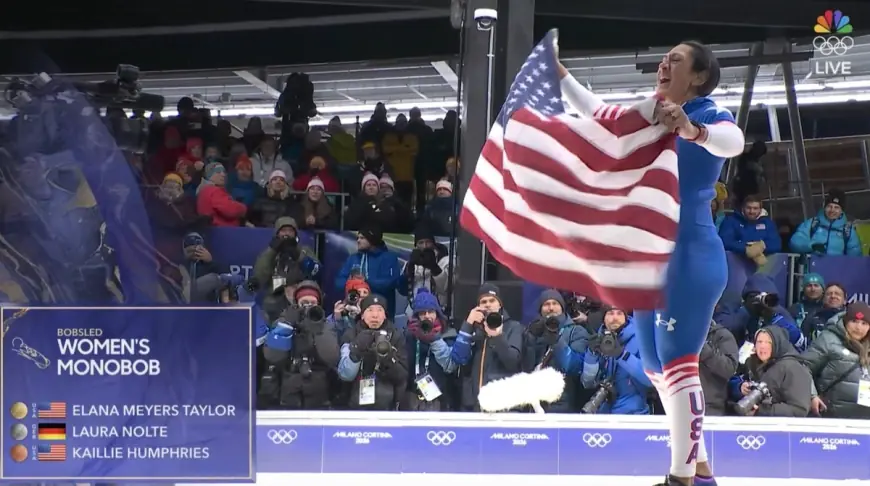
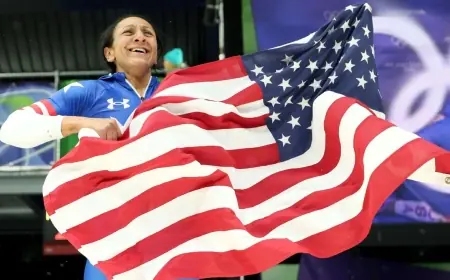
Elana Meyers Taylor’s long chase for Olympic gold ended Monday, February 16, 2026 ET, when the 41-year-old U.S. bobsled veteran won women’s monobob at the 2026 Winter Olympics in Milan-Cortina. Her four-run combined time of 3:57.93 held off Germany’s Laura Nolte by four-hundredths of a second, with fellow American Kaillie Humphries taking bronze at 3:58.05. In a sport where medals are decided by steering pressure and blade bite, the margin was a blink—and the moment was years in the making.
What happened in the monobob final
Monobob rewards consistency across four runs, and the gold medal was decided by who could stay clean when the track punished the smallest mistake. Nolte had been in the driver’s seat late, but a costly brush with the wall and a skid in her final run left the door open. Meyers Taylor slammed it shut with a closing run of 59.51 seconds, pairing it with earlier blistering pace that included a 59.08, one of the fastest trips of the competition.
The final order delivered a layered headline: Meyers Taylor’s first Olympic gold, Nolte’s silver after leading deep into the event, and Humphries on the podium again—another chapter in a rivalry-and-respect dynamic that has defined the U.S. women’s sled program in the monobob era.
Why this gold matters beyond one race
This wasn’t just a first-place finish; it rewrote multiple career narratives at once.
Meyers Taylor’s medal was her sixth Olympic medal, tying the U.S. Winter Olympic record for a woman set by speed skating legend Bonnie Blair. She also became the oldest American woman to win Winter Olympic gold. And as a trailblazer in a sport with high cost barriers and limited access points, she extended a legacy already marked by historic firsts and sustained excellence.
Just as importantly, the win arrived after years in which her public story expanded beyond the track: balancing elite training with motherhood, advocating for children with disabilities, and navigating the wear-and-tear realities of a sliding career that includes concussion-related setbacks.
Behind the headline: incentives, stakeholders, and the systems that produce hundredths
Bobsled is often framed as athlete versus ice, but the incentives tell a broader story.
For the athlete, the incentive is obvious: turn a lifetime of near-misses into the one medal that changes how the entire résumé is read. For the program, the incentive is structural: Olympic success attracts funding, keeps engineering talent in-house, and strengthens recruiting. For sponsors and partners, a marquee gold medal creates the cleanest possible narrative—experience, resilience, longevity—delivered on the sport’s biggest stage.
Stakeholders with real leverage include:
-
Coaches and technicians who control setup choices that can add or erase hundredths
-
The national program’s pipeline, which determines who gets track time and development opportunities
-
Athletes themselves, who decide whether to extend careers into their late 30s and 40s in a punishing sport
Meyers Taylor’s gold also spotlights something the results alone don’t show: monobob is marketed as a more standardized, athlete-driven event, but execution still depends on a support system—start training, sled preparation, and a team that can keep the “fast line” repeatable under maximum pressure.
The personal dimension that sharpened the moment
Meyers Taylor is married to Nic Taylor, a former U.S. bobsled Olympian, and the visibility around this win inevitably pulled more attention to her family life. That matters because the public often treats “veteran” as a simple label, when in reality longevity at this level usually requires extraordinary logistical support—especially for a parent traveling, training, and competing through an Olympic cycle.
Her gold, coming with Humphries also medaling in her 40s, sends a message that cuts against the usual assumptions in women’s sport: age and motherhood are not automatic endpoints when the athlete has resources, expertise, and a program built to keep performance sustainable.
What we still don’t know
Even after the podium ceremony, key questions remain open:
-
How transferable was Meyers Taylor’s monobob speed to the next bobsled events on the Olympic schedule?
-
Will this result reshape selection and pairing strategies for the two-woman competition?
-
How much of the final margin came from Nolte’s late error versus Meyers Taylor’s repeatable superiority across runs?
Those answers won’t come from highlight clips. They’ll come from the next starts, the next setups, and whether the U.S. program can turn one historic gold into a broader medal haul.
What happens next: realistic scenarios to watch
-
Meyers Taylor converts momentum into another medal if the U.S. sled speed translates cleanly into the two-woman event later this week.
-
Rival programs respond with setup tweaks and riskier lines, chasing the kind of raw pace that wins at this track.
-
The U.S. program leverages the spotlight to expand recruitment and access, especially for athletes who never see a bobsled track until late in their careers.
-
The monobob storyline reshapes the sport’s public image, emphasizing durability and mastery over novelty.
-
Meyers Taylor’s gold accelerates “what’s next” conversations—whether she extends one more season, or exits on the highest possible note.
On a day when four-hundredths decided history, Elana Meyers Taylor didn’t just win a race. She closed a decade-long loop—turning longevity into leverage, and turning a career of medals into the one that changes everything.