
























Women’s Olympic Hockey Sets Up Another USA–Canada Gold-Medal Collision as Milan Tournament Hits Its Final Stretch

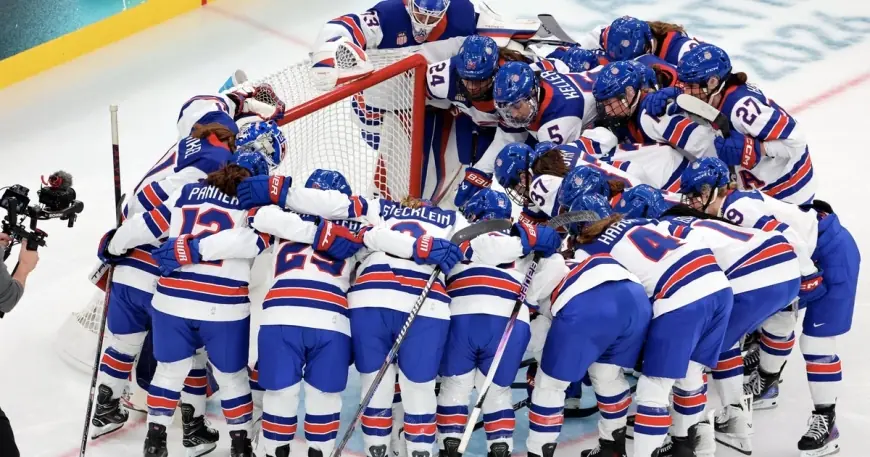
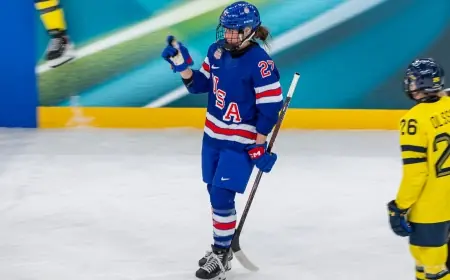
Women’s Olympic hockey is headed for its most familiar, most intense destination: a gold-medal showdown between the United States and Canada. After a dominant semifinal win over Sweden on Monday, February 16, 2026, ET, the Americans punched their ticket to the championship game, while Canada edged Switzerland in the other semifinal to keep the rivalry alive for another Olympic final.
The title game is scheduled for Thursday, February 19, 2026, at 1:10 p.m. ET, with Sweden and Switzerland meeting for bronze earlier the same day in Milan.
What happened: USA rolls, Canada survives, medal games set
The U.S. semifinal was a statement. The Americans shut out Sweden 5–0, controlling pace and territory and keeping defensive breakdowns to a minimum. The performance reinforced what has defined the U.S. run so far: suffocating structure, quick-strike finishing, and goaltending that has turned most opponent possessions into low-danger attempts.
Canada’s semifinal followed a different script. The defending champions beat Switzerland 2–1 in a game where Switzerland stayed stubbornly competitive deep into the third period. Canada advanced, but the narrow margin underlined a recurring Olympic truth: in a one-off, even a heavy favorite can be dragged into a tense, mistake-sensitive finish.
Women’s Olympic hockey context: why this rivalry keeps returning
The tournament format helps explain why the same matchup returns so often. The United States and Canada arrive with deeper player pools, more full-time high-performance resources, and a long history of facing each other in meaningful games. They also benefit from a feedback loop: big games create more investment, which creates more depth, which creates more big games.
But the rivalry persists for reasons beyond budget and tradition. Stylistically, the two teams mirror and challenge each other. Both play fast, both punish turnovers, and both convert special moments into scoreboard pressure. The real separation tends to come from details: defensive gaps in transition, faceoff execution, net-front battles, and whether the team chasing the game can stay composed.
Behind the headline: incentives, stakeholders, and the pressure points
This final is not just a sporting event. It is a high-visibility referendum on two national programs and the future shape of the women’s game.
Incentives are pulling hard in multiple directions:
-
The U.S. is incentivized to keep the game simple early, because their tournament identity has been built on control. When you’ve allowed almost nothing all event, chaos is the enemy.
-
Canada is incentivized to escalate physical and tactical pressure, because their best path often involves forcing the opponent into rushed decisions and fighting for second chances around the net.
-
Coaches on both sides are incentivized to shorten benches, but not so much that fatigue becomes a hidden opponent by the third period.
-
Star players are incentivized to take risks at the right moments, while role players are incentivized to avoid the one turnover that becomes an Olympic memory.
Stakeholders include more than the two rosters. League executives, federation leadership, sponsors, and broadcasters all have a stake in whether the final delivers the rivalry’s promise. Emerging programs have a quieter stake: a predictable final can grow the sport through star power, but it can also reinforce the perception that the top is closed off.
What we still don’t know before puck drop
Several variables will decide whether the final becomes a tactical chess match or a track meet:
-
Special teams shape: which penalty kill holds up under Olympic pressure, and whether power plays can create quick separation
-
Goaltending volatility: even elite goalies can be undone by screens, tips, or a bad bounce
-
Line matching: how each coach deploys top defenders against the other side’s primary scoring threats
-
First-goal psychology: if one team scores early, does the other chase and open seams, or stay patient and trust its system
-
Fatigue management: the semifinal styles were different, and that can matter late in the final
Second-order effects: what this final could change
A tight, high-quality USA–Canada final tends to accelerate investment in the women’s game because it showcases speed, skill, and intensity that convert casual viewers into repeat viewers. That can translate into better youth participation, stronger domestic pipelines, and more leverage in future broadcast and sponsorship negotiations.
On the other hand, if the final is lopsided, it risks fueling a narrative that the sport’s biggest stage is predictable. That narrative can be unfair to the depth of the tournament, but it still influences how new fans decide whether to stay.
What happens next: realistic scenarios and triggers to watch
-
A low-scoring grind develops if both teams protect the middle of the ice. Trigger: clean breakouts, disciplined gaps, few penalties.
-
A special-teams swing decides it quickly. Trigger: early power-play goal forces the other team to chase.
-
The game breaks open in the second period. Trigger: one team wins the transition battle and creates odd-player rushes.
-
A goalie duel turns it into one moment at the end. Trigger: high save percentages and limited rebounds.
-
Overtime arrives. Trigger: both teams trade pressure without conceding the decisive mistake.
Women’s Olympic hockey now has the matchup it always seems to find. The only question left is which program handles the spotlight better on Thursday afternoon, and which group turns the rivalry’s weight into fuel rather than friction.