




















The Godfather’s Quiet Power Returns to the Conversation as Robert Duvall Dies at 95

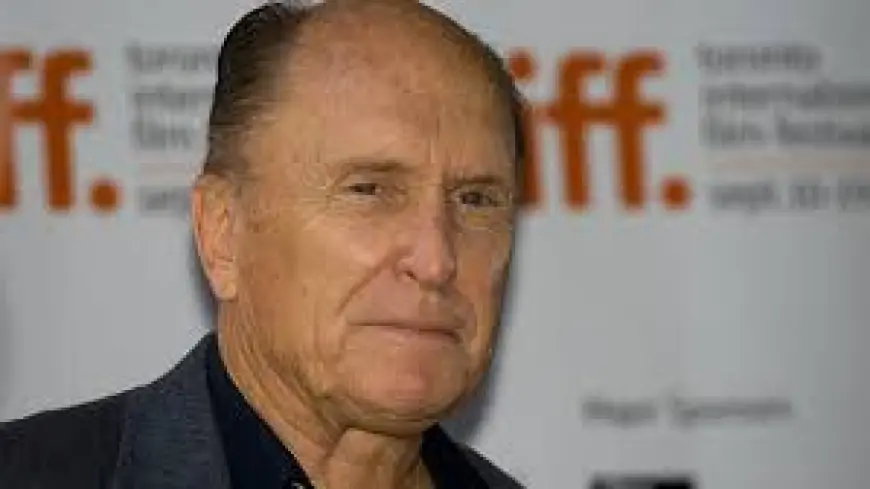
Robert Duvall, the actor who gave The Godfather one of its most controlled and consequential presences as Tom Hagen, has died at age 95, his family said on Monday, February 16, 2026, ET. The news has triggered a fresh wave of attention not just on Duvall’s long career, but on how his performance helped define what prestige acting would look like for generations: understated, precise, and quietly decisive.
Duvall’s death is also a reminder of how The Godfather continues to function as a living piece of American culture. It is not simply a classic that people revisit. It is a reference point that keeps absorbing new meaning as time passes, audiences change, and the people who made it leave the stage.
What Robert Duvall Did in The Godfather That Few Actors Could
Tom Hagen is not the loudest character in The Godfather, but he is one of the most structurally important. He translates family emotion into strategy. He turns threats into language that can pass for business. He stands between impulsive violence and calculated consequence.
Duvall played Hagen without begging for attention. He did not perform power as swagger. He performed it as competence. That choice made Hagen feel credible in the film’s world and, more importantly, made the Corleone operation feel real enough for audiences to believe the stakes.
It is a performance built on restraint: a steady gaze, a measured pace, and a posture that suggests a man constantly calculating the next move while making sure everyone else believes it was inevitable.
Behind the Headline: Why Duvall’s Death Is Reframing The Godfather Again
Context matters. Modern audiences live in an era of maximalism, loud branding, and acting that often signals intensity rather than earning it. Duvall’s passing is pushing viewers back toward a different craft ideal, one where dominance can be communicated by stillness and where authority can be conveyed by simply being the person who understands the room first.
The incentives are cultural and commercial. Studios and rights holders know that renewed attention around a major figure’s death often drives fresh viewing, commemorative screenings, and a spike in discourse that keeps older films economically alive. Streamers, broadcasters, and repertory theaters benefit from the same cycle. Meanwhile, fans and critics are incentivized to retell the story in a way that fits today’s language: legacy, influence, the end of an era.
Stakeholders extend beyond entertainment. The Godfather has shaped how Americans talk about power, loyalty, corruption, and family obligation. It influenced politics, business metaphors, and even how people describe negotiations. When someone like Duvall dies, the conversation is not only about his résumé. It is about the cultural machinery he helped build and how it continues to run.
Second-order effects show up quickly. Film schools and acting programs tend to re-center performances like Hagen’s when the industry feels overly performative. Writers and directors revisit what made those characters durable: clarity, consequence, and subtext. That can ripple into new projects that borrow the same quiet style, especially in crime dramas and prestige television.
What We Still Don’t Know About How Legacy Will Be Curated
In the days following a major death, the public usually receives a tidy narrative. The real picture is always messier, and the missing pieces are what shape how a legacy evolves:
-
Which performances Duvall himself considered his best, beyond the roles audiences cite most often
-
How much of his approach came from technique versus temperament
-
What unpublished interviews, letters, or behind-the-scenes accounts might emerge and complicate familiar stories
-
Whether new restorations, curated retrospectives, or estate-approved projects will influence how younger viewers encounter his work
These unknowns matter because legacy is not fixed. It is edited, packaged, and redistributed through anniversaries, tributes, and the changing tastes of each decade.
What Happens Next: The Likely Paths for The Godfather and Duvall’s Place in It
Several realistic scenarios tend to follow news like this, with clear triggers:
-
A wave of commemorative screenings and curated marathons
Trigger: sustained public interest through the next two weekends and strong ticket demand in major cities. -
A renewed debate over Tom Hagen’s role in the trilogy’s moral logic
Trigger: critics and creators revisiting whether Hagen is the story’s conscience, its fixer, or its most effective operator. -
A surge in career-spanning reevaluation beyond The Godfather
Trigger: audiences rediscovering Duvall’s leading roles and late-career performances that show a different kind of vulnerability and grit. -
A new generation adopting Duvall’s restraint as an acting template
Trigger: viral scene breakdowns and classroom use that spotlight how little he needed to do to control a moment. -
A quieter, more permanent shift in how The Godfather is discussed
Trigger: the gradual disappearance of the original generation that made the film, changing the conversation from behind-the-scenes lore to pure textual analysis.
Why It Matters
Robert Duvall’s death matters because it closes a chapter in American film history while sharpening what The Godfather has always been about: power expressed through discipline, and violence managed through language until it can no longer be contained.
Tom Hagen was never the flashiest figure in the room. He was the one who made the room work. That is why, even now, audiences keep returning to The Godfather and finding something new inside the quiet spaces Duvall knew how to fill.