

























Antarctica Hosts Rare ‘Ring of Fire’ Solar Eclipse on February 17

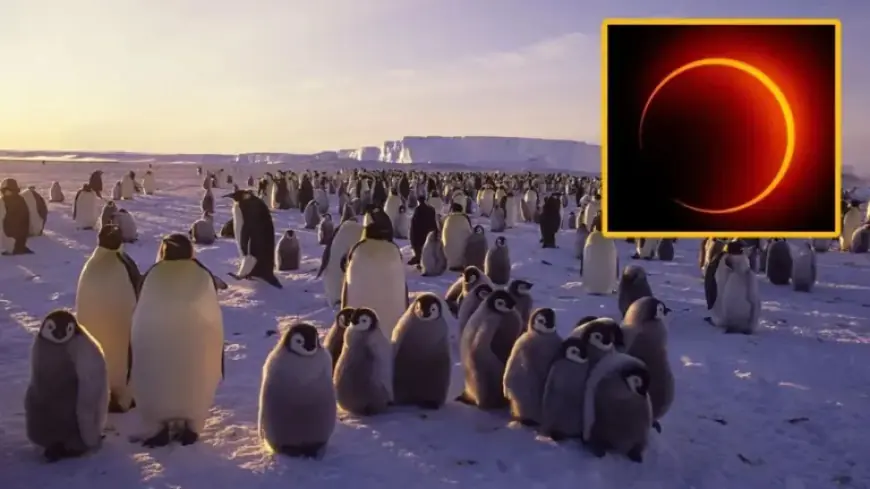
On February 17, 2024, a rare “ring of fire” solar eclipse will take place, primarily observable in Antarctica. This celestial event, known as an annular solar eclipse, occurs when the moon passes in front of the sun but is too far from Earth to completely cover it. As a result, only a bright ring remains visible around the moon, marking this spectacular phenomenon.
Details of the Solar Eclipse
During the February 17 event, approximately 96% of the sun will be obscured. The eclipse will be observable along a narrow path measuring 383 miles (616 kilometers) wide. Within this zone, some observers may see the “ring of fire” for up to 2 minutes and 20 seconds.
Viewing Locations
- Mirny Station: Located on the coast of the Davis Sea, this research station will witness the annular phase for about 1 minute and 52 seconds.
- Concordia Station: Jointly operated by France and Italy, this location offers a viewing time of around 2 minutes and 9 seconds and has a better chance of clear weather.
However, access to these locations is challenging, as the eclipse will traverse largely uninhabited areas of Antarctica. Only a limited number of people, including a few Russian researchers at Mirny and some employees at Concordia, are expected to observe this event directly.
Timeline of the Eclipse
| Event | UTC Time | EST Time |
|---|---|---|
| Start of Partial Eclipse | 09:56 UTC | 4:46 a.m. EST |
| Start of Annular Phase | 11:42 – 12:41 UTC | 6:42 – 7:42 a.m. EST |
| End of Partial Eclipse | 14:27 UTC | 2:27 p.m. EST |
Future Eclipses
Eclipses typically occur in pairs. Following the annular solar eclipse on February 17, a total lunar eclipse is scheduled for March 3, 2024, visible from East Asia, Australia, and North America.
The next annular solar eclipse will occur on February 6, 2027, featuring a “ring of fire” visible for up to 7 minutes and 51 seconds across various countries, including Chile and Argentina.
For more information on this celestial phenomenon, visit Filmogaz.com.